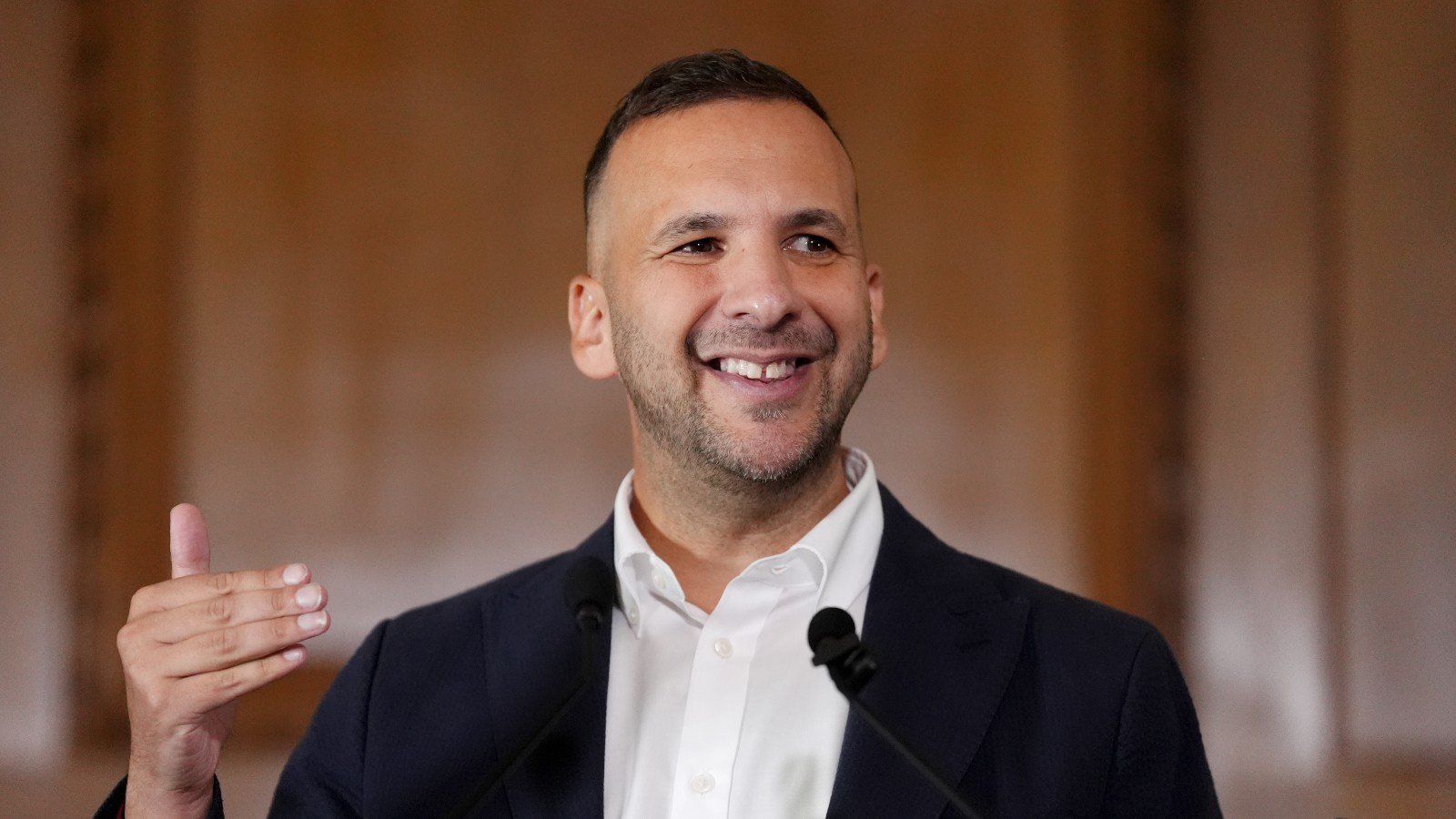
Zack Polanski has raised eyebrows by describing climate change as “the biggest threat to this country since the Second World War”.
While not a surprising comment from the leader of the Green Party, many would not share his opinion. Much has happened since 1945. Throughout the entire Cold War, Britain was close to the Nato frontline and nuclear calamity seemed one misstep away. Children read Where the Wind Blows at school while Protect and Survive guidance advised creating makeshift fallout rooms in homes.
The 20th century brought 9/11, the first and only time Nato’s Article Five has been invoked. It also saw the financial crisis, which threatened to bring banking, and even the capitalist system, to its knees. More recently came Covid, with UN Secretary-General Antonio Guterres describing the virus, and the upheaval it caused, as “the most challenging crisis we have faced since the Second World War”.
A former hypnotist, Mr Polanski is no stranger to making mesmerising claims. Below, we analyse some of his previous statements on the climate.
“The only reason why you’d make this decision on Rosebank is because you’re in the pockets of fossil fuel companies.”
Mr Polanski made this claim in an interview with the Times. He was referring to the possible approval of drilling at Britain’s largest untapped oil field, Rosebank. Work is currently paused pending a challenge on climate grounds.
Mr Polanski implies that it is only fossil fuel companies or their proxies that would support drilling at Rosebank. In fact, support has come from a number of quarters.
Make UK, the trade association that represents manufacturers, called for work at Rosebank and Jackdaw, a gas field, to restart, to help “mitigate energy costs and energy security because of the conflict in the Middle East”. Unite, the union, has said: “Domestic gas from Jackdaw and oil from Rosebank are essential for jobs and for energy security.”
While not mentioning Rosebank specifically, Tara Singh, chief executive of trade body RenewableUK, said: “It is entirely sensible to support continued domestic oil and gas production in the North Sea.”
She warned that, if the UK does not produce gas domestically, “we will simply import more of it”.

“We are facing an existential threat, people are dying, people are scared, it is time to act.”
Mr Polanski was speaking in the wake of the recent heatwaves. He is correct to say lives were lost in the extreme weather, although the precise numbers are disputed.
However, the IPCC, the global science body that advises Governments, says climate change is “a severe and urgent” crisis rather than an extinction-level threat.
It recently ditched its worst-case scenario, deeming it “implausible”. This is good news, although thousands of articles, and even parts of Government policy, have been based upon the now-outdated claims.
Mr Polanski may be right that many people are scared, especially youngsters, but claiming the threat is “existential” is unlikely to calm their nerves.
“We need to move to renewable energy. It's much cheaper than oil and gas economically.”
“Backsliding on climate action would be a moral and political failure from Andy Burnham. He has the chance to be bold, and failing to do so will see our country get poorer”
Mr Polanski suggests, in these words to the Prime Minister, that backtracking on climate pledges would make the country poorer.
Many authorities would say he is absolutely correct; the cost of inaction on global warming would dwarf the price of attempting to stop it.
However, what was once a Parliamentary consensus has been shattered. Reform has pledged to scrap Net Zero and the Tories have said they would abolish the UK’s climate change legislation and replace it with a plan for affordable energy. Axing carbon taxes and ending older wind farm subsidies would reduce electricity bills by 20 per cent, according to shadow Energy Secretary Claire Coutinho.
Even Tony Blair has suggested cheap power should now be the priority.
Mr Burnham has pledged to reindustrialise Britain in his quest for growth, but the country has the highest electricity prices in the developed world. Energy-intensive industries have all complained of soaring costs. They are also suffering carbon leakage, where manufacturing simply moves abroad, to countries with cheaper power.
Jobs have been lost, along with revenue to the Treasury. Meanwhile, we import many goods that we once made domestically. Our carbon footprint is the same, or likely higher, with many foreign manufacturers using coal to power their plants.
Whether climate action is a moral decision for Mr Burnham is, again, subjective.
A resident affected by the “apocalyptic” Suffolk wildfires may hold a different view to a former worker at Denby pottery, which closed its doors thanks, in part, to sky-high energy costs.
Our Standards: The GB News Editorial Charter