Relentless drive to Net Zero is trampling British industry, chemicals plant boss tells GB News
British industry is being trampled underfoot as the country “gallops” to Net Zero, the head of a chemicals plant has told GB News.
Adrian Hanrahan said that energy costs had been high since the Ukraine invasion and warned that green levies and the pressure to decarbonise were making the situation worse.
The managing director of historic chemicals company, Robinson Brothers, said the plant, along with other manufacturers, had taken huge strides in increasing energy efficiency.
But with prices soaring again as a result of the Iran war, the cumulative pressure on the chemicals industry was becoming too much, he said.
He said of the Net Zero demands: “We’re trying to run a marathon in a sprint format.”
The sector employs more than 150,000 people directly and supports half a million jobs in the wider economy. It has annual exports worth £61 billion.
Robinson Brothers was founded in 1869 and had weathered calamities including two world wars, the Great Depression, the financial crisis and the Covid pandemic.
But not once has the family-run firm considered leaving its West Midlands roots. After the 2008 crash, Mr Hanrahan pointed out that China might prove more lucrative.
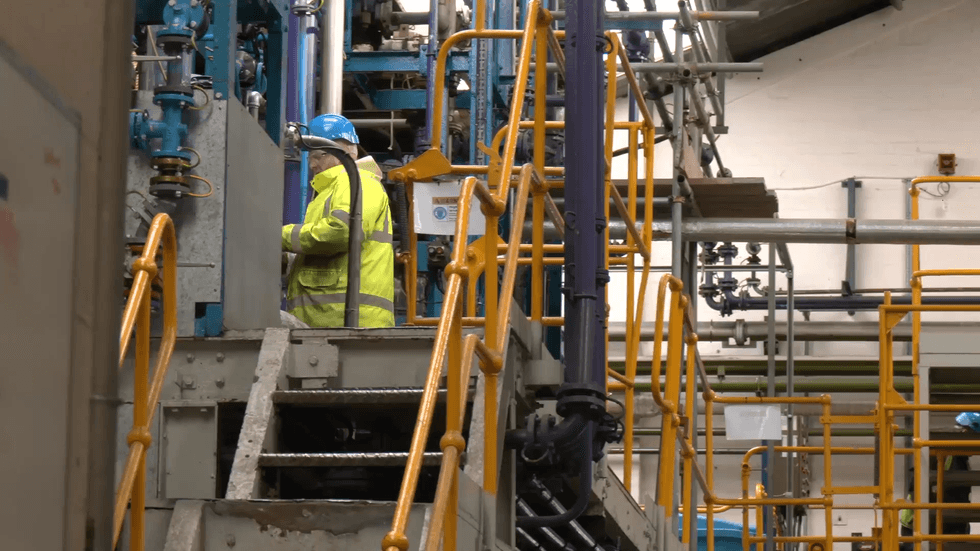
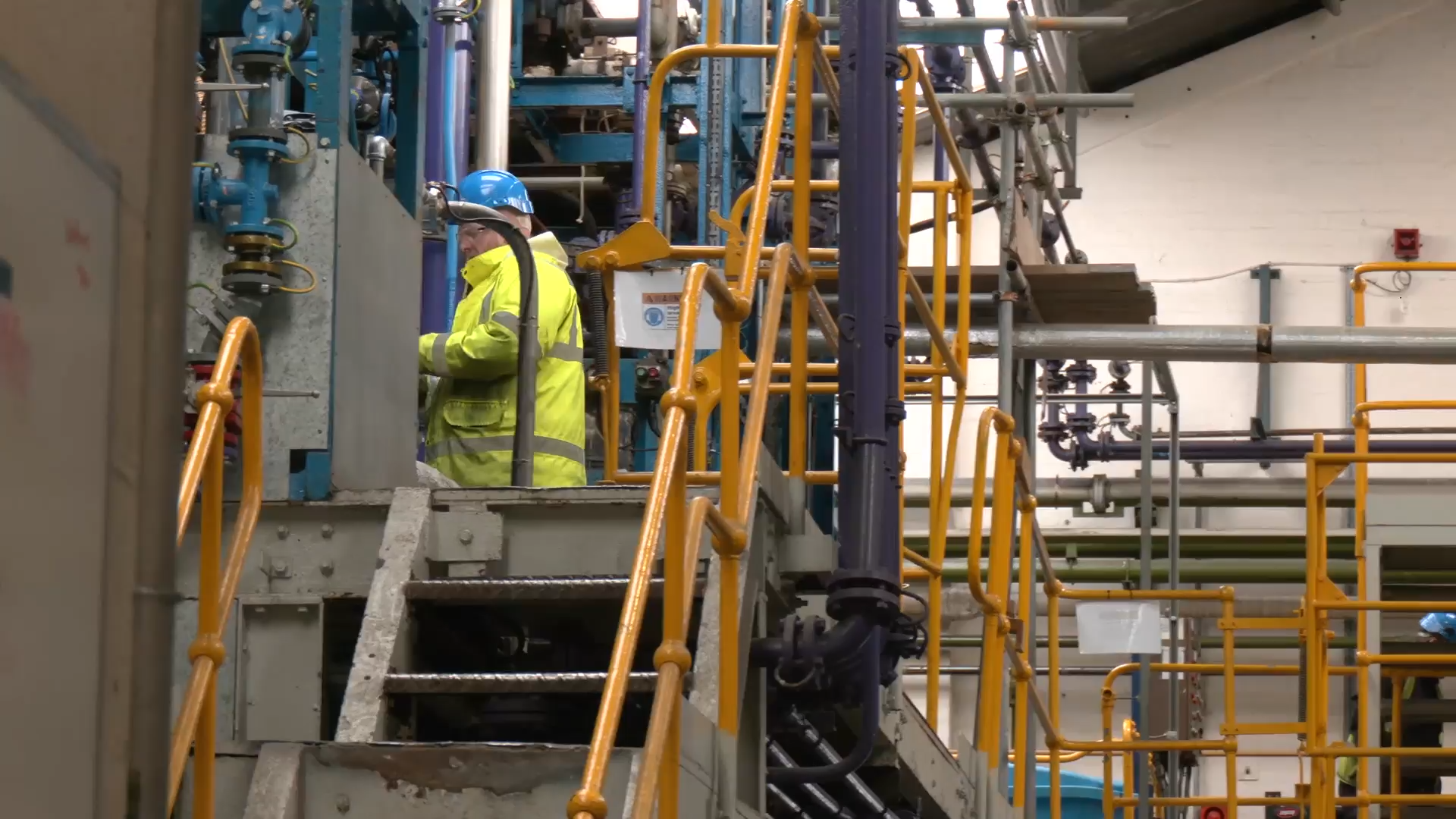
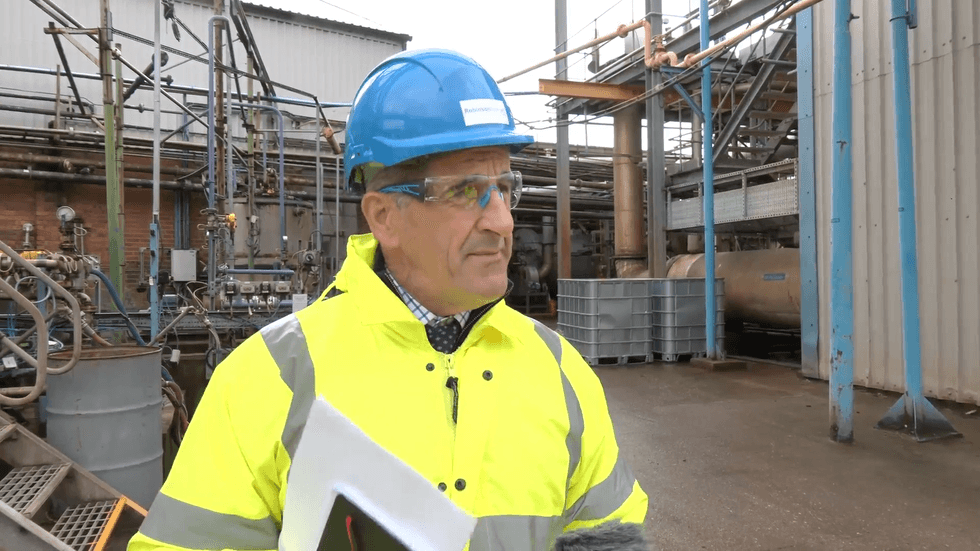
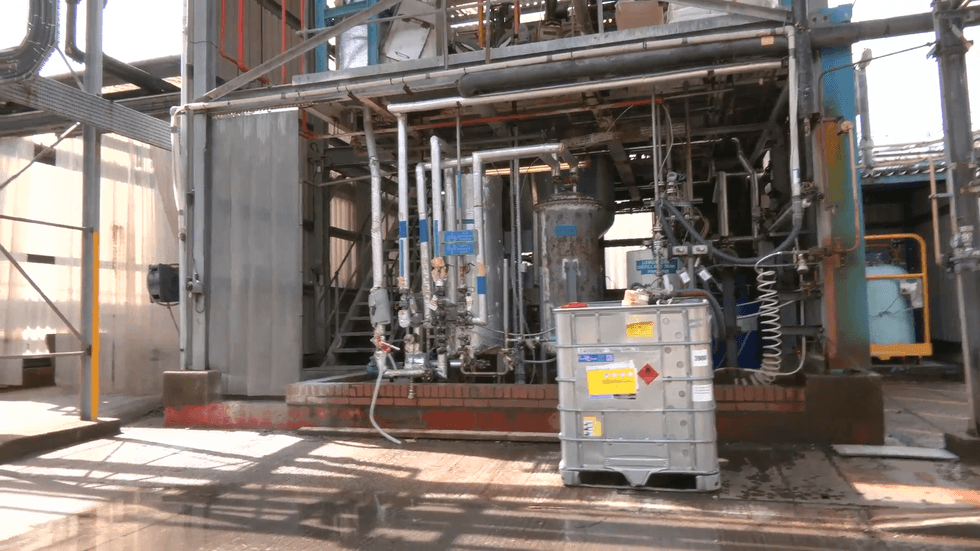
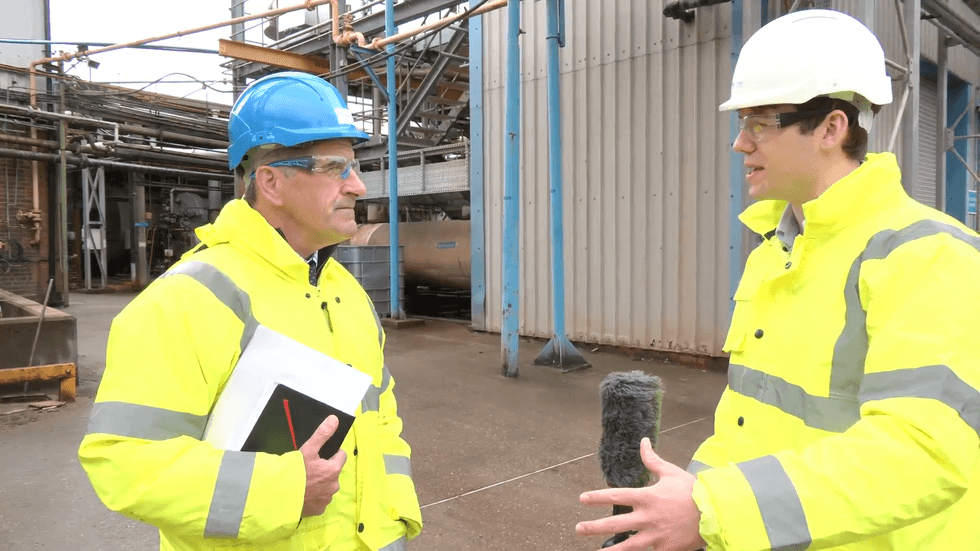
“I explained they’d make more money”, he said, as he showed GB News around the 14 acre site in West Bromwich.
“But it’s a family business, and we’ve been here since 1869. “The family is rooted in the West Midlands and they are absolutely adamant we are staying here. We are committed to this area.
“But we’re existing and surviving, in spite of successive governments. It’s cost, cost, cost for us, and it’s making us so uncompetitive.”
The chemicals sector is particularly vulnerable to energy prices. It requires large amounts of power to manufacture and also needs gas or oil as feedstocks.
LATEST DEVELOPMENTS
- Labour refuse to drop £2bn 'shopping stealth tax' linked to Net Zero despite food inflation warnings
- Ed Miliband under pressure as plug-in solar panel rollout fails to reach shelves'
- Insane!' Kemi Badenoch blasts Labour for lifting Russian sanctions while banning North Sea licences
This makes it one of the most energy intensive sectors in the UK, alongside steel and refineries. It is fighting to get to Net Zero but the battle has come at a cost.
Between 2021 and 2025 emissions from the sector dropped by 60 per cent. But more than 90 per cent of this reduction came not from efficiency, but closures.
Over that period, at least 25 facilities shut their doors. Of the reasons given for the closures, 15 firms stated either energy costs, policy costs, carbon costs or competitiveness.
In a letter to Prime Minister Sir Keir Starmer, Steve Elliott, Chief Executive of the Chemical Industries Association (CIA), gave a stark warning.
“We are the clearest-cut case for delivering decarbonisation through deindustrialisation,” he wrote, earlier this year. Last month, the Government announced a £350million funding package for the sector.
Mr Elliott said this was a “a very welcome first step” but he warned more action was needed Mr Hanrahan said the package didn’t address the underlying issue of energy costs, which had already led to lay-offs at his firm.
Some of Robinson Brothers’ products had moved abroad because of high energy prices, he said, and the workforce has been cut from 250 to 150.
“We’ve had to scale back because some of those products we were manufacturing could not cope with the excessive energy costs that we have endured,” he says.
“They just couldn’t withstand those high energy costs.
“Up until 2023 we were developing and manufacturing chemicals that went into pesticides and automotive applications. But with the increase in energy costs, the supply chain could no longer withstand that.
“So those products are no longer here and if the UK wants them, which it does, it has to re-import them back into the country.
“So we’re creating jobs in the Far East and we’re losing jobs here. Is that what we want for this country? I really don’t think so.
“What we’re seeing now is increases in fuel surcharges, raw material availability and raw material costs, because of energy.
“It’s getting progressively worse.”
The company has finally been accepted onto the British Industry Supercharger scheme, which means that, from next year, it will be exempt from a number of green levies on its electricity bills.
But even with this relief, Mr Hanrahan warns, the price of power will remain prohibitive.
The CIA has previously said that Supercharger is “neither a benefit nor subsidy, it is an essential intervention for UK companies to be able to compete”.
The trade body has lobbied for further relief on carbon taxes levied on electricity generators. Mr Hanrahan supports the move.
“These are what I call green taxes, and I would really like to see a reprieve on those”, he says.
“The impact that the UK is having on global decarbonisation is, I’m afraid, insignificant relative to other countries.
“So why are we punishing UK manufacturing? To look good?
“It’s an ideology and I get really upset by it because I just feel that we’re losing good industries from the UK to other countries, where environmental protection is not as great.”
He pointed out that his plant had already made huge leaps in efficiency, with the energy required per kilo of product down by 40 per cent.
But the costs had quadrupled over five years, he said, “because of the commodity price and the taxes that we pay on top of the energy, the green taxes”.
Mr Hanrahan said he was supportive of the aims of Net Zero, saying the concept was “very welcome” and “we all want to get there”.
But he warned; “The rate of change we are being asked to comply with – it's just too quick. “It’s trying to alter your energy costs and how you consume energy, and it’s a very slow process.
“I just wish that Government would realise what it takes to reduce energy, per kilo of product consumed.
“If the commodity and energy prices are going to be so high, and I don’t mean to be scaremongering, you may not have an industry to support.”
He said of Net Zero: “We all want to get there, but it’s the time taken to get there, and the cost of getting there. We’re trying to gallop towards Net Zero and I think we are trampling over industries.”
The majority of his workforce comes from the local area, providing a welcome boost to the economy. But the products they make head abroad.
Around 80 per cent of the factory’s output is exported and demand is high.
“We even sell white powder to the Colombians”, he jokes.
He is referring to a chemical vital for making latex non-carcinogenic, which is needed by South American balloon manufacturers.
“We develop and manufacture chemicals that are used in a variety of industries, from pharmaceutical to agriculture, electronics, digital, cars, food and flavour,” he says.
Chemicals are everywhere, he points out, and most of us will have come across a Robinsons Brothers product. It is their formula, for example, that gives piped natural gas its sulphurous smell.
During Covid, it switched manufacturing to hand sanitiser, which it gave out free to local hospitals and schools.
“We’re committed to the area, to the people in the area, to the families in the area,” he said. “It’s a family business.
“I’m not asking for freebies – I'm just asking for support to get us through the current crisis.”
He urged Energy Secretary Ed Miliband and Business Secretary Peter Kyle to “come out here, meet the people here, see what we do”.
He said: “95 per cent of everything manufactured has chemical content. Do we want to lose all that industry? Do we want to be a total importer of everything? Because that’s the way we seem to be going.
“I would ask them to take stock and come out and talk to us, rather than layers and layers of consultants. Come and talk to the people at the coalface. This is where it’s happening. This is where real work happens.
“And I’m just one little company. There are lots and lots of companies like us, all with the same challenges.
“We are surviving in spite of Government policy and I will fight tooth and nail to keep this company going. I really will.
“It’s a family business – it’s been around since 1869. I’d like it to be here for at least another 100 years.”
Last month, the Government announced its critical chemicals resilience fund - a £350 million investment in the sector. It is aimed at supporting “strategically important” producers and sites.
Ministers said the funding is designed to help firms stay competitive, modernise infrastructure, decarbonise, and transition their energy supplies from gas to electricity.
Business Secretary Peter Kyle said: “At a time of global uncertainty, it’s never been more important to ensure Britain’s resilience and back the industries our country depends on, and this funding will support thousands of jobs and put businesses on a secure footing for the long term.
“This is what a strategic state looks like: acting swiftly with targeted support in the national interest and giving certainty to the industries crucial to both our everyday lives and our economic future.”
Asked by GB News whether there could be potential competing interests between business and climate, Mr Kyle said that industry recognised Net Zero as a huge economic opportunity.
He said: “When it comes to issues between climate change and business, industry and the business community tell us that the decarbonisation agenda is the biggest economic opportunity that we face.”
Chancellor Rachel Reeves said that the chemicals sector underpins “our economic resilience and supports skilled jobs across the UK”.
“We have the right economic plan. It includes backing those workers, backing the communities that depend on them, and backing British industry for the long term,” she said.
The CIA’s Mr Elliott said of last month's funding announcement: “This is a good start, and I am pleased to see that Ministers also recognise the need to build on this by working with us to ensure the whole sector is more secure.”
But he warned: “Chemical businesses underpinning our critical national infrastructure and wider resilience stand to gain from this Critical Chemicals Resilience Fund, but they in turn are dependent on raw material suppliers and customers in the wider industry – all of whom are struggling to compete opposite uncompetitive energy, carbon reduction and wider regulatory burden costs.
“All of this we made clear to the Prime Minister back in March – so this is a welcome first step, but there remains much more to be done.”
He added: “In this increasingly uncertain world we should not be over-reliant on imports for essential raw materials to provide energy, water, telecommunications, transport, food supply and pharmaceuticals.
“We can deliver so much more of that through a robust, domestic chemical industry. “I want us as a country to build on this latest announcement, with chemical businesses working in partnership with Government to make the UK a far more competitive trade and investment location.”
Our Standards: The GB News Editorial Charter