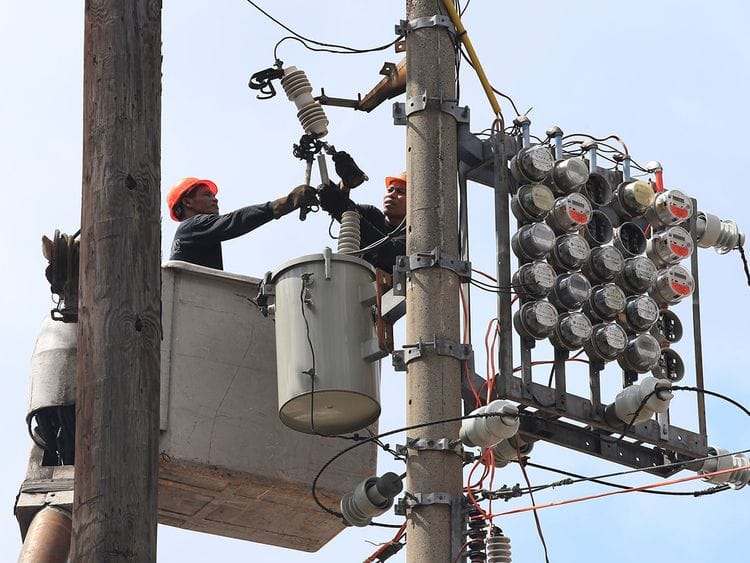
Manila: Rotational brownouts swept parts of Luzon as the Philippines’ power grid ran with razor-thin reserves while several large generating units and key transmission lines went “offline”, officials said.
This forced utilities to cut electricity to selected areas to prevent a wider “blackout”.
The electricity system operates as a three-part balancing act: power plants generate supply, the National Grid Corporation of the Philippines moves that power across high‑voltage transmission lines, and distribution utilities such as Manila Electric Co (Meralco) and power cooperatives deliver it to homes and businesses.
Get updated faster and for FREE: Download the Gulf News app now - simply click here.
When available generation falls below demand, the grid operator deliberately “drops load” in rotating blocks to keep frequency stable and avert a total system collapse.
A confluence of factors pushed the grid to the brink this week.
Philippine Energy Secretary Sharon Garin said the NGCP has no explanation or report why two major transmission lines resulted in "Red" and "Yellow" alerts in Luzon and the Visayas.
Energy Sec. Sharon Garin: Hanggang ngayon, wala pa ring report o paliwanag ang NGCP kung bakit pumalya ang 2 major transmission lines na nagresulta sa serye ng RED at Yellow alerts sa Luzon at Visayas. pic.twitter.com/kZtHfwKxIA
— alvin elchico (@alvinelchico) May 18, 2026
El Niño
Industry officials, however, reported that as El Nino rages throughout the archipelago, extreme heat pushed up air‑conditioning and cooling loads across Luzon and the Visayas, driving peak demand close to — and in short windows above — available capacity, officials said.
At the same time, Reuters reported that 27 generating units were “unavailable” because of outages, maintenance or derating, shrinking reserve margins and leaving little cushion when several large plants tripped at once.
El Niño is a climate phenomenon characterised by the unusual warming of sea-surface temperatures in the central and eastern tropical Pacific Ocean, causing trade winds to weaken. This shift disrupts global weather, commonly bringing severe droughts and heat waves to Southeast Asia and Australia, and increased rainfall and flooding to the Americas.
Compounding the supply squeeze, two critical 500‑kilovolt (KV) transmission lines feeding Metro Manila and adjacent provinces tripped: the Tayabas–Ilijan and the Dasmariñas–Ilijan lines.
JUST IN: The National Grid Corporation of the Philippines says the Visayas grid will be placed under yellow alert on Monday (May 18, 2026) from 4 to 8 p.m.
— Philippine News Agency (@pnagovph) May 18, 2026
In an advisory, NGCP said the declaration of yellow alert was due to the unavailability of Visayas' large coal plants TVI… pic.twitter.com/tSUoIkBugj
Those “electricity highways” move bulk power into densely populated areas, and their failure left parts of Luzon struggling to receive enough energy even when generation was available elsewhere on the grid, the National Grid Corporation of the Philippines said in advisories, as per NGCP statement.
Yellow alert
Yellow alert was raised in the Visayas on Monday (May 18, 2026). The grid operator raised yellow and then red alerts across Luzon and the Visayas as reserves dwindled.
Under a “Yellow Alert”, reserves are thin and operators prepare for contingency measures; a “Red Alert” indicates supply is insufficient and forced load shedding or rotational outages are likely.
Utilities including Meralco moved to implementation, posting rotating outage schedules covering areas of Metro Manila, Laguna, Cavite, Bulacan, Rizal, Quezon and nearby provinces.
HAPPENING NOW: Palace Press Officer Claire Castro holds a press briefing in Malacañang on Monday (May 18, 2026).
— Philippine News Agency (@pnagovph) May 18, 2026
• On rotational brownouts, Castro says the Department of Energy has ordered immediate restoration of affected distrbution lines.
• Castro says President… pic.twitter.com/yEm5uWKleA
Rotational brownouts, utility and government statements explained, mean customers in selected zones will experience planned power cuts for a few hours at a time before service is restored and the interruption shifts to another area.
The measure protects critical equipment, stabilizes grid frequency and prevents cascading failures that could lead to a more extensive blackout.
Emergency crews worked to repair the tripped transmission lines, and NGCP later reported restoration of the Tayabas–Ilijan and Dasmariñas–Ilijan lines after emergency interventions.
Electric reserve margins improve
The Department of Energy (DoE) said reserve margins improved as some generation returned online and the transmission links were reestablished, reducing the immediate need for wider outages.
Claire Castro, the presidential spokesperson, told reporters the department ordered “immediate restoration” of the affected lines because transmission failures are treated as critical national infrastructure incidents.
The DOE’s emergency response includes directing NGCP to restore tripped lines, coordinating with generation companies to bring plants back online, and instructing utilities to implement controlled load dropping when necessary to stabilise the system, Castro said.
‘Short-term strain’ on power supply
The government also sought to reassure the public that the episode reflected an acute strain on supply and transmission during high demand, not a long‑term “energy lockdown.”
Energy analysts warned the crisis also exposed deeper structural weaknesses in the Philippine power system.
Chronic thin reserve margins during hot months, aging coal and gas plants, and slow construction of new capacity due to right-of-way issues, transmission bottlenecks, dependence on imported fuel and delays integrating renewable energy have left the grid vulnerable.
When one or two large plants or major lines fail during peak demand, reserves can evaporate rapidly and trigger rotating outages, analysts said.
Consumers and businesses felt the immediate impact.
Hospitals, manufacturing facilities and commercial establishments in affected areas shifted operations and relied on backup power or adjusted hours, while households faced intermittent interruptions to cooling and other services during a week of unusually high temperatures.
Users urged to conserve power
Officials urged electricity users to conserve power, generate their own power through solar and batteries, where possible, and pledged that agencies and utilities would continue working to restore full service and improve system resilience.
Longer‑term solutions, they and analysts said, require faster investment in generation and transmission, improved maintenance and contingency planning, and accelerated integration of flexible renewable resources and grid technologies to expand reserve margins and reduce the likelihood that localised failures will cascade into rotating brownouts.