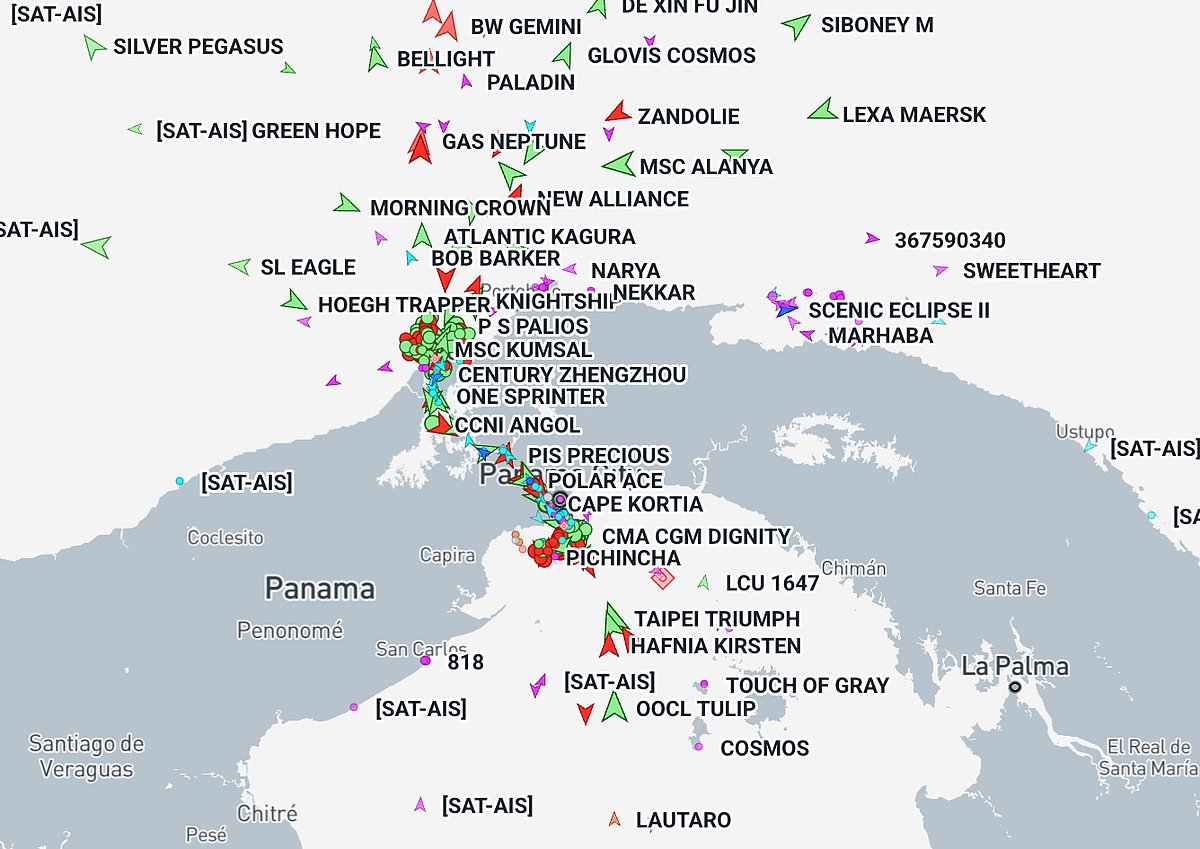
A surge of oil tankers and liquefied natural gas (LNG) carriers is crowding the Panama Canal, as shifting global energy routes driven by conflict in the Middle East push the strategic waterway to near-maximum capacity.
Videos circulating online this week show long lines of vessels waiting to transit the canal after loading crude oil and gas shipments from US Gulf Coast ports, underscoring a sharp rise in traffic bound for Asia.
Strong demand
Canal authorities say daily transits have climbed to between 36 and 38 vessels, above earlier projections, with energy shipments accounting for much of the increase.
Reuters reported that demand has been particularly strong among LNG and liquefied petroleum gas (LPG) carriers transporting US exports to Asian markets.
The congestion follows disruptions linked to tensions between Iran and the United States, including the effective closure of the Strait of Hormuz — a critical shipping route.
The situation has forced many energy shipments to reroute, boosting reliance on the Panama Canal as an alternative path to the Pacific.
Congestion
The current congestion differs from delays seen during 2023–2024, when drought conditions limited the canal’s capacity by reducing water levels.
Today, water supply has improved, allowing the canal to operate at full capacity.
However, the bottleneck now stems from surging demand rather than restricted supply.
Video is now going viral showing numerous LNG carriers and oil tankers queuing to enter the Panama Canal after loading crude oil and liquefied natural gas shipments in the Gulf of America before heading through to the Pacific and on to Asia amid a drastic increase in traffic. pic.twitter.com/eM6ziM2Eds
— Right Angle News Network (@Rightanglenews) April 16, 2026
US ramps up oil, gas exports
The United States has ramped up oil and gas exports, with a growing share heading to Asia. Analysts estimate that the canal now handles more than 95% of US LPG exports to the region.
The shift reflects broader changes in global energy flows, as buyers seek alternatives to Middle Eastern supplies disrupted by conflict.
KEY WATERWAY: Completed in 1914, the Panama Canal is an 80 km (50-mile), lock-type waterway connecting the Atlantic and Pacific oceans, saving ships over 20,000 km of travel distance. It connects the oceans through a system of locks that lift vessels 26 meters above sea level to Gatun Lake. Around 14,000 vessels traverse the canal annually.
Rising cost and delays
The spike in demand has triggered record-high fees for priority passage. Some LNG and LPG carriers have reportedly paid more than $4 million in auction bids to secure faster transit slots.
Despite the canal operating at full capacity, waiting times for unbooked vessels can exceed three days, with some transit slots already filled weeks in advance.
Shipping companies face difficult choices: pay steep fees to pass through Panama or take longer, riskier routes such as around Cape Horn or via the Suez Canal.
FACT FILE: PANAMA CANAL CONGESTION (2026)
Location: Panama Canal
Daily Transits: 36–38 vessels (above forecast of 34)
Main Cargo: LNG, LPG, crude oil
Key Driver: Disruption of Strait of Hormuz
Wait Times: 3+ days for unbooked vessels
Record Auction Fees: Over $4 million per transit slot
Primary Route: U.S. Gulf Coast to Asia
Canal officials say the waterway remains a critical artery for global trade, but the current surge highlights its growing role in energy geopolitics as supply chains adapt to conflict and shifting demand.