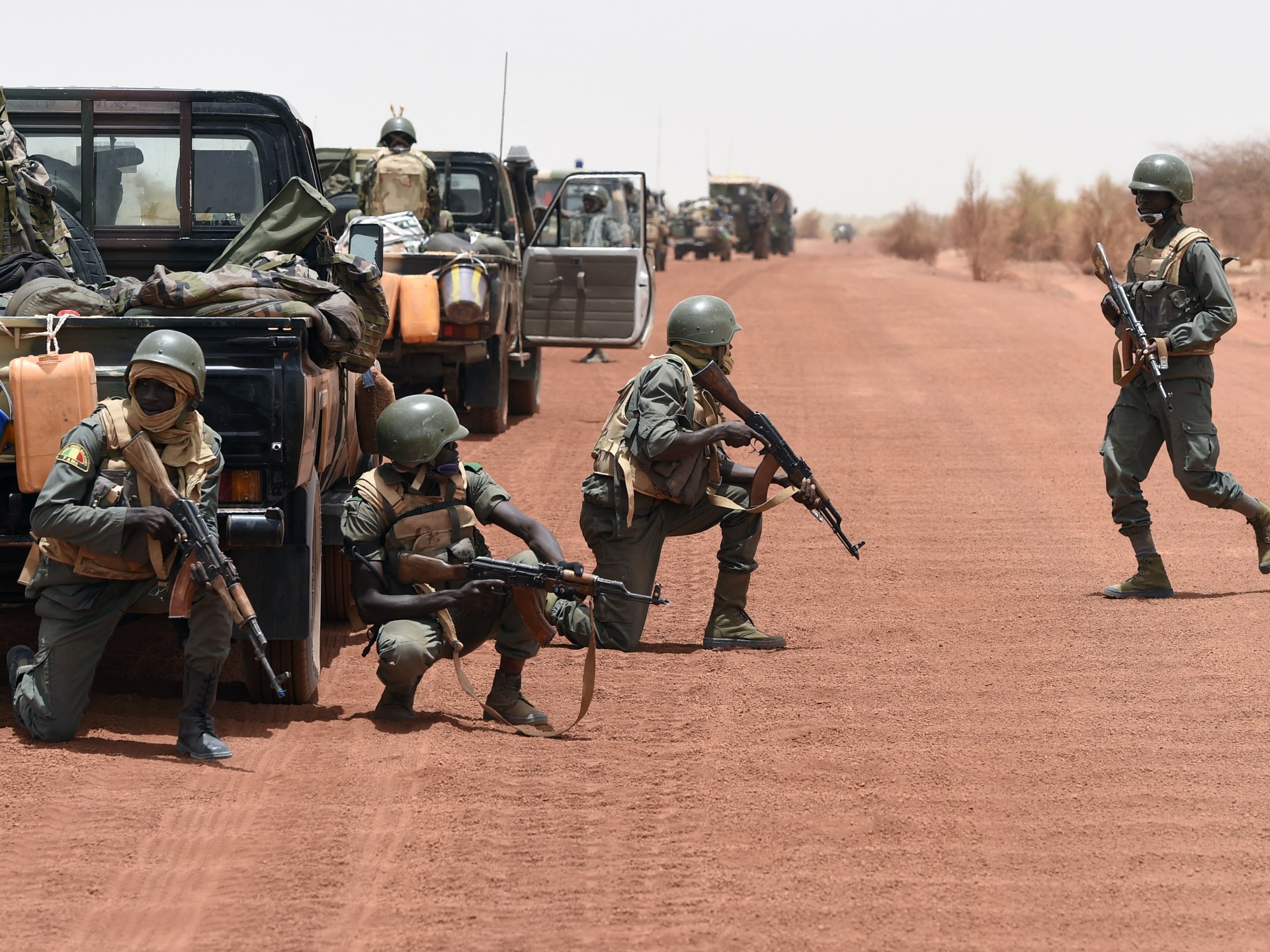
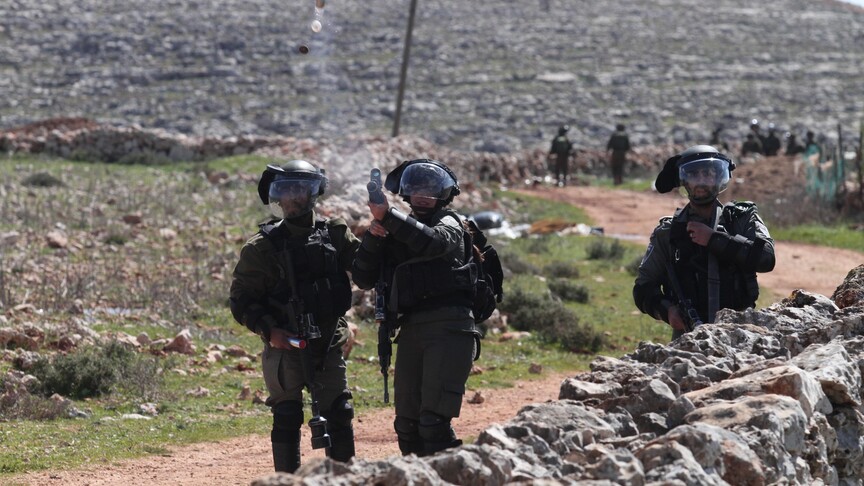
play Live Sign upShow navigation menuNavigation menuNewsShow more news sectionsAfricaAsiaUS & CanadaLatin AmericaEuropeAsia PacificMiddle EastExplainedSportOpinionVideoMoreShow more sectionsFeaturesEconomyHuman RightsClimate CrisisInvestigationsInteractivesIn PicturesScience & TechnologyPodcastsTravelSponsored Contentplay Live Click here to searchsearchSign upNewsNigeria and the Sahel: A growing security divideA widening diplomatic rift is complicating efforts to confront a shared cross-border security threat. xwhatsapp-strokecopylinkgoogleAdd Al Jazeera on GoogleinfoSecurity cooperation in the Sahel has become increasingly fragmented as regional governments pursue different approaches to fighting armed groups [File: Philippe Desmazes/AFP]By Mubarak AliyuPublished On 22 Aug 202622 Aug 2026Abuja, Nigeria – In December 2025, Burkina Faso detained 11 Nigerian Air Force personnel after their C-130 transport aircraft made an emergency landing in Bobo-Dioulasso while travelling to Portugal for scheduled maintenance. Burkina Faso said the aircraft had entered its airspace without the required authorisation, while Nigerian officials said the landing followed a technical problem. The Nigerian Air Force said the precautionary landing was made in accordance with safety procedures. The aircraft and its 11-member crew were released following diplomatic talks on December 17. They departed Burkina Faso two days later, continuing their journey to Portugal via Ghana. The incident underscored the widening political divide between Nigeria and the three Sahelian countries of Burkina Faso, Mali and Niger. The three countries formed the Alliance of Sahel States (AES) in September 2023 through the Liptako-Gourma Charter, establishing a framework for collective defence and mutual assistance. They later withdrew from the Economic Community of West African States (ECOWAS), the regional bloc created to promote economic integration and cooperation in West Africa. Their withdrawal became effective on January 29, 2025. Bolaji Akinyemi, a professor and former external affairs minister of Nigeria and director-general of the Nigerian Institute of International Affairs, told Al Jazeera that the region’s current security challenges can in part be traced to the aftermath of the overthrow of Muammar Gaddafi in Libya in 2011. “The influx of bandits from the AES into Nigeria is something that had been ongoing since Gaddafi was overthrown. There was no doubt the suspicion as to where the bandits would go. They couldn’t go across the Mediterranean. They could only come down south. This made Nigeria a target.” “I hope that it will not go beyond where it has gone so far. I hope that good sense and diplomacy will allow these four countries to show maturity,” Akinyemi added. The dispute comes as security threats facing Nigeria and its Sahelian neighbours continue to overlap. Boko Haram and the Islamic State in West Africa Province (ISWAP) remain active in Nigeria, while ISWAP also operates in southeastern Niger, particularly in the Diffa region. Niger withdrew from the Multinational Joint Task Force (MNJTF) in March 2025, the regional force created to fight armed groups around the Lake Chad Basin. Niger’s government said the move was aimed at strengthening security around its oil assets. Abiola Sadiq, a Nigerian resilience adviser, told Al Jazeera that Niger’s withdrawal had created a significant gap in regional counterterrorism cooperation and cross-border coordination. “With ISWAP remaining active in southeastern Niger, particularly in the Diffa region, Niger’s withdrawal from the Multinational Joint Task Force in 2025 has further created a significant gap in regional counterterrorism cooperation and cross-border coordination,” Sadiq said. He warned that the deterioration in relations between Nigeria and the AES could give ISWAP greater freedom to exploit border areas and move personnel and resources across poorly coordinated security zones. Nigeria shares a long northern frontier with Niger. Borno and Yobe states border Niger in the northeast, while Sokoto and Katsina lie further west along the frontier. The security picture is similarly fluid further west. On April 25, 2026, coordinated attacks targeted several locations in Mali. Defence Minister Sadio Camara was killed in an attack on his residence in Kati, near Bamako, according to Mali’s government and Reuters. The attacks involved al-Qaeda-linked Jamaat Nusrat al-Islam wal-Muslimin (JNIM) and the Tuareg-led Azawad Liberation Front (FLA), which later claimed joint responsibility. Reuters described the cooperation between the two groups as unusual, given their different objectives and common opposition to Mali’s military government. The political rupture has also left questions over trade and movement. Nigeria is West Africa’s largest economy and a key market for goods moving through the Sahel corridor. Nigeria and the three AES states also share established patterns of cross-border trade and labour migration. When Burkina Faso, Mali and Niger’s withdrawal from ECOWAS took effect on January 29, 2025, the regional bloc said it would seek to avoid disruption to trade and movement while the future terms of its relationship with the three countries were determined. ECOWAS said citizens of the three countries would continue, until further notice, to enjoy visa-free movement, residence and establishment within the ECOWAS region. It also said goods and services from the three countries would continue to be treated under existing regional trade arrangements. For traders, transport operators and workers, the uncertainty surrounds how easily goods and people can continue to move across borders, and under what rules. The latest diplomatic dispute followed remarks by Nigerian President Bola Tinubu on July 30 about the security situation in Mali, Burkina Faso and Niger. Tinubu said the lack of security in the three countries had compounded Nigeria’s own security challenges. The three AES governments subsequently rejected the assessment. In response, Burkina Faso’s Foreign Minister Karamoko Jean-Marie Traore met Nigeria’s charge d’affaires in Ouagadougou, with representatives of Mali and Niger also present. Traore said the three AES countries and Nigeria faced the same security threat and criticised what he described as an overly simplistic assessment of the situation. A Malian international relations analyst, who requested anonymity, told Al Jazeera that successive confrontations had hardened positions. “Each new flashpoint, from the 2023 sanctions threat to the December 2025 aircraft detention to this month’s exchange over cross-border blame, has hardened positions rather than softened them,” the analyst said. The analyst warned that unless Abuja and the Sahelian capitals found a channel that could survive their political disagreements, armed groups operating across the Liptako-Gourma region and into northern Nigeria could exploit the widening divide. Liptako-Gourma is the area where the borders of Mali, Burkina Faso and Niger meet. Nigeria and the three AES states have moved further apart politically. Yet the threats confronting them remain deeply interconnected. Fighter groups do not recognise the political boundaries separating Nigeria from its Sahelian neighbours. JNIM and ISWAP operate across national borders, while weak coordination can create opportunities for armed groups to exploit gaps between security zones. Nigeria and the AES states have therefore become politically divided over a security threat that remains fundamentally transnational. “The result is a West Africa splitting into two security architectures that do not talk to each other, even as the threat they both face becomes more transnational by the month,” the analyst said. Advertisement AboutAboutShow moreAbout UsCode of EthicsTerms and ConditionsEU/EEA Regulatory NoticePrivacy PolicyCookie PolicyCookie PreferencesAccessibility StatementSitemapWork for usConnectConnectShow moreContact UsUser Accounts HelpAdvertise with usStay ConnectedNewslettersChannel FinderTV SchedulePodcastsSubmit a TipPaid Partner ContentOur ChannelsOur ChannelsShow moreAl Jazeera ArabicAl Jazeera EnglishAl Jazeera Investigative UnitAl Jazeera MubasherAl Jazeera DocumentaryAl Jazeera BalkansAJ+Our NetworkOur NetworkShow moreAl Jazeera Centre for StudiesAl Jazeera Media InstituteLearn ArabicAl Jazeera Centre for Public Liberties & Human RightsAl Jazeera ForumAl Jazeera Hotel PartnersFollow Al Jazeera English:
المصدر: Al Jazeera English
| Source: Al Jazeera English
ملاحظة تحريرية | Editorial Note:
نُشر هذا المقال في الأصل بواسطة Al Jazeera English.
خبر (Khabr) هي منصة إعلامية أردنية مرخّصة تعمل بالذكاء الاصطناعي.
نضيف قيمة تحريرية من خلال: تحليل ذكي للأخبار، ملخصات تلقائية، رواية صوتية بالذكاء الاصطناعي، ترجمة متعددة اللغات، وتدقيق الحقائق.
هدفنا جعل الأخبار أكثر وضوحاً وسهولةً للقارئ العربي.
This article was originally published by Al Jazeera English.
Khabr is a licensed Jordanian AI-powered news platform (Registration #82086).
We add editorial value through: AI-powered news analysis, automated summaries, AI audio narration, multi-language translation (Arabic, English, French, Turkish), and AI fact-checking.
Our mission is to make news more accessible and understandable for Arabic-speaking audiences worldwide.