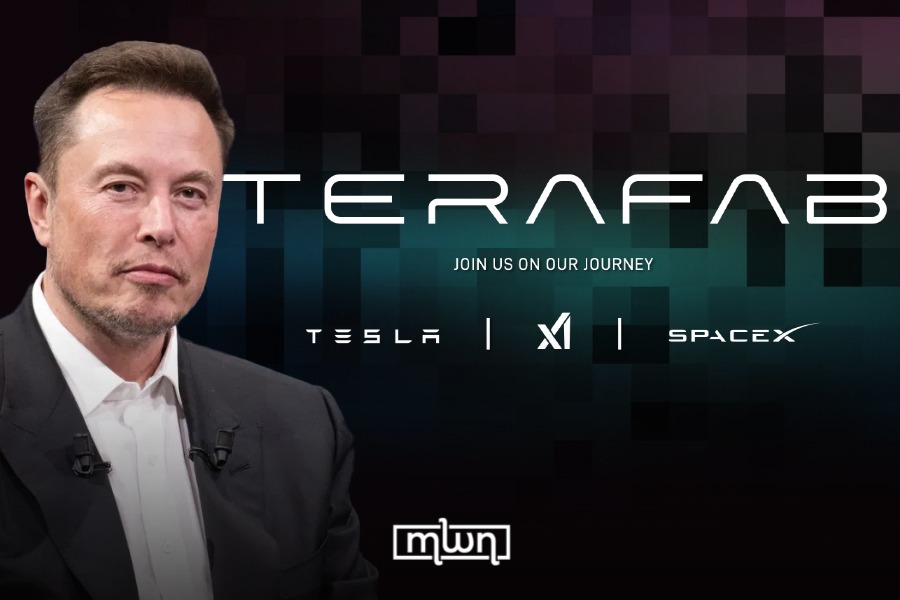
Casablanca – Elon Musk said SpaceX and Tesla will build two advanced chip factories in Austin, Texas, as part of a new project called Terafab, expanding plans he outlined a day earlier.
In a video he reposted on X, Musk said the site would include two separate fabs, each focused on a single chip design. One will produce chips for Tesla vehicles and its Optimus humanoid robots. The other is being designed for artificial intelligence systems in space, including satellites that can operate in harsher environments and higher temperatures.
Rapid recursive improvement https://t.co/5mjBV4IYu2
— Elon Musk (@elonmusk) March 22, 2026
“We either build the Terafab or we don’t have the chips,” Musk said during a presentation in Austin on Saturday, pointing to rising demand across his companies.
He did not give a timeline. Musk has previously said Tesla would eventually need its own chip manufacturing, though SpaceX’s involvement had not been disclosed. SpaceX is preparing for a public listing that could value it at around $1.75 trillion and recently merged with Musk’s AI company xAI.
Musk said current global chip production would meet only a small fraction of future demand from his businesses. Terafab is expected to eventually produce one terawatt of computing capacity per year, roughly double what the United States generates today.
He thanked suppliers including Samsung, TSMC and Micron, but said supply constraints remain.
The announcement comes as competition for AI chips intensifies globally, putting pressure on supply chains. Demand is being driven largely by data centers and generative AI systems. Nvidia alone expects more than $1 trillion in AI chip demand by 2027.
Read also: French Prosecutors: Elon Musk Fueled Grok Deepfake Controversy to Boost X Valuation
At the same time, supply is struggling to keep up. Micron said it can currently meet only 50% to two-thirds of demand for some memory chips, while AI systems are expected to require significantly more storage capacity in the coming years.
Industry data shows AI chips could generate about half of total semiconductor revenue in 2026, despite representing a tiny share of total chip volume. AI data centers alone could consume up to 70% of global memory supply by 2026.
This shift is already affecting other sectors. Prices for memory chips have surged, and shortages are spreading to consumer electronics and automotive production.
As companies race to secure supply, Musk’s move reflects a broader trend: build your own chips, or risk running out.
Morocco World News is also on X — check out our latest posts now! Get MWN on iOS and Android for instant access to breaking news.
The post Musk Plans Tesla, SpaceX AI Chip Plants in Austin Amid Supply Crunch appeared first on Morocco World News.