Iran warning adds to shipping uncertainty
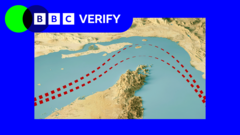
Ships still cautious about using Strait of Hormuz as Iran issues warning1 hour agoShareSaveAdd as preferred on GoogleTom Edgington, Joshua Cheetham and Kayleen DevlinBBC VerifyGetty ImagesThe Strait of Hormuz has become a focal point of the US-Israel war with Iran after Tehran effectively choked off one of the world's most important shipping lanes, carrying about a fifth of the world's oil and liquefied natural gas.A two-week ceasefire was agreed on Tuesday evening on the condition that "safe passage" through the strait is guaranteed - but BBC Verify analysis shows only a few vessels have since crossed.The disruption, over the past five weeks, has sent shock waves across the world economy, pushing up energy prices and exposing just how reliant international supply chains are on the strait, which is only about 33km (21 miles) wide at its narrowest point.As well as energy, the Gulf is also vital for transporting chemicals needed to process products like microchips, pharmaceuticals and fertiliser.While the price of oil has fallen on news of the ceasefire, shipping analysts are warning to expect only a trickle of crossings for now."Most shipping lines would want to get details and reassurances on what it actually takes to transit and those details are not available," Lars Jensen from Vespucci Maritime told the BBC.Since the ceasefire came into force, shipping brokerage firm SSY has confirmed to BBC Verify that ships in the Gulf have received a warning from Iran's navy that any vessels seeking to cross without permission "will be targeted and destroyed".By 14:00 BST on 8 April just three tankers - NJ Earth, Daytona Beach and Hai Long 1 - had passed through the strait since the ceasefire was announced late on Tuesday night.That's based on BBC Verify analysis of ship-tracking data from MarineTraffic.That compares to 138 ships that passed through the strait each day, on average, before the conflict started on 28 February.We...المصدر: BBC News | Source: BBC News
ملاحظة تحريرية | Editorial Note: نُشر هذا المقال في الأصل بواسطة BBC News. خبر (Khabr) هي منصة إعلامية أردنية مرخّصة تعمل بالذكاء الاصطناعي. نضيف قيمة تحريرية من خلال: تحليل ذكي للأخبار، ملخصات تلقائية، رواية صوتية بالذكاء الاصطناعي، ترجمة متعددة اللغات، وتدقيق الحقائق. هدفنا جعل الأخبار أكثر وضوحاً وسهولةً للقارئ العربي.
This article was originally published by BBC News. Khabr is a licensed Jordanian AI-powered news platform (Registration #82086). We add editorial value through: AI-powered news analysis, automated summaries, AI audio narration, multi-language translation (Arabic, English, French, Turkish), and AI fact-checking. Our mission is to make news more accessible and understandable for Arabic-speaking audiences worldwide.