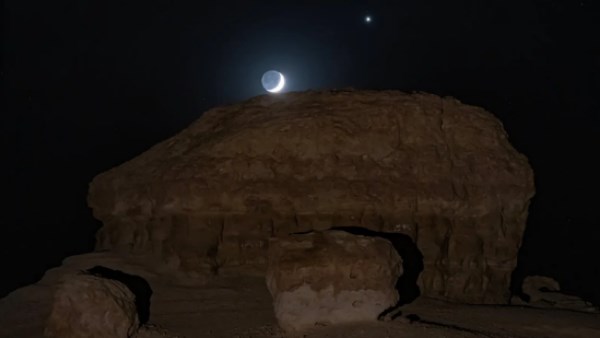
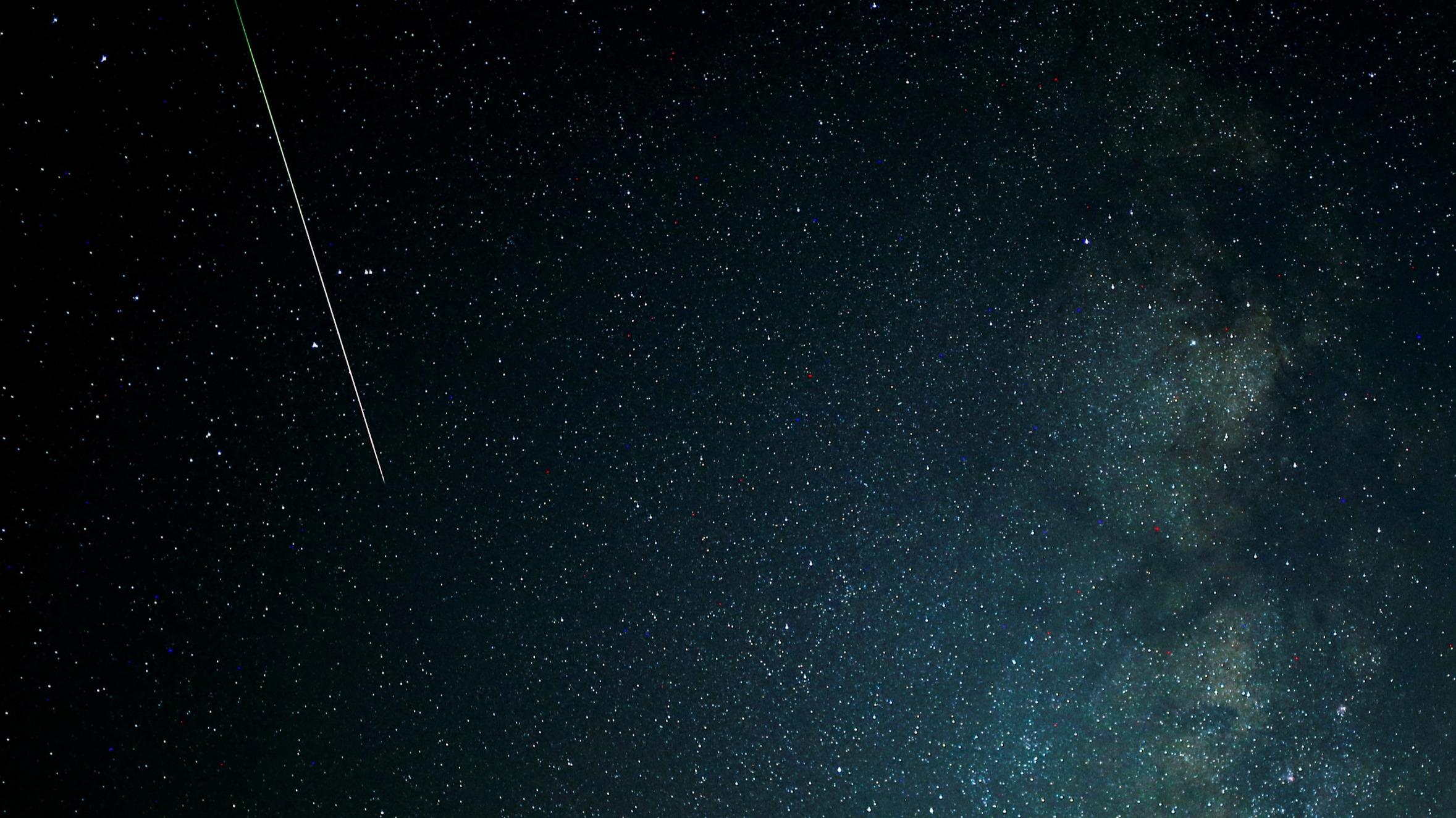
By CHRISTOPHER STEVENS, TV CRITIC Published: 00:22, 12 August 2026 | Updated: 00:34, 12 August 2026 The conditions are practically perfect. For most people, this evening offers the best chance in a lifetime to see an almost total solar eclipse – with the added bonus of meteor showers. Across the country, from about 6.15pm, the moon will gradually slide across the face of the sun until it covers up to 96 per cent. The precise moment this begins, and how complete the darkness will be, depends on where you are (see below), but everywhere can expect at least a 90 per cent blackout. This coincides with the peak of the annual Perseids meteor shower, when thousands of space rocks burn up in Earth's atmosphere as our planet passes through a belt of debris from comets. To make this all the more spectacular, clear skies are expected across most of the country. Even in cities, there ought to be comparatively little light pollution in early evening, though inevitably many street lights will come on automatically. Out in the countryside, the skies will be magnificently dark. Scotland will see the effect soonest, with the eclipse reaching its maximum at 7.05pm in Edinburgh and Glasgow. In Cornwall, at Truro, that moment will come 11 minutes later. But it doesn't last long, with the darkness beginning to lift just two minutes after it reaches its most intense. Across the country, from about 6.15pm, the moon will gradually slide across the face of the sun until it covers up to 96 per cent Your browser does not support iframes. Readers in their 30s and older might remember the eclipse of August 11, 1999. But that morning was cloudy across much of the country, to the frustration of millions who had taken the day off work to enjoy the sight. The 1970s saw several partial eclipses of about 60 per cent or less – impressive but not as awe-inspiring as today's event is expected to be. And the next full eclipse over the British Isles will not occur until 2081, by which time a baby born today will be 55 years old. For the perfectionists who will settle for nothing less than a total eclipse, this will be visible in northern Spain from Bilbao to Barcelona and the west coast of Iceland. Perhaps the event, which begins in Siberia, will be most thrilling in Greenland, where the inhabitants last saw darkness during the Polar Night that ended in mid-February. Paris will see a 92 per cent eclipse, while in Berlin it will be 85 per cent. The last place on earth to catch a glimpse of the full, 100 per cent eclipse before the sun sets will be the islands of Majorca and Menorca in the Mediterranean. Wherever you are, it's going to be an unforgettable experience. The BBC's 'visual journalism' team has been moved to prose-poetry as it tells online readers what to expect: 'The temperature will suddenly drop and the wind slows, and even changes direction. The UK will miss out on the path of totality, but up to 96 per cent of the sun will be obscured during the eclipse 'For a brief moment a flare of sunlight on the moon's rim will make it seem as if a huge diamond ring is hanging in the sky. Then the flare will vanish, as if a giant hole has devoured the sun.' For the best view, pick a spot facing west, such as the Clifton Downs overlooking the Avon Gorge in Bristol or the Bedruthan Steps near Newquay, Cornwall. In both places, enthusiasts will have protective glasses available, although supplies will be limited. Many venues are making a party of it. From Bamburgh Castle in Northumberland to the Poltimore Inn at North Molton on Exmoor, not to mention the Royal Observatory in Greenwich, organisers are selling tickets. Wherever you watch, take care to never look straight into the sun, even for an instant. 'Looking directly at the sun during a solar eclipse can cause damage to the retina,' says Mohamed Elalfy, the president of the Royal College of Ophthalmologists. 'Crucially, the retina has no pain receptors, so people will not feel the damage as it happens.' Experts also warn against reusing protective glasses left over from the 1990s, as these are likely to have lost their effectiveness over time. Only those marked with the ISO safety standard 12312-2 are recommended. Even then, the safest method is to stand with your back to the sun. Hold up a piece of card with a pinprick hole, a few inches from a piece of white paper. It will project an image of the sun on to the paper. You'll be able to watch the progress of the moon across the sun. Do this with a colander to see dozens. Why have one eclipse, when you can watch a multi-eclipse? Jamie Oliver beats the hosepipe ban to keep his garden lush and green in record-breaking drought - by using water from his own personal lake
المصدر: Daily Mail
| Source: Daily Mail
ملاحظة تحريرية | Editorial Note:
نُشر هذا المقال في الأصل بواسطة Daily Mail.
خبر (Khabr) هي منصة إعلامية أردنية مرخّصة تعمل بالذكاء الاصطناعي.
نضيف قيمة تحريرية من خلال: تحليل ذكي للأخبار، ملخصات تلقائية، رواية صوتية بالذكاء الاصطناعي، ترجمة متعددة اللغات، وتدقيق الحقائق.
هدفنا جعل الأخبار أكثر وضوحاً وسهولةً للقارئ العربي.
This article was originally published by Daily Mail.
Khabr is a licensed Jordanian AI-powered news platform (Registration #82086).
We add editorial value through: AI-powered news analysis, automated summaries, AI audio narration, multi-language translation (Arabic, English, French, Turkish), and AI fact-checking.
Our mission is to make news more accessible and understandable for Arabic-speaking audiences worldwide.