Can China target critics abroad with its new 'ethnic unity' law?
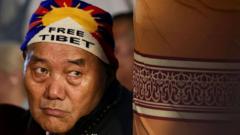
•Can China target critics abroad with its new 'ethnic unity' law?Image source, Getty ImagesImage caption, Critics of the Chinese government who live abroad fear what the new law means for themByLaura B...
•She had also helped edit an online Chinese language platform promoting Tibetan rights while studying in France.Her words of support for Tibetans, posted while abroad, are believed to have put her in p...
•Beijing views the exiled spiritual leader as a separatist and what it calls the Tibet Autonomous Region, which it annexed in 1950, as an integral part of China.Tara was reportedly arrested in Shangri-...
هذا الخبر من BBC News. خبر يقدم أدوات ذكاء اصطناعي للتلخيص والترجمة والاستماع.
Can China target critics abroad with its new 'ethnic unity' law?Image source, Getty ImagesImage caption, Critics of the Chinese government who live abroad fear what the new law means for themByLaura BickerChina correspondent Published23 minutes agoZhang Yadi, 23, also known as Tara, is supposed to be studying at a prestigious university in the UK.Instead she is believed to be in detention in China.In one of her last posts on the social media platform "X", she wished the Dalai Lama a happy 90th birthday. She had also helped edit an online Chinese language platform promoting Tibetan rights while studying in France.Her words of support for Tibetans, posted while abroad, are believed to have put her in prison. Beijing views the exiled spiritual leader as a separatist and what it calls the Tibet Autonomous Region, which it annexed in 1950, as an integral part of China.Tara was reportedly arrested in Shangri-La in Yunnan province in July last year while on a visit to China, and is thought to be facing charges of "inciting others to split the country and undermine national unity."Her story is a grave lesson in China's tolerance for dissent, or what it sees as separatism, as a new law takes effect: one that could even give the government the right to target people outside of its own borders.Beijing has long been accused of intimidating dissidents overseas, from pressuring Uyghur activists to tracking down government critics in exile to offering bounties for Hong Kong's pro-democracy campaigners. But the "Ethnic Unity Law", which comes into effect on Wednesday, will now give the Chinese government legal cover for its actions.This comes at a time when Beijing is polishing its image abroad as it cements its role as a global power.It is throwing open its doors to foreign leaders and tourists. Several world leaders, including US President Donald Trump and UK Prime Minister Sir Keir Starmer, have walked the red carpet outside the...المصدر: BBC News | Source: BBC News
ملاحظة تحريرية | Editorial Note: نُشر هذا المقال في الأصل بواسطة BBC News. خبر (Khabr) هي منصة إعلامية أردنية مرخّصة تعمل بالذكاء الاصطناعي. نضيف قيمة تحريرية من خلال: تحليل ذكي للأخبار، ملخصات تلقائية، رواية صوتية بالذكاء الاصطناعي، ترجمة متعددة اللغات، وتدقيق الحقائق. هدفنا جعل الأخبار أكثر وضوحاً وسهولةً للقارئ العربي.
This article was originally published by BBC News. Khabr is a licensed Jordanian AI-powered news platform (Registration #82086). We add editorial value through: AI-powered news analysis, automated summaries, AI audio narration, multi-language translation (Arabic, English, French, Turkish), and AI fact-checking. Our mission is to make news more accessible and understandable for Arabic-speaking audiences worldwide.