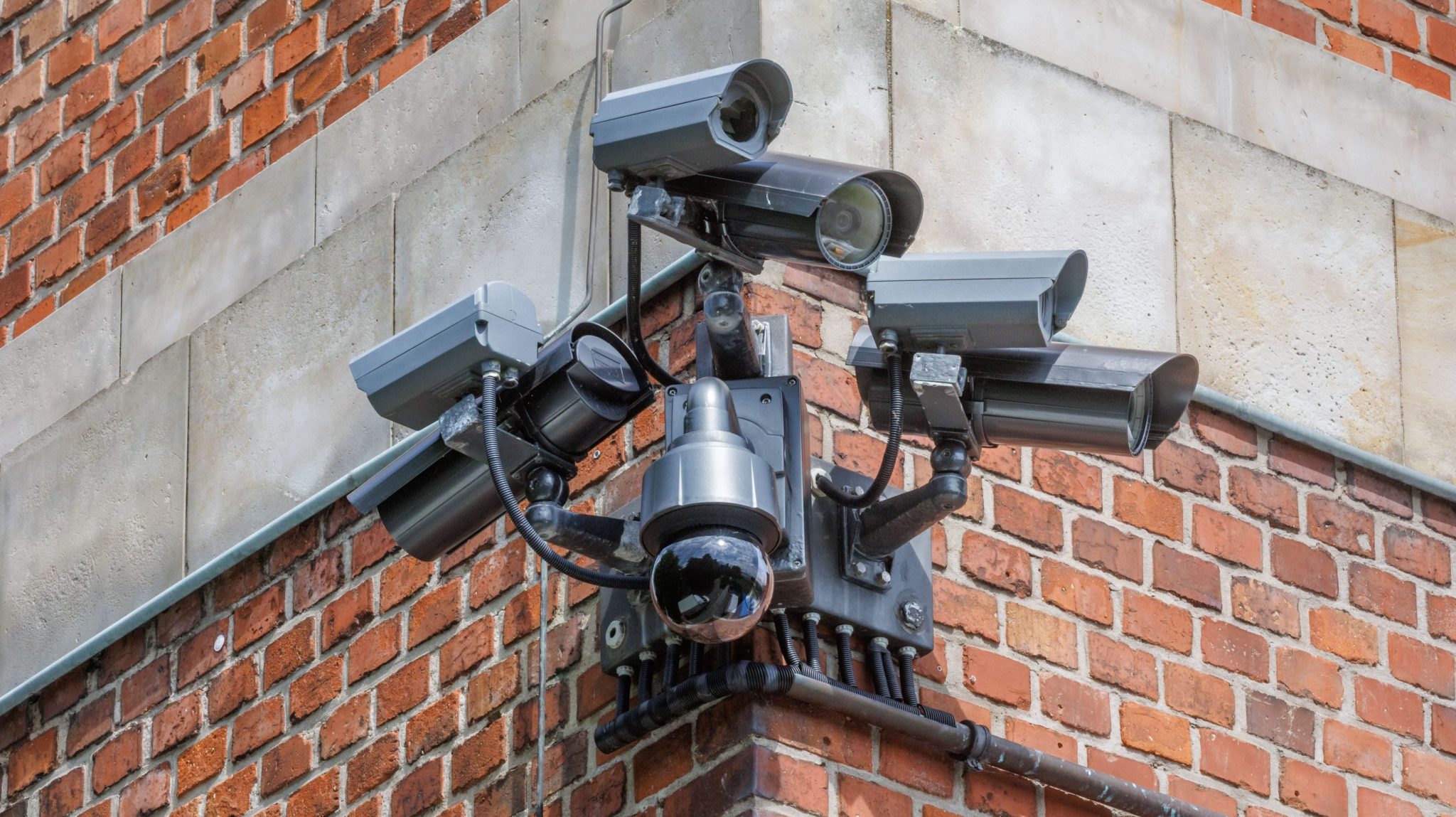
Your neighbor just got a home security system, but should you be worried? ‘It’s inherently a little creepy’ says surveillance expert
•Picture this: your neighbor installs a new doorbell camera, maybe two.
•One faces their driveway, and the other has a pretty clear view of your front yard.
•They didn’t ask, not that they have to.
هذا الخبر من فورتشن العربية. خبر يقدم أدوات ذكاء اصطناعي للتلخيص والترجمة والاستماع.
المصدر: فورتشن العربية | Source: فورتشن العربيةPicture this: your neighbor installs a new doorbell camera, maybe two. One faces their driveway, and the other has a pretty clear view of your front yard. They didn’t ask, not that they have to. And depending on who made that camera and what that company does with the footage, you may be in someone’s database without ever knowing it.
It’s exactly the kind of scenario that Hilary Schneider, CEO of SimpliSafe, deals with, and says people, maybe thanks to a recent Super Bowl commercial that put that idea on full blast, are growing even more concerned about. But video surveillance is only a portion of her job at a company that promises security over surveillance: she now says it’s convincing consumers that the company watching over their home isn’t watching them.
“There’s a growing focus on who gets to control the data, how it’s used, and how it’s protected,” Schneider told Fortune. “When you think about your home, what we’re really securing is your home and your family. Those videos are capturing things that are inherently private to you. And the whole idea that that information could be shared, or that there are business partnerships that enable other people to use it, I think it’s inherently a little creepy to customers.”
The anxiety is no longer hypothetical. During Super Bowl LX, Ring aired a commercial meant to be heartwarming about a lost dog, with AI cameras rallying the neighborhood to help. Instead, it went viral for all the wrong reasons, with viewers calling it “dystopian” and vowing to ditch the product entirely. Days later, Ring quietly canceled a planned integration with Flock Safety, the AI-powered license plate reader company whose contracts are being terminated by cities across the country over fears its footage could be shared with federal immigration enforcement without local consent. In February, Americans began physically destroying Flock cameras in acts of public protest.
For Schneider, none of it is surprising. She sees it as consumers finally catching up to something the industry has long sidestepped. “Consumers are speaking with their feet when they think something feels too big brother,” she said. “The first signal companies are getting isn’t ‘is this legally correct?’ It’s ‘Does this feel wrong?'”
The legal frameworks governing surveillance technology of what companies can collect, store, share, and sell are, by her own assessment, badly out of date. “Our old definition of legal controls is just not moving fast enough to anticipate all the changes happening in the world of AI,” Schneider said. “The regulation and what’s acceptable will get litigated over time. But right now, you have consumers acting first.”
Home protection with privacy
With SimpliSafe, the customer owns the video, and that idea is embedded in both the policy and the hardware. Law enforcement must provide valid warrants, subpoenas, or court orders to access any customer footage: no voluntary sharing, no government data arrangements. Indoor cameras come equipped with a mechanical privacy shutter, which audibly engages and physically prevents streaming when not in use. Live monitoring agents can only pull up video during an active triggered alarm, after a customer has explicitly opted into the service. All stored footage is purged after 30 days. “The data belongs to the customer,” Schneider said plainly. “We believe we can protect people’s homes while also protecting their privacy with the same level of care.”
That positioning is increasingly a business strategy as much as a values statement. In February, the same month the Ring Super Bowl ad ignited a privacy firestorm, SimpliSafe reported that Schneider called for a “material increase in consumer demand.” She ties it in part to the disappearance of Nancy Guthrie, a case that gripped the country and prompted millions of Americans to think seriously about their own security for the first time. But she’s quick to add a caveat that gets buried in most marketing: a camera, on its own, is not a security system.
“There are a lot of sophisticated consumers who have a video doorbell and think they have a security program,” she said. “When they’re not there, there’s really nobody on deck. Having video doesn’t protect you if you don’t have a human who can intervene.”
That gap between passive surveillance and active, accountable protection is where Schneider sees the market heading. As the cultural conversation around AI and data privacy intensifies, she believes the companies that survive the next phase of growth will be the ones that made a clear choice early.
“I think the American zeitgeist is just starting to tease apart the implications,” she said. “What makes me feel secure? What makes my life easier? Versus — what gives me a lack of control, where all of a sudden I’m giving up information that I don’t feel anybody else has the right to have?”
This story was originally featured on Fortune.com
ملاحظة تحريرية | Editorial Note: نُشر هذا المقال في الأصل بواسطة فورتشن العربية. خبر (Khabr) هي منصة إعلامية أردنية مرخّصة تعمل بالذكاء الاصطناعي. نضيف قيمة تحريرية من خلال: تحليل ذكي للأخبار، ملخصات تلقائية، رواية صوتية بالذكاء الاصطناعي، ترجمة متعددة اللغات، وتدقيق الحقائق. هدفنا جعل الأخبار أكثر وضوحاً وسهولةً للقارئ العربي.
This article was originally published by فورتشن العربية. Khabr is a licensed Jordanian AI-powered news platform (Registration #82086). We add editorial value through: AI-powered news analysis, automated summaries, AI audio narration, multi-language translation (Arabic, English, French, Turkish), and AI fact-checking. Our mission is to make news more accessible and understandable for Arabic-speaking audiences worldwide.