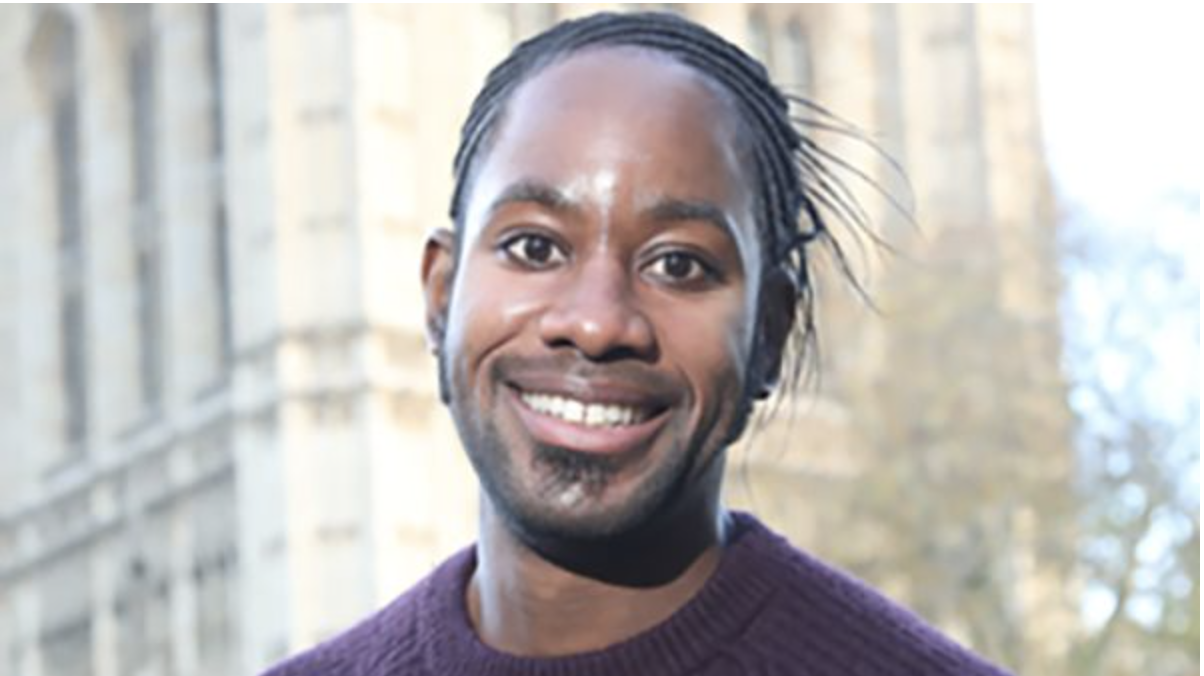
Youngest black professor ever appointed to Cambridge University accused of plagiarising other academics' works
•The youngest black professor ever appointed at Cambridge University has been accused of plagiarising other academics' work.Concerns have been raised over Jason Arday’s work within academic circles sin...
•The concerns around Mr Arday’s work were aired this week in an article published on the blog of a former Cambridge academic, who compared side-by-side images of Mr Arday’s PhD dissertation with the th...
•TRENDING Stories Videos Your Say In one section of the 401-page thesis, Mr Arday writes: “The student teachers believed that pupil learning and development was attributable to their personal impr...
هذا الخبر من GB News. خبر يقدم أدوات ذكاء اصطناعي للتلخيص والترجمة والاستماع.
المصدر: GB News | Source: GB NewsThe youngest black professor ever appointed at Cambridge University has been accused of plagiarising other academics' work.
Concerns have been raised over Jason Arday’s work within academic circles since 2023, when he was appointed as professor of sociology at the age of just 37.
The concerns around Mr Arday’s work were aired this week in an article published on the blog of a former Cambridge academic, who compared side-by-side images of Mr Arday’s PhD dissertation with the thesis of another student.
Analysis carried out by The Times found multiple examples of identical or near-identical passages in Mr Arday’s thesis from 2015 with that of Paula Zwozdiak-Myers of Brunel University, which was published six years prior.
TRENDINGStoriesVideosYour SayIn one section of the 401-page thesis, Mr Arday writes: “The student teachers believed that pupil learning and development was attributable to their personal improvement in five main areas: greater understanding, insight and awareness about the principles and procedures of pedagogy; thinking more about aspects of teaching and their enhanced knowledge of pupil difference and diversity.
“Another common area of interest perceived by student teachers to have been influenced as they studied their own teaching was their capacity and commitment to seek alternative perspectives and possibilities to inform their teaching.”
In her essay, Ms Zwozdiak-Myers had written: “Student teachers believed that pupil learning and development was attributable to their personal improvement in three main areas: greater understanding, insight and awareness about the principles and procedures of pedagogy; thinking more about aspects of teaching and their enhanced knowledge of pupil difference and diversity.
“The third most common area perceived by student teachers to have been influenced as they studied their own teaching was their capacity and commitment to seek alternative perspectives and possibilities to inform their teaching.”
Ms Zwozdiak-Myers is mentioned 17 times within Mr Arday’s thesis.
The row revolved around whether Mr Arday should have cited her every time he paraphrased or recycled her work.
Nathan Cofnas, the author of the blog post published this week, claimed that Mr Arday had “relied heavily on Zwozdiak-Myers for key ideas and arguments.”
He claimed: “Many passages are lifted with minimal editing, sometimes retaining copy-editing mistakes from the original source.”
LATEST DEVELOPMENTS
- Hull University tells academic keeping books on shelf is an 'unnecessary storage of combustible materials'
- Triggered students given the right to walk out of lectures unpunished if they feel 'offended'
- Top UK university tells lecturers to ignore students' poor grammar in 'diversity and inclusion' drive
Last year, Cambridge threw out complaints against Mr Cofnas, who is an academic philosopher.
The complaints were raised about his views on “hereditarianism” and what he called the “DEI devil”; however, the university declared his views were protected under its new freedom of speech policy.
Despite Cambridge clearing him, Emmanuel College, where Mr Cofnas had been a research fellow, cut ties with him.
After initially defending his “academic right, as enshrined by law, to write about his views,” the college cut ties after a blog written by Mr Cofnas, in which he wrote that a culture of “race realism” that acknowledged differences between ethnicities was “a rejection of diversity, equality and inclusion.”
Dave Harris alerted Cambridge and Liverpool John Moores universities to his concerns about plagiarism in 2023, when he was a professor at Plymouth Marjon University.
He told the Telegraph: “In my opinion, important sections of the work of Professor Jason Arday, both his PhD thesis and some subsequent published articles, solo and jointly written, seem to display indications of serious plagiarism.
“I can think of no other plausible explanation for what I have read.
“I notified both Liverpool John Moores and Cambridge universities of my initial concerns, and they have done nothing. Of the journal editors I notified, two have asked for corrections.”
Both university’s investigated the claims and found no evidence of wrong doing.
Our Standards: The GB News Editorial Charter


ملاحظة تحريرية | Editorial Note: نُشر هذا المقال في الأصل بواسطة GB News. خبر (Khabr) هي منصة إعلامية أردنية مرخّصة تعمل بالذكاء الاصطناعي. نضيف قيمة تحريرية من خلال: تحليل ذكي للأخبار، ملخصات تلقائية، رواية صوتية بالذكاء الاصطناعي، ترجمة متعددة اللغات، وتدقيق الحقائق. هدفنا جعل الأخبار أكثر وضوحاً وسهولةً للقارئ العربي.
This article was originally published by GB News. Khabr is a licensed Jordanian AI-powered news platform (Registration #82086). We add editorial value through: AI-powered news analysis, automated summaries, AI audio narration, multi-language translation (Arabic, English, French, Turkish), and AI fact-checking. Our mission is to make news more accessible and understandable for Arabic-speaking audiences worldwide.