Women’s seats, bigger India Parliament: What’s changing?
المصدر: Gulf News | Source: Gulf NewsIndia is moving towards one of the most significant changes to its parliamentary structure since independence, with plans to expand the size of Parliament while reserving one-third of seats for women.
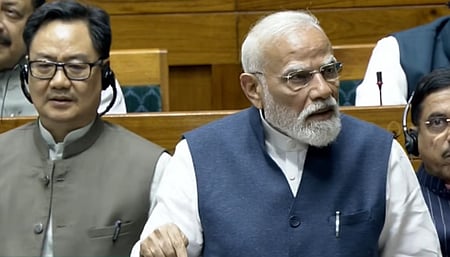
Prime Minister Narendra Modi has pitched the move as a “historic step” to empower women and reshape governance, urging lawmakers not to “let this important opportunity slip away” during a special parliamentary session.
He said the move would bring “a new direction” to governance by ensuring greater representation for women, and called for unanimous support in Parliament. Modi also warned that women would not forget those who opposed their rights, highlighting the political weight of the legislation.
But the proposal has triggered sharp political pushback. Opposition parties say the plan — which links women’s reservation to a redrawing of electoral boundaries — could shift power in favour of the ruling Bharatiya Janata Party (BJP), especially ahead of the 2029 general elections.
What has the government proposed?
The government is pushing a set of interconnected reforms aimed at reshaping representation in India’s Parliament. At the centre of the proposal is the reservation of 33 per cent of seats for women in Parliament and state legislatures. To enable this, the government is also proposing a significant expansion of the Lok Sabha, increasing its strength from the current 543 seats to more than 800.
This expansion would be accompanied by a delimitation exercise — a redrawing of constituency boundaries based on population — effectively reshaping how representation is distributed across the country.
Why is women’s reservation being introduced now?
Women remain significantly underrepresented in India’s Parliament, accounting for only about 14 per cent of Lok Sabha members.
The proposed quota is intended to address this gap by ensuring that women have a guaranteed share of seats in legislative bodies. Supporters argue that increasing women’s participation could influence policy priorities, particularly in areas such as health, education and gender-based issues, while also making India’s democracy more representative.
While there is broad political agreement on the need to increase women’s representation, differences have emerged over how and when the reform should be implemented.
What is delimitation?
Delimitation refers to the process of redrawing electoral boundaries so that constituencies reflect changes in population. Under India’s Constitution, this exercise is meant to be carried out periodically following a census.
However, delimitation has been delayed for decades due to concerns about uneven population growth across regions. The current proposal would use data from the 2011 census to redraw constituencies.
Critics say this could result in an increase in seats for faster-growing northern states, while reducing the relative influence of southern states where population growth has slowed.
What is this reform about?
Women’s reservation (33%)
One-third of seats in Parliament and state legislatures reserved for women
Expansion of Parliament
Lok Sabha seats could rise from 543 to over 800
Delimitation
Redrawing of constituencies based on population
Census link
Based on 2011 census; opposition wants updated data
Timeline
Likely to take effect from the 2029 general elections
Political impact
Could shift power towards northern states with higher population growth
Why is the opposition objecting?
Opposition parties have expressed support for women’s reservation in principle, but have strongly objected to linking it with delimitation.
They argue that basing representation on older population data could skew the political balance, potentially benefiting the BJP, which draws significant support from northern states. There are also concerns that southern states could see their relative influence reduced despite stronger economic performance and lower population growth.
Congress leader Rahul Gandhi has described the proposal as an attempt to “seize power through delimitation and gerrymandering,” while Tamil Nadu Chief Minister M.K. Stalin has warned that the exercise could marginalise southern states.
What does the government say in response?
The government has rejected accusations that the reform is politically motivated.
Ministers have emphasised that the proposal is aimed at ensuring gender equality and fulfilling a long-standing demand for greater representation of women in politics. They have also said that no state will lose its existing representation, as the increase in seats would expand overall capacity rather than redistribute current allocations.
Union Minister Arjun Ram Meghwal said the move would “ensure gender equality” and mark a significant step in India’s democratic development.
What does this mean for India’s politics?
If implemented, the reforms could lead to a significant increase in the number of women in Parliament, potentially bringing hundreds of new female lawmakers into national politics.
At the same time, the delimitation exercise could alter the balance of power between regions, influencing electoral outcomes and political strategies. Parties would be required to field more women candidates, while also adapting to changes in constituency boundaries.
The combined effect of these changes could reshape both representation and competition in India’s political system, with implications that may extend beyond the 2029 general elections.
Does this have wider implications?
Beyond domestic politics, the proposal is being seen as a major step in democratic reform.
Increasing women’s representation could bring India closer to other countries that have adopted legislative quotas, while also influencing global discussions on gender equality in governance. At the same time, the debate over delimitation raises broader questions about how large, diverse democracies balance representation with regional equity.
What happens next?
The proposed changes require a two-thirds majority in Parliament to pass, making political consensus crucial.
While there is support for the idea of women’s reservation, disagreements over delimitation and its timing are likely to shape the outcome of the debate in the coming days.
ملاحظة تحريرية | Editorial Note: نُشر هذا المقال في الأصل بواسطة Gulf News. خبر (Khabr) هي منصة إعلامية أردنية مرخّصة تعمل بالذكاء الاصطناعي. نضيف قيمة تحريرية من خلال: تحليل ذكي للأخبار، ملخصات تلقائية، رواية صوتية بالذكاء الاصطناعي، ترجمة متعددة اللغات، وتدقيق الحقائق. هدفنا جعل الأخبار أكثر وضوحاً وسهولةً للقارئ العربي.
This article was originally published by Gulf News. Khabr is a licensed Jordanian AI-powered news platform (Registration #82086). We add editorial value through: AI-powered news analysis, automated summaries, AI audio narration, multi-language translation (Arabic, English, French, Turkish), and AI fact-checking. Our mission is to make news more accessible and understandable for Arabic-speaking audiences worldwide.