
Hungarian Prime Minister Viktor Orban has been ousted after 16 years in power, marking a dramatic political shift in one of Europe’s most closely watched elections. In a high-turnout vote, Orban conceded defeat to conservative challenger Peter Magyar, ending a long period of nationalist rule that had often put Hungary at odds with the European Union.
The result delivers a major blow to nationalist and far-right movements globally and removes one of Russian President Vladimir Putin’s closest allies within the EU. It also signals a potential reset in Hungary’s relations with Brussels and NATO, after years of tensions over rule of law, Ukraine policy and democratic standards.
Magyar, a political newcomer who rose rapidly in the past two years, secured a commanding victory with more than 53% of the vote, while Orban’s Fidesz party trailed at around 38%. With turnout reaching nearly 80% — a record in Hungary’s post-communist history — the result reflects a decisive push for change by voters in the country of 9.5 million people.
What just happened in Hungary?
Hungary’s parliamentary election ended with a decisive defeat for Viktor Orban, who had sought a fifth consecutive term.
With more than 98% of votes counted, Magyar’s Tisza party secured a strong parliamentary majority, winning 138 seats in the 199-seat legislature. Orban’s Fidesz took just 55 seats.
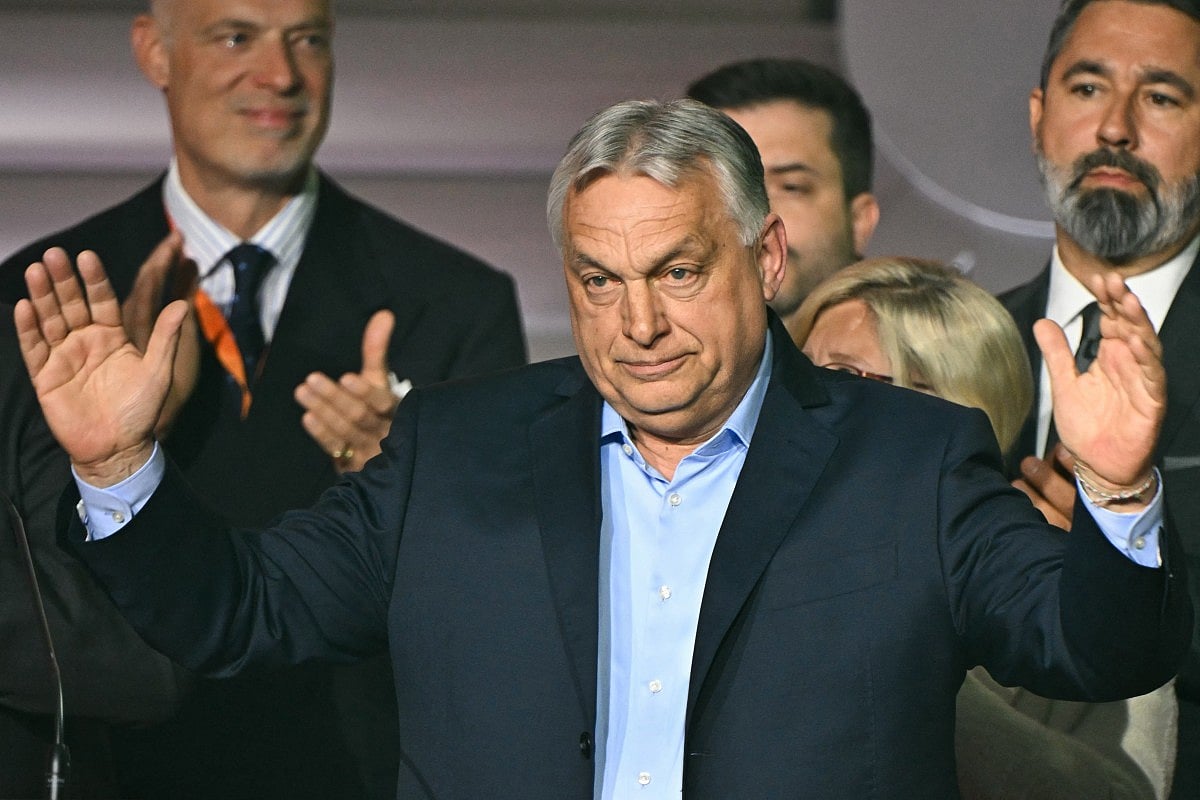
Orban conceded defeat, saying the results were “painful but unambiguous” and confirming that his party would move into opposition.
Magyar told supporters that voters had “liberated Hungary” and declared that “the Hungarian people have said ‘yes’ to Europe”.
Who is Viktor Orban?
Hungary’s prime minister for 16 years
One of Europe’s longest-serving leaders
Promoted the concept of “illiberal democracy”
Known for anti-immigration policies and nationalist rhetoric
Maintained close ties with Russia and criticised EU policies
Accused of undermining media freedom and judicial independence
Widely seen as a key figure in the global far-right movement
Why does this matter?
Orban was one of Europe’s longest-serving leaders and a defining figure of nationalist, “illiberal democracy”.
During his tenure, he reshaped Hungary’s political system, tightened control over media and institutions, and clashed repeatedly with the EU over democratic norms, minority rights and judicial independence.
His government also blocked key EU decisions — including financial support for Ukraine — using Hungary’s veto power, often frustrating European partners.
His defeat represents not just a domestic political shift, but a broader rejection of that model by voters. Analysts described it as a “resounding defeat for authoritarianism” with implications beyond Hungary.
What does this mean for Europe?
The result is expected to significantly alter political dynamics within the European Union.
Orban had frequently positioned himself as a disruptor within the bloc, earning a reputation as a “thorn” in Brussels’ side. His departure removes a key obstacle to EU consensus on major issues, particularly support for Ukraine and sanctions on Russia.
Magyar has pledged to rebuild Hungary’s ties with the EU and align the country more closely with European institutions. His party belongs to the European People’s Party, the EU’s mainstream centre-right political family.
The shift is also seen as symbolic — reinforcing the idea that pro-European platforms can still win elections in a region where nationalist politics had gained ground.
Who is Peter Magyar?
45-year-old political newcomer
Former insider within Orban’s Fidesz party
Founded the Tisza party in 2024
Campaigned on anti-corruption and public services reform
Positioned himself as pro-Europe and reform-oriented
Promised to restore democratic checks and balances
Rapid rise driven by grassroots campaigning across Hungary
How has Europe responded?
European leaders reacted swiftly, welcoming the result as a turning point.
European Commission President Ursula von der Leyen said: “Hungary has chosen Europe.”
French President Emmanuel Macron called it a victory for “democratic participation” and Hungary’s commitment to European values.
German Chancellor Friedrich Merz said he looked forward to working together for a “strong, secure and united Europe”.
UK Prime Minister Keir Starmer described it as a “historic moment… for European democracy”.
Ukrainian President Volodymyr Zelensky said he was ready to work with Hungary’s new leadership “for peace, security, and stability in Europe”.
Will this impact NATO and security alliances?
Yes, potentially.
Under Orban, Hungary’s relationship with NATO and EU partners became strained, particularly over the war in Ukraine and Hungary’s continued ties with Russia.
Magyar has indicated he will restore Hungary’s relationships with both NATO and the EU, which could lead to stronger alignment on defence and security policies.
The change could also ease tensions within Western alliances at a time when unity is seen as critical amid ongoing geopolitical instability.
Does Orban’s defeat have an impact on the United States?
Yes — both politically and symbolically.
Orban has long been a key ally of US President Donald Trump and a prominent figure among American conservative circles, where his governance model - combining nationalism, strong executive power and cultural politics - has been closely watched and, in some cases, admired.
Trump openly backed Orban’s re-election bid, even sending Vice-President JD Vance to Hungary in the final days of the campaign to rally support.
Orban’s defeat is therefore being seen as a setback for that political network. Analysts say it underscores a broader trend: even leaders with significant control over institutions and media can still be voted out when public dissatisfaction grows.
The result is also likely to influence political debates in the US, particularly around the durability of populist movements and the limits of incumbency advantage.
At the same time, reactions in Washington have been mixed, with some US lawmakers framing the outcome as a reaffirmation of democratic processes.
Why did Orban lose?
Several factors contributed to Orban’s defeat:
Economic stagnation and rising public dissatisfaction
Concerns over corruption and governance
Fatigue after 16 years of continuous rule
A unified opposition and a credible challenger
High voter turnout reflecting demand for change
Despite structural advantages — including control over media and an electoral system seen as favouring his party — Orban was unable to secure another term.
What happens next?
Magyar now faces the challenge of delivering on promises to reform Hungary’s institutions and rebuild international relationships.
If his party retains a two-thirds parliamentary majority, it could enable significant legislative changes, including reforms to the constitution and governance structures.
However, expectations are high, and the transition from a long-established political system will not be easy.
Still, the election marks a clear turning point — not just for Hungary, but for Europe’s political direction.