Why Iran is not joining US talks: Excessive demands, shifting positions and ongoing naval blockade
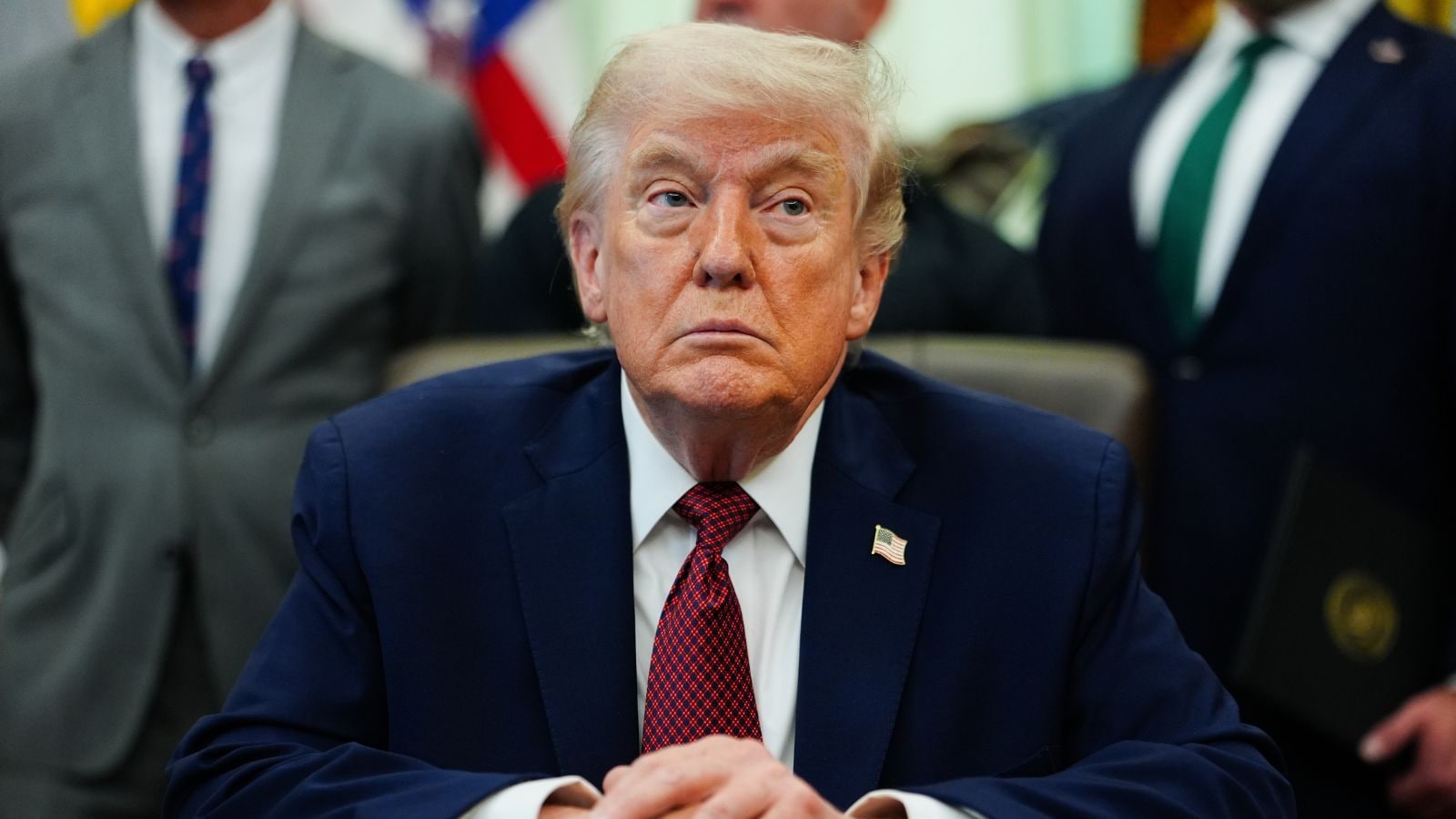
Weather ePaper Today’s Paper Journalism of Courage Home ePaper Politics Explained Opinion India Business Premium Cities UPSC Entertainment Sports World Lifestyle Tech Subscribe Sign In TrendingUPSC OfferIPL 2026US NewsPuzzles & GamesLegal NewsFresh TakeHealthResearch🎙️ Podcast Advertisement NewsWorldUS NewsWhy Iran is not joining US talks: 'Excessive demands, shifting positions and ongoing naval blockade' Why Iran is not joining US talks: ‘Excessive demands, shifting positions and ongoing naval blockade’ The US had announced it would send officials to Pakistan for possible negotiations aimed at ending the ongoing conflict involving the US and Israel in Iran. By: Express Global Desk 3 min readApr 20, 2026 06:49 AM IST First published on: Apr 20, 2026 at 06:36 AM IST Make us preferred source on Google Share Comments Bookmark Bookmark Print Share Whatsapp twitter Facebook President Donald Trump listens in the Oval Office of the White House. (Photo: AP) Iran is not planning to take part in a new round of talks with the United States, according to state media, hours after US President Donald Trump said a delegation would travel to Islamabad. “There are currently no plans to participate in the next round of Iran-US talks,” Iran’s state broadcaster IRIB said, citing official sources, as reported by The Guardian. Senior Iranian official Ebrahim Zolfaghari said Tehran has officially rejected all negotiations with the US, declaring that any peace deal is now cancelled and the Strait of Hormuz is fully closed again. 🚨 🇮🇷 Iran officially rejects all negotiations with the US.Peace deal is now cancelled.Strait of Hormuz fully closed again. pic.twitter.com/FwVQgr4r3u The US had announced it would send officials to Pakistan for possible negotiations aimed at ending the ongoing conflict involving the US and Israel in Iran. Trump said the proposed talks would be a “last chance” for Iran to agree to a deal. “If Iran does not sign this deal, the whole country is getting blown up,” Trump said in an interview, according to The Guardian. He also repeated earlier warnings that the US could target Iran’s infrastructure, including power plants and bridges. Iran’s official news agency IRNA said the decision not to attend talks was due to what it described as “Washington’s excessive demands, unrealistic expectations, constant shifts in stance, repeated contradictions, and the continuing naval blockade”. The developments come as the conflict enters its eighth week, with thousands reported killed and oil markets hit hard by restrictions in the Strait of Hormuz, a key route for global energy supplies. Iran recently reimposed limits on commercial shipping through the strait, reversing a brief move to reopen it. Tehran has said it will not allow normal transit while the US naval blockade remains in place. Meanwhile, Pakistan has been in contact with both sides. Officials said there were discussions on the need for “continued dialogue and engagement” to reduce tensions. In a separate statement, Iran criticised the US blockade, calling it “unlawful and criminal”, and said it amounted to collective punishment. The situation remains uncertain as a two-week ceasefire is due to expire soon, with both sides yet to agree on next steps. The Express Global Desk at The Indian Express delivers authoritative, verified, and context-driven coverage of key international developments shaping global politics, policy, and migration trends. The desk focuses on stories with direct relevance for Indian and global audiences, combining breaking news with in-depth explainers and analysis. A major focus area of the desk is US immigration and visa policy, including developments related to student visas, work permits, permanent residency pathways, executive actions, and court rulings. The Global Desk also closely tracks Canada’s immigration, visa, and study policies, covering changes to study permits, post-study work options, permanent residence programmes, and regulatory updates affecting migrants and international students. All reporting from the Global Desk adheres to The Indian Express’ editorial standards, relying on official data, government notifications, court documents, and on-record sources. The desk prioritises clarity, accuracy, and accountability, ensuring readers can navigate complex global systems with confidence. Core Team The Express Global Desk is led by a team of experienced journalists and editors with deep expertise in international affairs and migration policy: Aniruddha Dhar – Senior Assistant Editor with extensive experience in global affairs, international politics, and editorial leadership. Nischai Vats – Deputy Copy Editor specialising in US politics, US visa and immigration policy, and policy-driven international coverage. Mashkoora Khan – Sub-editor focusing on global developments, with a strong emphasis on Canada visa, immigration, and study-related policy coverage. ... Read Moreالمصدر: Indian Express | Source: Indian Express
ملاحظة تحريرية | Editorial Note: نُشر هذا المقال في الأصل بواسطة Indian Express. خبر (Khabr) هي منصة إعلامية أردنية مرخّصة تعمل بالذكاء الاصطناعي. نضيف قيمة تحريرية من خلال: تحليل ذكي للأخبار، ملخصات تلقائية، رواية صوتية بالذكاء الاصطناعي، ترجمة متعددة اللغات، وتدقيق الحقائق. هدفنا جعل الأخبار أكثر وضوحاً وسهولةً للقارئ العربي.
This article was originally published by Indian Express. Khabr is a licensed Jordanian AI-powered news platform (Registration #82086). We add editorial value through: AI-powered news analysis, automated summaries, AI audio narration, multi-language translation (Arabic, English, French, Turkish), and AI fact-checking. Our mission is to make news more accessible and understandable for Arabic-speaking audiences worldwide.