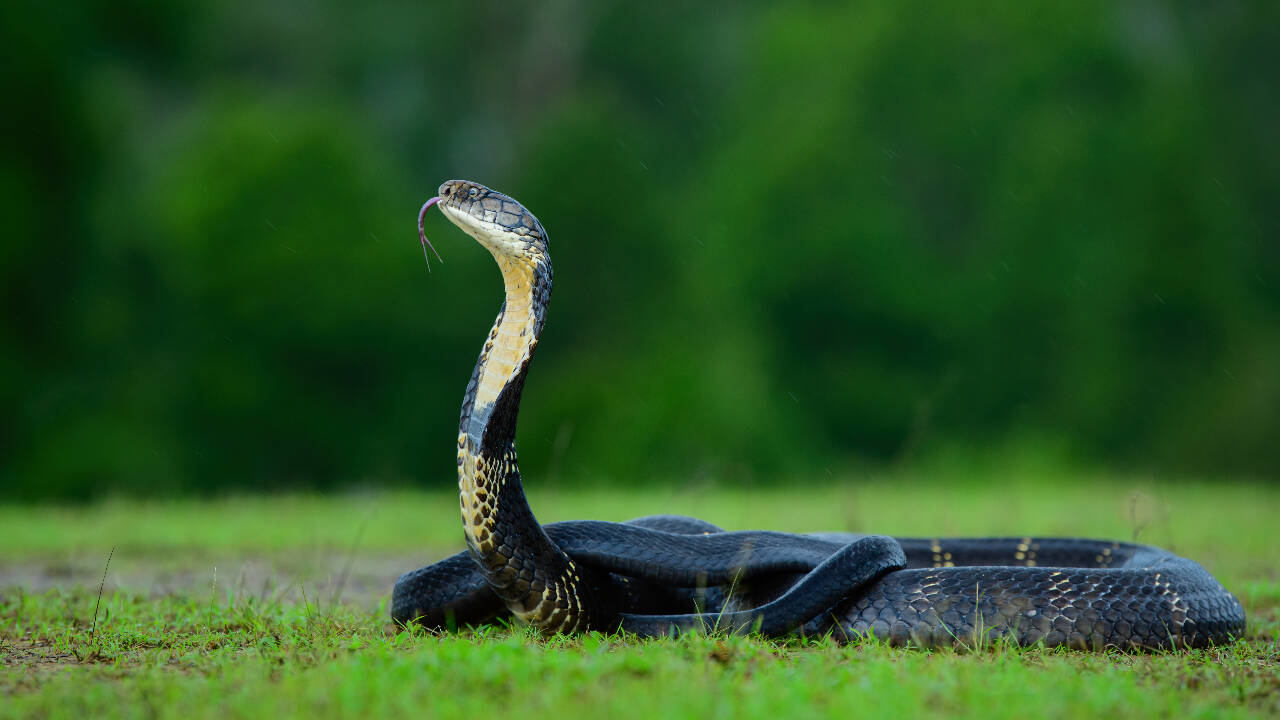
Why Do Humans Get Dizzy? An Evolutionary Biologist Explains
•InnovationScienceWhy Do Humans Get Dizzy?
•An Evolutionary Biologist ExplainsByScott Travers,Contributor.Forbes contributors publish independent expert analyses and insights.
•I write about biodiversity and the hidden quirks of the natural world.Follow AuthorJun 07, 2026, 08:30am EDT--:-- / --:--This voice experience is generated by AI.
هذا الخبر من Forbes. خبر يقدم أدوات ذكاء اصطناعي للتلخيص والترجمة والاستماع.
InnovationScienceWhy Do Humans Get Dizzy? An Evolutionary Biologist ExplainsByScott Travers,Contributor.Forbes contributors publish independent expert analyses and insights. I write about biodiversity and the hidden quirks of the natural world.Follow AuthorJun 07, 2026, 08:30am EDT--:-- / --:--This voice experience is generated by AI. Learn more.This voice experience is generated by AI. Learn more.Every human will, at least once, experience a “head spin.” Not many of us, however, will know the delicate and complex machinery that causes that experience.gettyThere is a structure nestled deep within your inner ear, roughly the size of an aspirin tablet, that has been doing essentially the same job for half a billion years. Long before there were humans, before there were mammals, before there were even land-dwelling vertebrates of any kind, something eerily similar to your vestibular system was humming away inside the skulls of ancient fish, helping them navigate a world of water. And that structure is the key to understanding why, on a perfectly calm morning, a slow roll out of bed can send the room spinning.Humans Received Their Vestibular System From FishThe story begins around 500 million years ago, with a predatory marine fish equipped with what researchers call a lateral line system: a fluid-sensing organ running along the flank of the body, capable of detecting movement, vibration and pressure gradients in the surrounding water. This was the primordial architecture. Over hundreds of millions of years, as vertebrate lineages diverged and the inner ear grew more sophisticated, the lateral line gave rise to the labyrinthine structures we now carry inside our skulls. Jawless fish had one or two semicircular canals. When jawed vertebrates appeared around 430 million years ago, a third canal evolved — completing the three-axis gyroscope that allows detection of rotation in any direction.A 2018 study published in Nature analyzing the regulatory genes controlling canal...المصدر: Forbes | Source: Forbes
ملاحظة تحريرية | Editorial Note: نُشر هذا المقال في الأصل بواسطة Forbes. خبر (Khabr) هي منصة إعلامية أردنية مرخّصة تعمل بالذكاء الاصطناعي. نضيف قيمة تحريرية من خلال: تحليل ذكي للأخبار، ملخصات تلقائية، رواية صوتية بالذكاء الاصطناعي، ترجمة متعددة اللغات، وتدقيق الحقائق. هدفنا جعل الأخبار أكثر وضوحاً وسهولةً للقارئ العربي.
This article was originally published by Forbes. Khabr is a licensed Jordanian AI-powered news platform (Registration #82086). We add editorial value through: AI-powered news analysis, automated summaries, AI audio narration, multi-language translation (Arabic, English, French, Turkish), and AI fact-checking. Our mission is to make news more accessible and understandable for Arabic-speaking audiences worldwide.