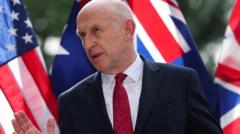
Why defence funding deal offered to Healey wasn't enough to keep him
•Why defence funding deal offered to Healey wasn't enough to keep him9 minutes agoShareSaveAdd as preferred on GoogleJonathan BealeDefence correspondentReutersThe surprise thing about John Healey's res...
•He has always been a loyal minister and Labour Party man.Unlike other recent defence secretaries, he studiously avoided briefing against other ministers or the Treasury.
•When he met journalists, he - frustratingly for us - hid his own frustrations and mostly said the same in private as he did in public.
هذا الخبر من BBC News. خبر يقدم أدوات ذكاء اصطناعي للتلخيص والترجمة والاستماع.
Why defence funding deal offered to Healey wasn't enough to keep him9 minutes agoShareSaveAdd as preferred on GoogleJonathan BealeDefence correspondentReutersThe surprise thing about John Healey's resignation is that he never looked like a quitter. He has always been a loyal minister and Labour Party man.Unlike other recent defence secretaries, he studiously avoided briefing against other ministers or the Treasury. When he met journalists, he - frustratingly for us - hid his own frustrations and mostly said the same in private as he did in public. But the government's failure to move as fast as other European nations, or as fast as he had promised, on ramping up defence spending had clearly taken its toll.Defence Secretary John Healey's resignation letter in fullChris Mason: Healey's resignation is a devastating critique of Starmer's governmentLive reaction to this storyAllies were asking when the UK government's words would be matched by actions, as was the defence industry.Healey made mistakes too. He thought the government's promise to increase defence spending to 2.5% of GDP earlier than planned would be enough, and senior defence officials were exasperated when they heard he had said he would not be asking for any more.He soon had to.Healey was also accused of cutting out other ministers in his department from key conversations and decisions. But all that being said, his resignation means the government has lost a hard-working, dedicated and - until now - loyal minister.The BBC understands that behind the scenes John Healey had been pressing the prime minister for a larger increase in defence spending than he was offered.The deal the prime minister put to him on Monday did not include a timetable to increase defence spending to 3% of GDP, an ambition the government has committed itself to, not least because of pressure from the Trump administration, which has tired of doing the heavy lifting on investment. Healey was push...المصدر: BBC News | Source: BBC News
ملاحظة تحريرية | Editorial Note: نُشر هذا المقال في الأصل بواسطة BBC News. خبر (Khabr) هي منصة إعلامية أردنية مرخّصة تعمل بالذكاء الاصطناعي. نضيف قيمة تحريرية من خلال: تحليل ذكي للأخبار، ملخصات تلقائية، رواية صوتية بالذكاء الاصطناعي، ترجمة متعددة اللغات، وتدقيق الحقائق. هدفنا جعل الأخبار أكثر وضوحاً وسهولةً للقارئ العربي.
This article was originally published by BBC News. Khabr is a licensed Jordanian AI-powered news platform (Registration #82086). We add editorial value through: AI-powered news analysis, automated summaries, AI audio narration, multi-language translation (Arabic, English, French, Turkish), and AI fact-checking. Our mission is to make news more accessible and understandable for Arabic-speaking audiences worldwide.