When China's economy met World Cup 2026
هذا الخبر من CGTN EN. خبر يقدم أدوات ذكاء اصطناعي للتلخيص والترجمة والاستماع.
المصدر: CGTN EN | Source: CGTN ENEditor's note: Ankit Prasad is a biz commentator. The article reflects the author's views and not necessarily those of CGTN.
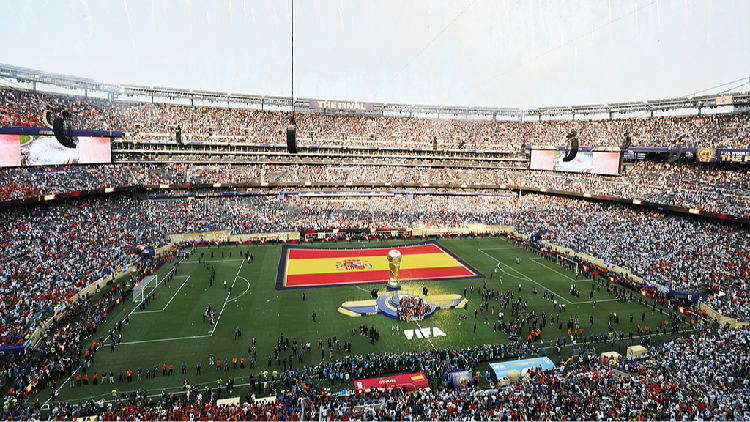
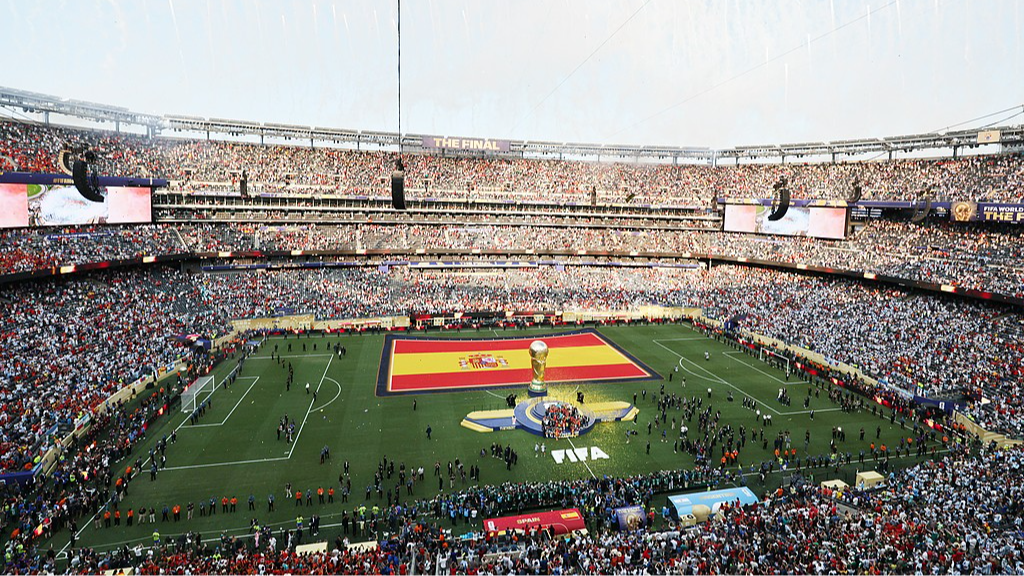
The greatest show on Earth concluded in dramatic fashion on Sunday in New Jersey with Spain emerging world champions against Argentina, but several time zones ahead, the watch party in China went on all night. In what has been the biggest World Cup by many metrics, most notably in terms of structure with its 48 teams, and with FIFA projecting tournament revenues in excess of $9 billion, one of the most astounding stats was to be found on the CMG live stream that this author was hooked on to for a majority of the 104 matches.
At the climax of the FIFA World Cup Final, the concurrent viewers counter read an incredible 90 million, with the comments-box moving so fast it was impossible to read. And that was just one of the many streams on offer, for a match that kicked off at 3 a.m. in Beijing time. The 2022 World Cup in Qatar had witnessed China account for almost half (49.8%) of all hours of viewing on digital and social platforms globally, as per FIFA. While this edition's numbers will be collated, evidence suggests Chinese football fans have put in their best effort to keep that record intact -- vouched for by the bleary eyes in offices and surge in football-related consumption on-ground and in the data. The interest is abundant, and this is despite factors being far from ideal.
Consumption levels up as China watches World Cup 2026
The last 6 weeks have flown by in a World Cup frenzy. As often happens when the showpiece event comes around every four years, it's not only the football devout who are watching. The World Cup transcends all manner of boundaries, the most obvious of which is nationality. There often is no real logic behind whom a fan decides to support. Ask any random group who they're cheering for and you're likely to get as many answers as there are people.
In the lead-up to the World Cup I had noticed pop-up stores selling merchandise of various teams crop up at heavy-footfall pedestrian centers. The interiors of some of Beijing's subway trains were also branded for the World Cup, with the cab floor painted to resemble a football pitch and larger-than-life cut-outs of some of the competing superstars emblazoned on the walls.
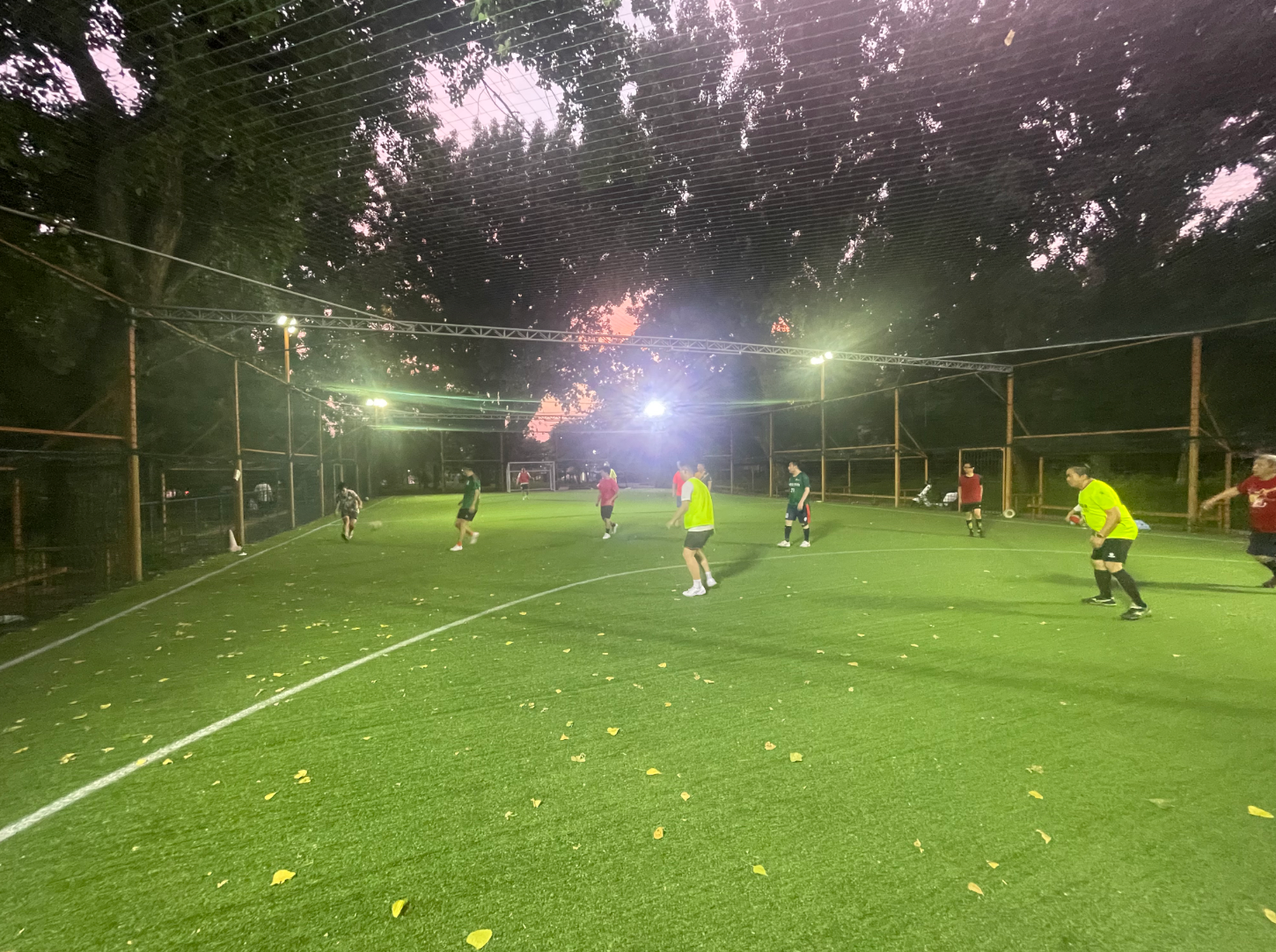
It's not even limited to watching. Clearly unsatisfied at just being spectators, many people took to the field to emulate their heroes. For the last month, this author has spent every Saturday evening at a futsal turf near the Temple of Heaven in Beijing. My teammates and opponents have been an assorted bunch of people of all ages and professions: a young lawyer who is a dashing winger, a middle-aged advertising executive with an eye for goal, a silver-haired businessman with a very accurate heading ability. There are often 18 people who join in to play on a pitch that is meant for 6 vs 6, so creative tournament formats have to be applied to ensure everyone gets enough game-time. And you have to confirm your presence for a Saturday session as early as Tuesday because there's a rush to book the court.
Beyond hobbyists, high-profile regional amateur leagues also took the spotlight. The Northeast Super League created a carnival atmosphere and was a superhit with the fans. Match tickets were also clubbed with entry to historic attractions and retail offers. A person going to watch a match in Shenyang could add a visit to Marshal Zhang's Mansion and the Shenyang Imperial Palace for no extra cost, making it a more rounded and leisurely tourist weekend.
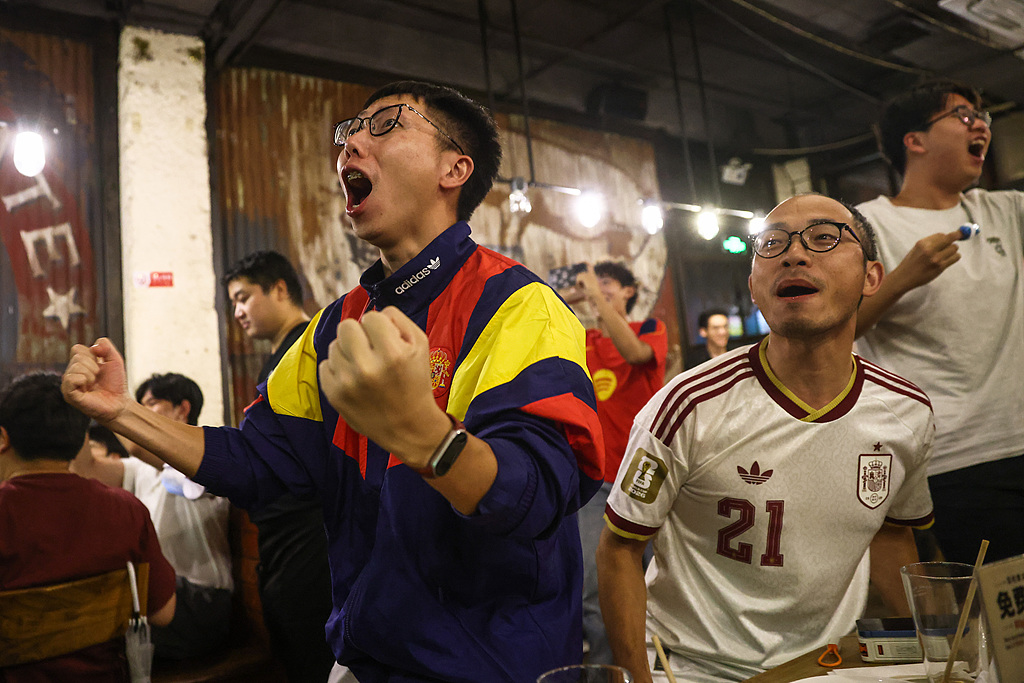
Restaurants, pubs and theaters across the country also pulled out all the stops. Many had offers on food and drink, for fans to come over in the middle of the night to watch their teams on the big screen and have a great time, win or lose. For the final itself, for those who preferred to go out rather than the ubiquitous house-party barbecue with friends, several establishments advertised creative "free-flow" and extended happy-hour deals. Take a walk around town at any time, and a screen with either a live match or highlights would never be far.
Chinese tech & production delivers at World Cup 2026
Importantly, this time, the World Cup even transcended the realm of sports in a sense. If Qatar 2022 was the winter tournament of influencers, North America 2026 has been the tournament of technology. VAR has played a role in most matches, now aided by several sensor-based systems.
Aileen Zhang, a senior executive at Lenovo, told CGTN in great detail during a live-stream how the Chinese company had implemented the automatic offside detection system. This included not just setting up the relevant infrastructure at all tournament venues, but also making millimeter-accurate avatars of each player at the World Cup. 1,263 players were photographed from 36 different angles in a herculean task which Aileen and her team clearly relished.
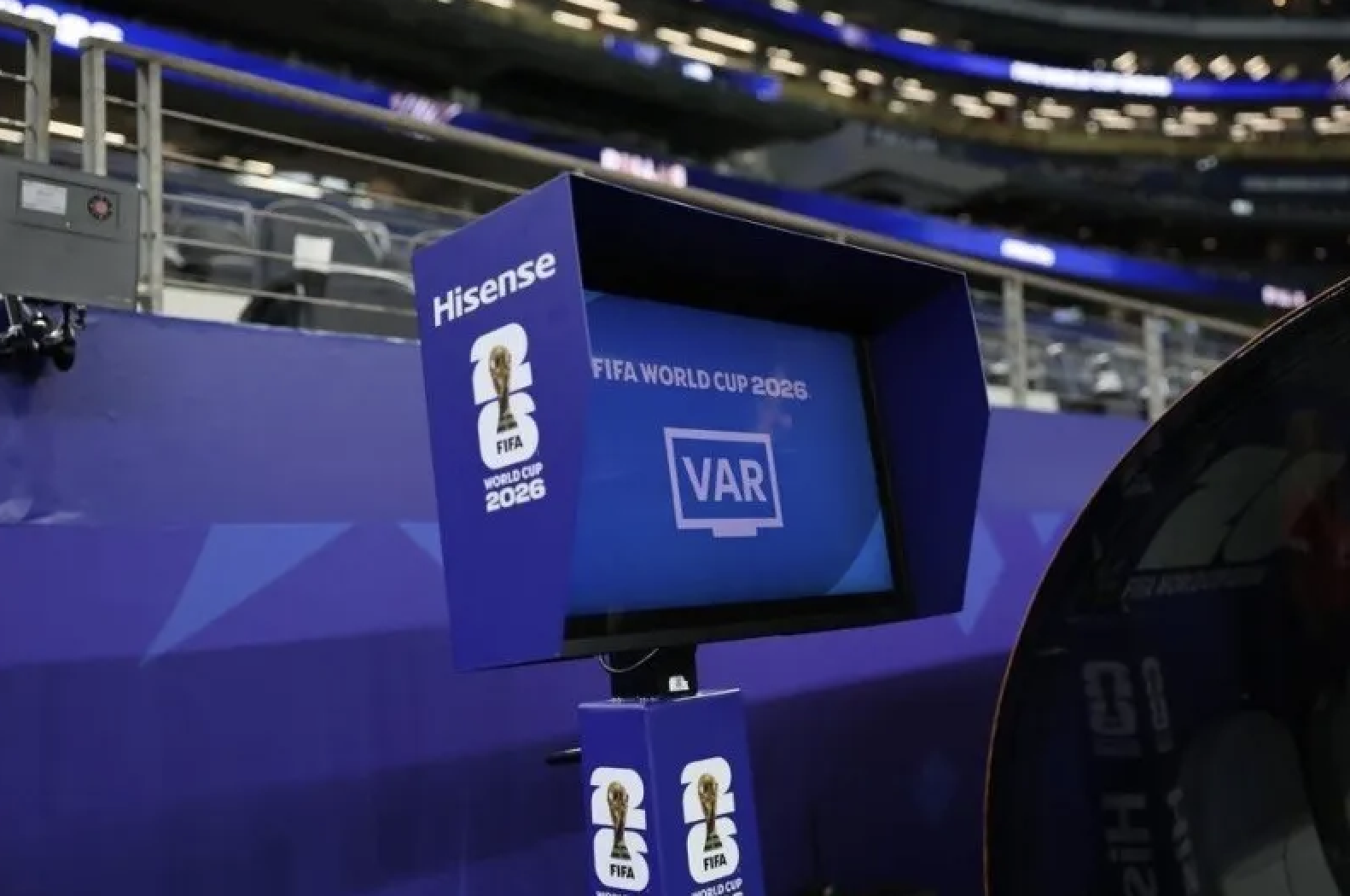
In general, from branding and sponsorship to specific partnerships and technology, Chinese firms were deeply embedded in the 2026 FIFA World Cup. Life-sized Labubu figures became the first Chinese IP to debut at a World Cup at the opening match, going viral on social media. Hisense screens were used by the match referees pitchside to consult the VAR. As per reports, Chinese firms contributed as much as 20% of FIFA's sponsorship income for World Cup 2026.
Outside the stadia, Chinese technology also played a role in enriching the fan experience during their commutes to-and-fro matches. Chinese-made EV buses as well as an urban light rail system provided safe and comfortable travel for local fans as well as visitors from around the world in Mexico's venues.
And then there's the merchandise. Yiwu, the epicenter of football merchandise, pulled out all the stops for this edition. There was a 39% year-on-year increase in exports of sporting goods and equipment during the first two months of this year. If you purchased a football scarf, toy, wristband, jersey or any other licensed gear, there is a good chance it originated in Yiwu.
What this tells us: We've just scratched the surface
From the experience of the 39-day tournament, it becomes clear once again that the intersection of the World Cup and China's economy makes for very interesting analysis. There is overwhelming interest in absolute terms across different areas, which may shift up or down based on multiple factors. But it appears to be sticky and has critical mass. The elephant in the room, therefore, is -- what if all the factors were positive and the stars aligned? What if viewers not just in China but also elsewhere had even more reason to watch, engage, and consume when the World Cup comes around?
FIFA has made the right noises by suggesting the World Cup could be further expanded in coming editions. The jump from 32 to 48 teams was a success, with many World Cup debutants giving a good account of themselves and even achieving the odd memorable result. If anything, there is a sporting reason to go further, as the group stage of the 2026 edition had the lowest stakes and the least jeopardy in history, and that is a format issue that must be sorted.
The fact that FIFA is more openly and creatively embracing both inclusivity as well as football's commercial potential, via various reforms both on and off the pitch, underscores the need to continue to view the World Cup as a work-in-progress. Tournament participation and fan interest are a virtuous circle. To put it simply, four of the five most populous nations in the world didn't have teams playing in the 2026 World Cup, and yet, they may offer diehard fan bases with exciting potential. The question every football fan, sports administrator and economist must ask together is:
What if they do participate?
...and then they must work out a solution.
ملاحظة تحريرية | Editorial Note: نُشر هذا المقال في الأصل بواسطة CGTN EN. خبر (Khabr) هي منصة إعلامية أردنية مرخّصة تعمل بالذكاء الاصطناعي. نضيف قيمة تحريرية من خلال: تحليل ذكي للأخبار، ملخصات تلقائية، رواية صوتية بالذكاء الاصطناعي، ترجمة متعددة اللغات، وتدقيق الحقائق. هدفنا جعل الأخبار أكثر وضوحاً وسهولةً للقارئ العربي.
This article was originally published by CGTN EN. Khabr is a licensed Jordanian AI-powered news platform (Registration #82086). We add editorial value through: AI-powered news analysis, automated summaries, AI audio narration, multi-language translation (Arabic, English, French, Turkish), and AI fact-checking. Our mission is to make news more accessible and understandable for Arabic-speaking audiences worldwide.