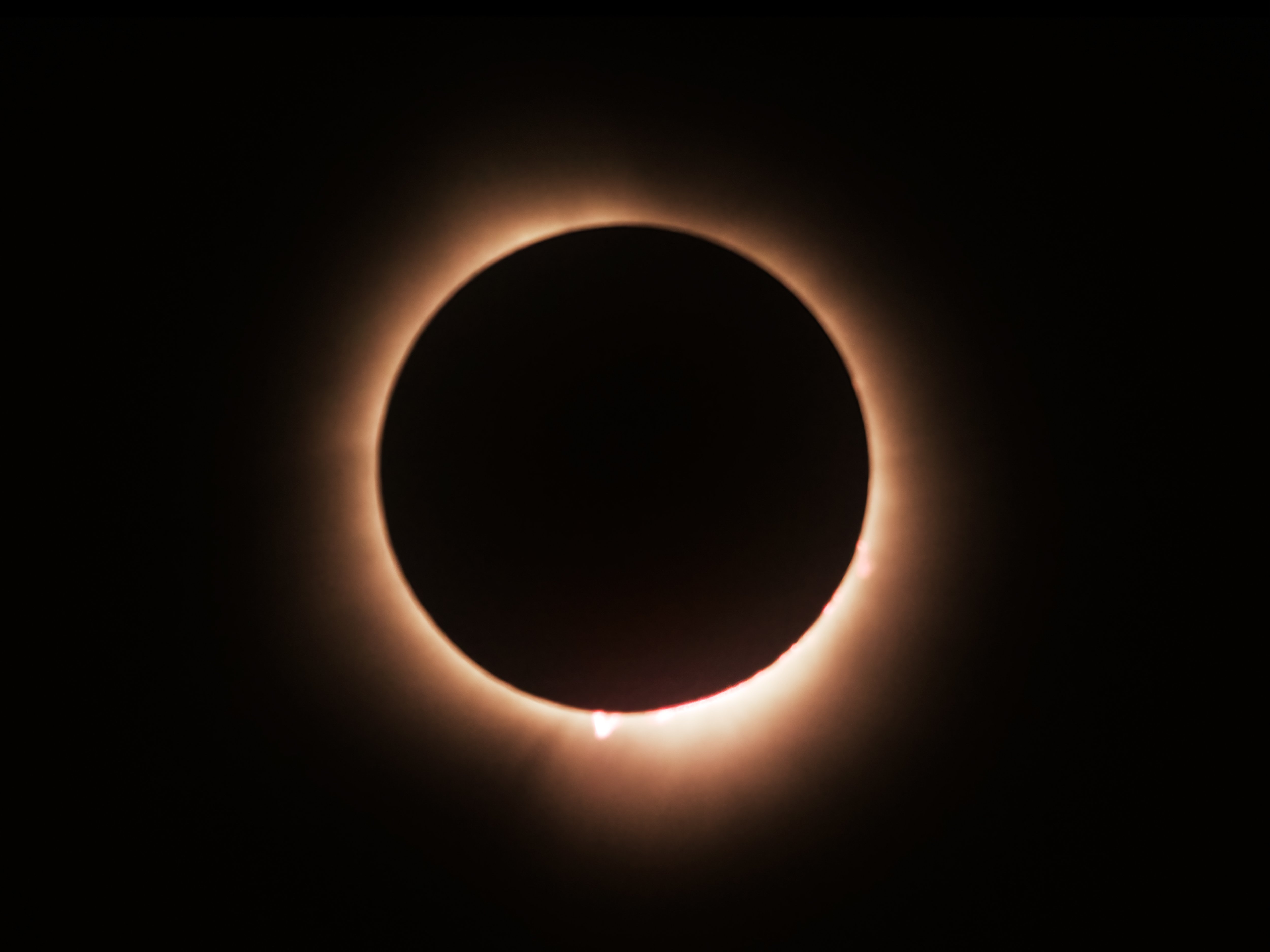
Britons are in for a spectacular celestial show this Wednesday, with the Moon set to block up to 96 per cent of the Sun in what will be the country's most complete solar eclipse since 1999.
The dramatic event on August 12 will see the Moon pass directly between the Earth and the Sun, casting a striking shadow across the UK and Ireland. People across the nation will witness varying levels of coverage depending on their location, with most areas seeing between 90 and 96 per cent of the Sun obscured.
Those in the South West will get the best views, with Cornwall experiencing around 95 per cent coverage. Even Londoners will see roughly 90 per cent of the Sun blocked out.
The eclipse marks the UK's finest viewing opportunity in 27 years.
The timing of the spectacle varies across the country, with viewers in different locations seeing the eclipse at slightly different moments.
Liverpool and Manchester will witness first contact at 6.13pm, with the peak arriving at 7.10pm before the show wraps up just after 8pm. London's eclipse kicks off at 6.17pm, reaching its maximum at 7.13pm and finishing at 8.06pm.
Cornwall, which saw totality back in 1999, will experience the event slightly later, starting at 6.18pm and peaking at 7.15pm before ending at 8.09pm.
Further north, Edinburgh's eclipse begins earlier at 6.08pm, reaches its height at 7.05pm, and concludes by 8pm. Belfast will see first contact at 6.10pm, maximum coverage at 7.08pm, and the finale at 8.03pm.

The entire event will conclude for all UK viewers by 8:10pm.
Whether Britons get to see the eclipse depends heavily on the weather and the Met Office has issued forecasts showing a divided picture across the nation.
Southern England looks set to enjoy the clearest skies, with weather maps indicating largely cloud-free conditions for the prime viewing time around 7pm. This puts viewers in the capital and surrounding areas in a strong position to catch the show.
It is a different story further north, however. Large parts of Yorkshire, the North East, and the North West are expected to see cloud cover, including areas around Greater Manchester. Northern Wales and much of Scotland also face cloudy conditions that could obscure the spectacle.
LATEST DEVELOPMENTS
- Britons urged to use common kitchen utensil to watch nation's greatest solar eclipse in decades
- Octopus Energy offers FREE electricity to customers who cut usage during this week's solar eclipse
- Dramatic aftermath of 5,400mph SpaceX Moon crash revealed for very first time

With the eclipse just days away, forecasts could still shift, so those hoping to watch are being advised to keep checking local forecasts leading up to Wednesday evening.
Health officials have issued a warning for anyone planning to watch Wednesday's eclipse, as looking directly at the Sun can cause permanent eye damage within seconds.
The UK Health Security Agency has cautioned the Sun's dimmer appearance during an eclipse can actually make viewing it more dangerous.
The reduced brightness tricks your body's natural reflex to look away, allowing intense sunlight to damage the retina without any pain.
The 1999 eclipse serves as a stark reminder, with the Royal College of Ophthalmologists reporting roughly 70 cases of vision problems amongst viewers. Around 40 per cent of those affected had watched for less than a minute.
Thankfully, there are several safe ways to enjoy the eclipse without risking your eyesight.
The safest option is to purchase specially designed eclipse glasses that meet the ISO 12312-2 safety standard.
The certification code should be printed on viable glasses.
Professor Jim Wild, President of the Royal Astronomical Society, encouraged Britons to enjoy the spectacle safely.
He stated: "With the right precautions, this eclipse promises to be an inspiring experience for seasoned astronomers and first-time skywatchers alike."
Our Standards: The GB News Editorial Charter