
Feral cats are everywhere. Slipping between parked cars, darting under porches, appearing briefly at dusk before vanishing again. Most people see them, feel a momentary pang of sympathy, and move on with their day.
And some people leave food. That impulse to help is genuinely kind. But here’s what most people don’t realize: food alone isn’t actually helping much.
The average lifespan for a feral cat living outdoors is just 2 to 5 years. Indoor cats can live into their late teens or early twenties. That massive gap isn’t about food, as feral cats are actually resourceful hunters. It’s about parasites, disease, untreated injuries, extreme weather, and constant reproductive cycles that their bodies can’t sustain.
If you’re feeding a feral cat (or thinking about it), here’s what they actually need to survive beyond a full food bowl. And more importantly, how to provide it when the cat won’t let you anywhere near them.

The Lifespan Problem
Two to five years. That’s what a feral cat gets if they’re lucky. The causes stack up fast: untreated injuries from fights or accidents, exposure to extreme weather, infectious diseases spreading through colonies, parasite burdens that slowly weaken them, and constant reproductive cycles that drain the body’s resources.

Why Deworming Matters More Than You Think
Feral cats hunt to survive. Mice, birds, insects – anything they can catch becomes a meal. And nearly every prey animal they consume exposes them to parasites.
Roundworms, tapeworms, and hookworms are the most common culprits. These parasites live in the intestines but migrate through different parts of the body, causing a cascading series of health problems. Severe worm burdens lead to malnutrition even when food is plentiful, anemia from blood loss, weakened immune systems that can’t fight off other infections, and, in extreme cases, organ damage or intestinal blockages.
For a cat already struggling to survive outdoors, a heavy parasite load can be the difference between making it through winter and not. Deworming isn’t optional care – it’s one of the most impactful interventions you can make.
The challenge, of course, is getting medication into an animal that won’t let you touch it.

How to Actually Deworm a Cat You Can’t Touch
Hide It in Their Food
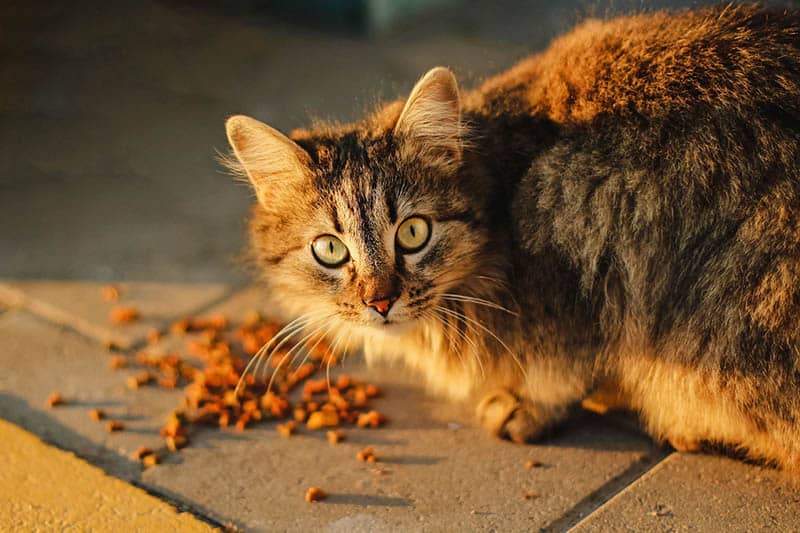
The most practical method, especially if you never get close enough to handle the cat, is mixing the medication directly into food. This works because several deworming products come in liquid or granule form, making them easy to fold into wet food without obvious detection.
Panacur, which contains the active ingredient fenbendazole, is a commonly recommended option. It covers roundworms, tapeworms, hookworms, and Giardia, and it’s typically given once daily for three days. It can even be used in kittens as young as four weeks old. The granule or liquid form makes it far easier to disguise than a tablet, and for a cat that won’t tolerate handling, this is often the most realistic path forward.
The key is patience. If the cat is suspicious of anything new in their bowl, start by mixing a small amount and build from there.
For Kittens, Use Milk Replacer
If you’re dealing with a litter of feral kittens still on liquid nutrition, milk replacer is your best friend. Once the kittens are reliably drinking from a bowl, the deworming medication can be mixed directly in. Because they’re already accustomed to the taste and smell, most kittens won’t notice the addition.
This approach is especially convenient when you’re managing multiple kittens at once, and individual dosing isn’t realistic.
Kittens need more frequent treatment than adults. The general recommendation is deworming every two weeks from around 3 to 4 weeks of age, then monthly until they reach six months old. After that, treatment every one to three months is appropriate for ongoing prevention.
Topical Spot-On Treatments
If you can get close enough to the cat to apply a product to the back of their neck, topical dewormers are worth knowing about. Products like Drontal Spot-On and Profender are applied directly to the skin and absorbed without any oral medication required. Many spot-on treatments also cover fleas and ticks at the same time, which matters because flea infestations and tapeworms often go hand in hand. Any cat carrying a flea burden should be assumed to also have tapeworms.
The application site matters. The back of the neck is recommended specifically to prevent the cat from licking the product off, and it should always be applied to clean, unbroken skin.
For a feral cat that tolerates minimal handling but not full restraint, this can be a workable middle ground.
Work With a Vet When You Can
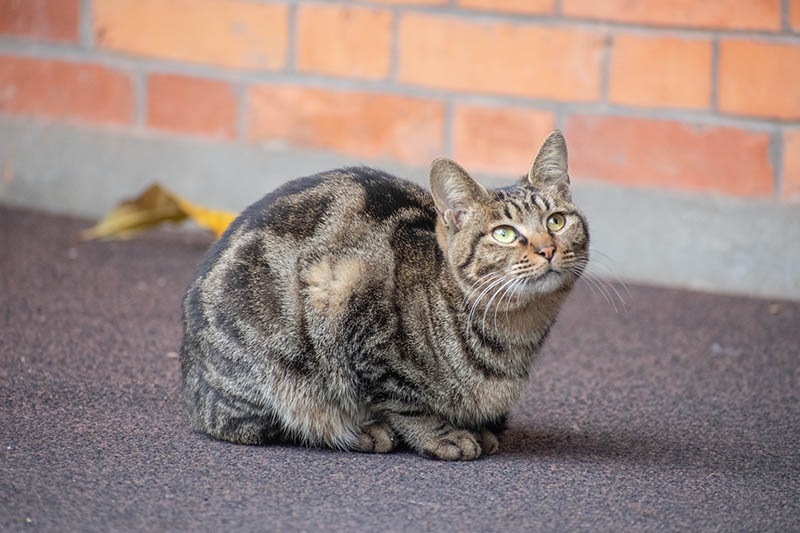
If it’s possible to trap the cat and bring them to a clinic, a veterinary visit opens up the most thorough option. Under sedation or anesthesia, a vet can perform a full examination, administer deworming and flea medications, and address any other health concerns in a single appointment. This is also the ideal time to have the cat spayed or neutered, which is a critical part of managing feral cat populations. Many programs around the world operate on this trap-neuter-return model for exactly this reason.
If getting to a vet in person isn’t feasible, online veterinary services can at least help you figure out the right product and dosage for your situation.
Don’t Forget Lungworms and Heartworms
Depending on where you live, additional parasites may be a concern. Lungworms, spread through contact with slugs and snails, and heartworms, transmitted by mosquitoes, are regional risks that standard oral dewormers like Panacur and Drontal don’t cover. Monthly spot-on treatments such as Stronghold and Advocate do offer protection against these parasites, so geographic location should factor into which product you choose.
When in doubt, a vet can point you toward the right coverage for your area.
The Bigger Picture
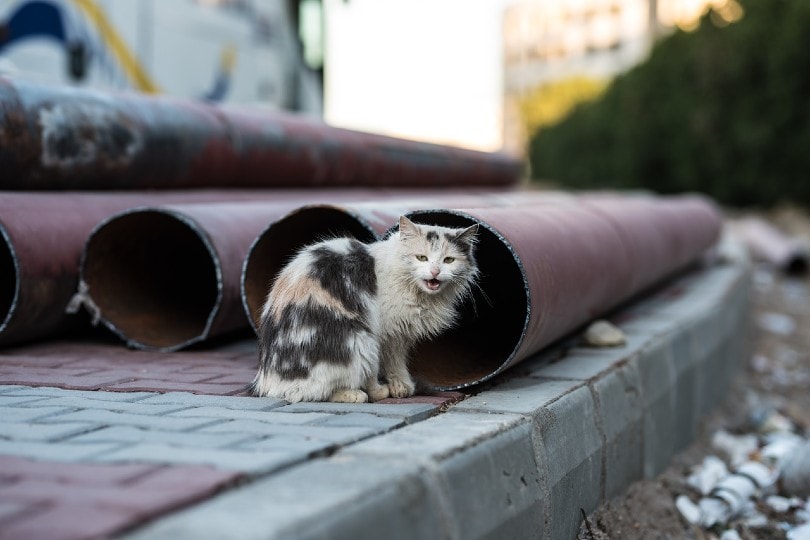
Caring for a feral cat means working around the limits of what they’ll tolerate, and that requires some creativity. But the options are genuinely there. Hidden medication in food, topical applications, and veterinary visits under sedation mean that even the most elusive cat can be treated.
The effort is worth it. Worms are manageable. A healthy feral cat living a longer, more comfortable life is the payoff for figuring out which method works for yours.
Feature Image Credit: Joseph M. Arseneau, Shutterstock
Did You Know?