The US military said it would block shipping traffic in and out of Iran’s ports starting at 10am ET (7pm PKT) on Monday, a move that would prevent roughly two million barrels of Iranian oil a day from entering the world’s markets, further tightening global supply.
Here are details on the planned blockade and its implications for oil markets.
What was announced?
After weekend peace talks in Islamabad between negotiators from the US and Iran ended without a deal, US President Donald Trump said the US Navy “will begin the process of BLOCKADING any and all ships trying to enter, or leave, the Strait of Hormuz”.
The US military’s Central Command (Centcom) later said the blockade would only apply to ships going to or from Iran, including all Iranian ports on the Gulf and Gulf of Oman.
US forces would not impede freedom of navigation for vessels transiting the Strait of Hormuz to and from non-Iranian ports and additional information would be provided, it said.
Iran’s Revolutionary Guards responded to Trump by warning that military vessels approaching the strait would be considered a ceasefire breach and dealt with harshly and decisively.
Retired Admiral Gary Roughead, a former chief of US naval operations, cautioned that Iran could fire on ships in the Gulf or attack the infrastructure of Gulf states that host US forces.
What is the implication for oil flows
Blocking Iranian shipments would disconnect a significant source of oil from the world’s markets.
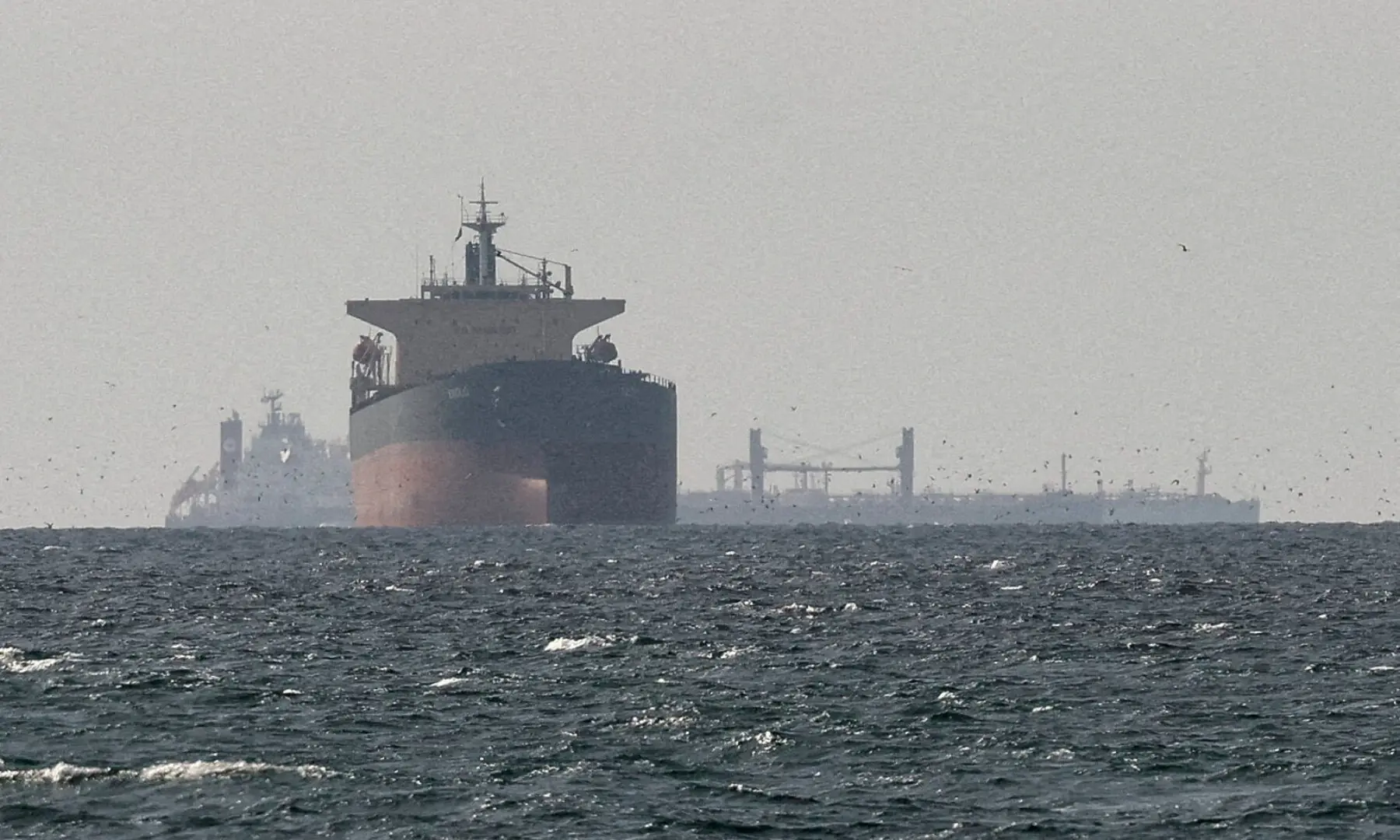
Iran exported 1.84m barrels per day (bpd) of crude in March and has shipped 1.71m bpd thus far in April, compared with a full-year average of 1.68m bpd in 2025, according to Kpler data.
However, a surge in Iranian output before the war started on February 28 has led to near-record levels of Iranian oil loaded on ships, with more than 180m barrels floating as of earlier this month, according to Kpler data.
What about oil flows from other Gulf producers?
Shipping traffic through the Strait of Hormuz, which has been severely curtailed by an Iranian blockade since the start of the war, remains nearly halted despite last week’s two-week ceasefire agreement between Washington and Tehran.
Oil tankers were steering clear of the strait on Monday.
A Liberia-flagged very large crude carrier (VLCC), Mombasa B, transited the strait earlier on Sunday and was ballasting in the Gulf.
Another VLCC, the Malta-flagged Agios Fanourios I, which tried to pass through the strait on Sunday to load Iraqi crude destined for Vietnam, turned back and was anchored near the Gulf of Oman.
On Saturday, three fully loaded supertankers passed through the Strait of Hormuz in what appeared to be the first vessels to exit the Gulf since the US-Iran ceasefire deal.
Some 187 laden tankers carrying 172m barrels of crude oil and refined products were inside the Gulf as of last Tuesday, according to Kpler.
Which importers are most affected?
Before the war, most Iranian oil exports were shipped to China, the top global crude importer. Last month, the US unveiled a sanctions waiver that has enabled other buyers, including India, to import Iranian oil.
India is set to receive its first crude shipment from Iran in seven years this week, ship tracking data from LSEG and Kpler showed on Wednesday.
Before the war, roughly 20pc of global oil and natural gas exports were shipped through the Strait of Hormuz, with most cargoes headed to Asia, the largest importing region.