Charlotte McCrossin always knew she would take over her family-run business when her mum retired – but more recently she has started to fear being hit with a hefty inheritance tax bill.
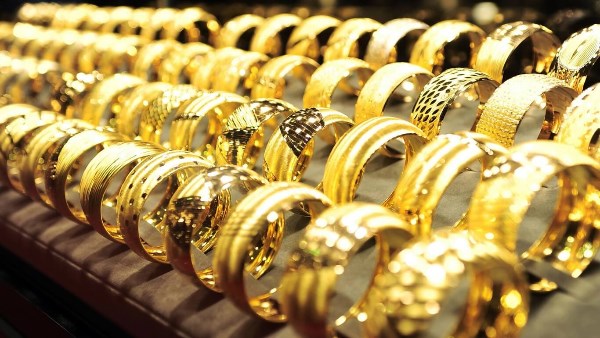
Gatwards in Hitchin, Hertfordshire, is one of the oldest family-run jewellers in the UK, but despite their rich history, Charlotte, of the Gatward family, is worried about what tax she and her family will face in the future.
“My mum and aunt jointly own the building,” explained Charlotte. “Each of their half of the building will form part of their overall estates. So the building will be subjected to IHT on both of their deaths.”
IHT is paid on someone’s estate when they die, before anything can be passed on. It is not applied if the estate is worth less than £325,000, known as the nil rate band, or if the estate is left to a person’s wife, husband or civil partner.
If a person’s main home is left to direct descendants, including children and grandchildren, the IHT threshold might increase by £175,000 depending on the value of the home.
Charlotte, 48, believes family businesses who trade out of a building should not be subjected to IHT.
She said: “The building we are in is an inherent part of the romance of buying jewellery. It is a really old building and its wonky floors and low beams are part of the whole experience and charm.
“I feel that inheritance tax is a very unfair tax, especially for small family-run businesses. The building is worth about £750,000. It is a building that can never be sold if we want the business to keep on trading out of it.
“It is not wealth that I will release. It is an asset that is linked to the business and the business trades out of it. I think business property like this should be exempt from IHT.”
Gatwards was established in 1760 and has been passed down from generation to generation.

Charlotte, who is married with two children, says as a small family-run business, they already pay a hefty amount of tax.
“We have already had to face much higher national insurance, our business rates have gone up by another £10,000 in the last two years and our last VAT bill was £32,000.
“I just think this Government is doing absolutely nothing to help small businesses. It is almost like they are on a mission to kill us.”
Charlotte says they have considered ways to avoid being hit by IHT on the building. One of the measures they have considered is rolling the building into the business, rather than it being owned by her mum and aunt – but this means there would be capital gains tax and stamp duty to pay.
“It feels like whatever you try to do, there are challenges. It is just so unfair. We already have to pay tens of thousands of pounds in business rates just for the privilege of trading out of a building which we already own.
“We are taxed enough already as it is. We should not be taxed again when family members pass away.”
Charlotte had her own career in banking, but when her mum Lisa Pheazey, 78, retired in 2016, she took over and is now managing director of the business.
“The plan is to keep it in the family. I have two sons and my brother has a daughter, so hopefully one of them will become the ninth generation to take it forward.
“We have lots of long standing customers who come to us because we have been here for such a long time and we are a very trusted local business.
“But it seems the Government just doesn’t care about things like that and doesn’t understand the challenges small businesses are facing. We feel like we are being attacked at all angles.
“Inheritance tax can kill businesses like ours. We are a very cashflow intensive business and buying stock is very expensive. If we were landed with a big inheritance bill, it would be a problem.”
Bryony Cove, partner private client at Farrer & Co, said: “Family businesses do feel very aggrieved at the level of tax they have to pay on an unknown event, such as a family member’s death in the future, which they have to fund out of a liquid asset. That has always been the case.
“Death duties and inheritance tax do affect a family’s ability to sustain their businesses. Extra tax bills are always unwelcome and people running family-run businesses feel very emotionally attached to their businesses, which makes things all the more difficult for them.”
David Little, partner in financial planning at Evelyn Partners, told The i Paper that in this situation, as the commercial property is owned by the mother and aunt, it is not anything to do with the business, and IHT would be payable as part of their estates, depending on the thresholds.
However, to answer Charlotte’s fears about if a second death occurred soon after IHT had been paid, meaning it would have to be paid again, he explained that something called Quick Succession Relief would be able to be used.
This is an IHT relief that reduces the tax burden on an estate when the same assets are taxed twice within a five-year period. It allows a percentage of the IHT paid on the first death to be credited against the IHT due on the second death.
Little said: “Quick Succession Relief is not used very often because when people inherit an asset, they generally hope to survive longer than five years to enjoy it.
“The concept behind it is that if someone passed away and inheritance tax was paid on that, if the person who inherited then died within five years of inheriting, there is a relief which tapers down over the five years.”
Little added that because the business does not own the building, recent changes to business property relief will not affect them.
He explained that if the mother and aunt decided to make the property part of the business, they would have to pay capital gains tax on any gain made as it is not their main residence. The jewellery business would also have to pay stamp duty to buy the building.
“It might be an idea to look into this and look into the numbers. It is weighing up the cost for the business to buy the property against what the IHT saving would be.”
A Government spokesperson said: “We’ve listened and raised the relief threshold to £2.5 million to protect more small family businesses, while ensuring the largest make a fair contribution so we can deliver support for families and businesses, including cutting the cost of living.”