It’s an early January morning in a remote Colombian village, miles from anywhere.
Local families are pouring us traditional ‘tinto’ coffee, grating balls of sugar the size of tennis balls into our mugs. A woman named Soyla invites us into her home, offering a shower and fresh fruit.
People might not have much here, we notice, but whatever they have, they’ll share.
Three days earlier, we’d just arrived in Bogotá, Colombia’s capital, having left our jobs and flat in Bristol for a year-long bikepacking adventure.
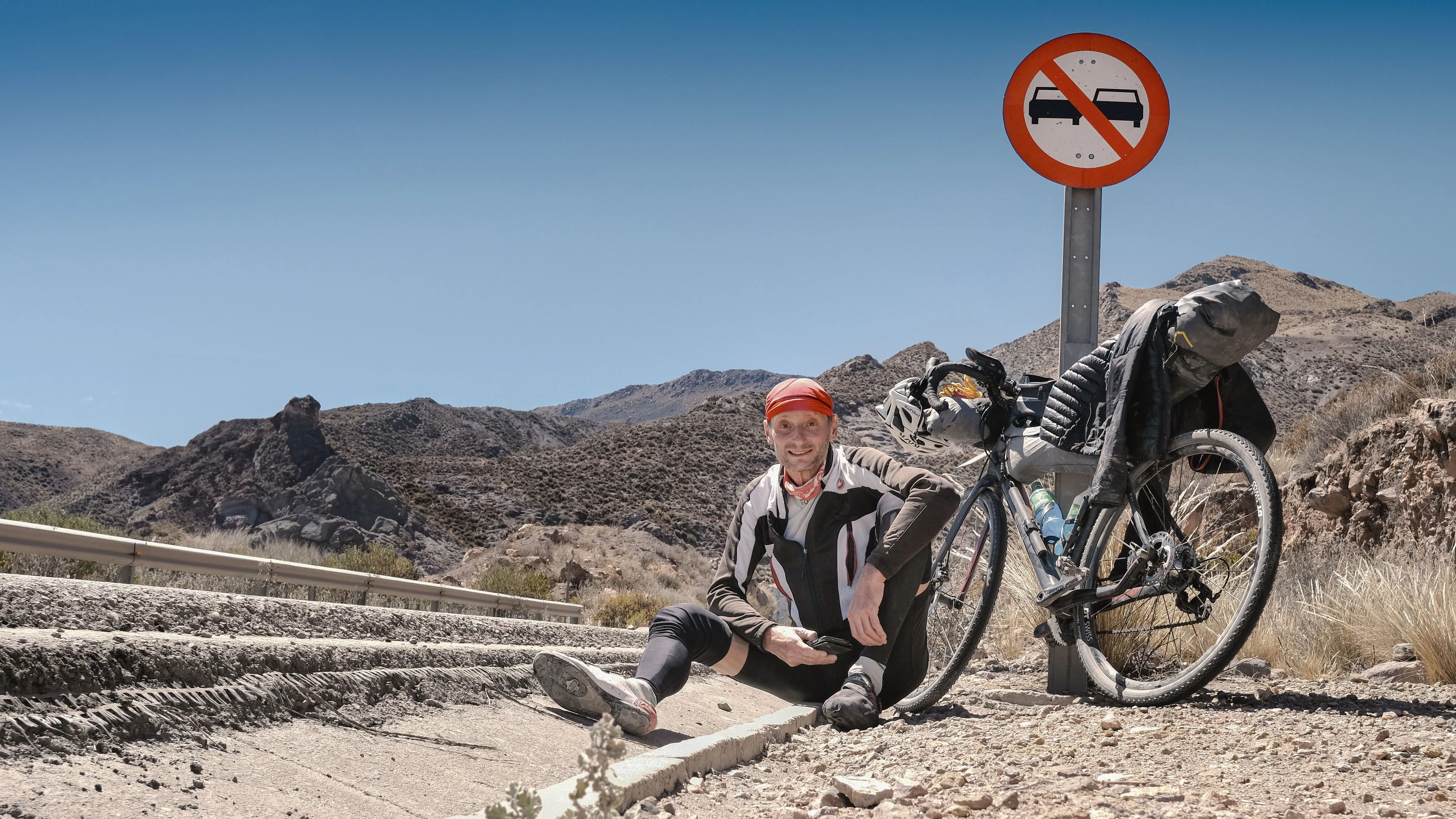
With just three changes of clothes, two bikes, a tent, and a dream, we began our mission: cycling from Colombia to Patagonia, a region on the southernmost tip of Chile and Argentina.
Back home, we watched videos online of people bikepacking — an outdoor adventure that combines off-road cycling, lightweight camping, and self-supported travel — and it looked exhilarating.
Eight months on, we’ve just crossed the breathtaking Bolivian Salar de Uyuni, the world’s largest salt flat.
Spanning over 3,860 square miles, this natural wonder was formed from evaporated prehistoric lakes.
It’s currently dry season, so the flats are defined by a hard, white crust. But when winter arrives, the rain transforms it into a sprawling natural mirror.
It’s just one of the incredible sights we see on the adventure of a lifetime.
How to plan a bikepacking adventure
Before we left the UK, we joined a WhatsApp group called ‘Cycling South America,’ where people recommend routes and share their experiences.

We also joined Warmshowers, a platform that connects bikepackers with locals willing to offer a bed, a garden for a tent, a hot shower, a meal, or even just advice.
Speaking of advice, we quickly learned to pack light. We started the trip carrying a lot of unnecessary items, such as camp chairs and pillows.
We soon ditched both, swapping home comforts for rock faces and using clothes as cushions.
Of course, there are non-negotiables when you’re taking on a challenge like this: water, a water filter, and a stove.
But the most important? A Garmin inReach Mini, a pocket-sized satellite communicator that lets you send and receive two-way text messages, share your GPS location, and trigger 24/7 emergency rescue anywhere in the world.
The route
We started in Bogotá on January 16. Since then, we’ve travelled 14,000km through Colombia, Ecuador, and Peru.

In Ecuador, we stopped at Cuenca, a UNESCO World Heritage city with a relaxed Andean lifestyle, Spanish colonial architecture and a leafy central square.
Nearby is Cajas National Park, a rugged, high-altitude nature reserve famous for its glacial lakes. It’s a place no words can do justice.
In Peru, we cycled through the surf town of Máncora on the northwest coast.


We also travelled to Cusco, a historic city and region in southeastern Peru.
It’s the capital of the Inca Empire and the main gateway to Machu Picchu, the Sacred Valley, and Rainbow Mountain.
From Bolivia, we’ll travel into Argentina, criss-crossing the border between there and Chile.
Our endpoint is Ushuaia in Argentina, the southernmost city on Earth, and where South America meets the Antarctic.

A thrilling culinary experience
South America has always been a popular place for food tourism. But right now, it feels like more people are taking note.
Time Out recently ranked Lima, Peru’s capital, as the world’s best city for food in 2026. Street food is big business here.
We’ve indulged in everything from pork chicharron (crispy fried pork belly, seasoned with salt and spices) to trucha frita (fried whole freshwater trout marinated in lime juice, garlic, salt, pepper, and cumin).
Deep-fried and cooked on the street, though they’re not the healthiest of dishes, they’re delicious, greasy, and full of calories. Exactly what we need when we’ve been cycling.
It’s cheap, too. Outside the cities, meals cost around £2 per person.
Not all fun and games
We won’t sugarcoat it; we’ve had some hairy moments. On one of our first days in mountainous Colombia, we were lashed by torrential rain.
At one point, we needed to cross a flooded rocky road on the edge of a cliff.
One wrong move, and we could have gone tumbling off the edge.

Luckily, a local man pulled over on his motorcycle and (to our embarrassment) hoisted our bikes onto his shoulders and waded effortlessly across.
It was the most heroic moment we’ve ever witnessed. All while questioning our own life choices.

There was also a big discussion on Cycling South America about the Peru Great Divide — a 1600km route dubbed one of South America’s premium dirt-road touring trails — and whether it was worth it.
For us, it wasn’t. While the high peaks of the Peruvian Andes were spectacular, we had to give up due to altitude sickness.
The highest point is 16,372 feet above sea level — it’s no joke.

An affordable trip
Once you’ve covered the cost of flights to Colombia (in January, one-way direct fares with Iberia average around £510), it’s cheap to bikepack through South America.
Many hotels cost as little as £5 a night, while wild camping is free.
Money can’t buy some of the views we’ve woken up to.

Bikepacking v backpacking
Bikepacking might be tiring at times, but we’re seeing a lot of the ‘in-between’ that backpackers miss.
They might see mountains and countryside from a bus window, but we’re part of the environment and landscape, seeing how people really live.
It sounds cliché, but bikepacking is more about the journey than the destination.
You’re moving at your own pace, without feeling the pressure to tick off landmarks and bucketlist moments.
It’s slow tourism at its best.
As told to Sophie-May Williams.
You can follow Eline and Jonny’s journey here.
The rise of bikepacking
Eline and Jonny aren’t the only ones to get the extreme travel itch.
Searches for adventure tourism have surged by 75%, while the Adventure Travel Trade Association (ATTA) estimates the global adventure travel market is valued at £871.6 billion.
A small percentage of this figure comes from the bikepacking trend — this market was recently valued at £1.06 billion, as major hubs like Bikepacking.com record millions of monthly site visits.