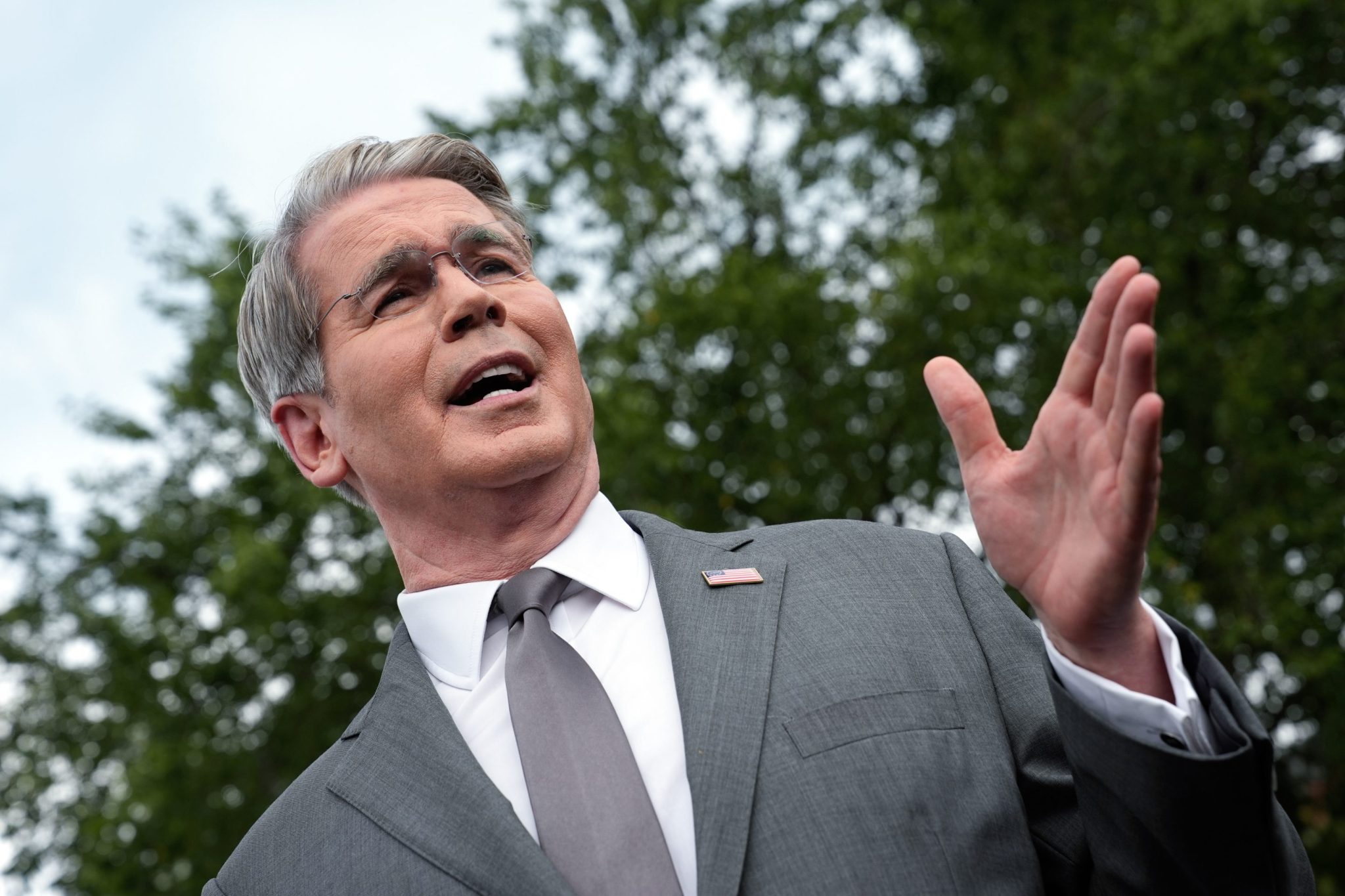
Investors are wondering what Scott Bessent is up to. At the start of the month, the Treasury Secretary’s ‘to-do’ list included purchasing $5 to $10 billion in Japanese yen.
This week, he announced the Treasury would increase “by at least double” the size of buybacks for longer-dated securities—and is prepared to expand the “fiscal consolidation” of purchasing back the costlier debt.
Analysts are generally nonplussed. The Japanese yen—while stronger against the dollar than in its June slump—has unwound to roughly the level it started the year at. The drift back to market-perceived fair value is “hardly surprising,” quipped UBS’s Paul Donovan.
Likewise, analysts fear Bessent’s bond battle this week will amount to very little: “Despite a series of efforts to thwart bond vigilantes, we believe these measures will struggle to offset either declining Fed credibility or rising rate expectations,” the BNP Paribas Markets 360 team wrote Wednesday.
Long-dated Treasuries drifted down since the announcement, but they remain relatively elevated. As such, Daniel Casali, chief investment strategist at wealth management firm Evelyn Partners, suggested: “If policymakers are serious about capping long-end yields, more intervention may be required. Indeed, to borrow from the movie Jaws: “We’re gonna need a bigger boat …” Investors may conclude that this week’s buyback announcement is not the last one needed to stop yields rising higher.”
Bessent is apparently unimpressed by the lack of confidence. Speaking on CNBC, he suggested the Treasury is working beyond the market’s perception.
“People have bad information. I have asymmetric information,” Bessent said. “So I think that the market should think: ‘Why would we have joined the Japanese in the intervention at this time? Do we know something the market doesn’t know … in terms of being willing to do … what I would call a Treasury twist here, in terms of the bond market? What do I know that the market doesn’t know?'”
“So I think the market’s probably gotten a little ahead of itself, a lot of people have not much to do in August.”
Bessent added that further action on bonds will hinge on market reaction, maintaining that what the Treasury is “trying to do is get people to focus on the fundamentals and not trade the headlines during a quiet period in a thin market. So, we are trying to keep the market in equilibrium.”
Warsh and Bessent
On the surface, Bessent’s action seems at odds with the Federal Reserve’s strategy. New chairman Kevin Warsh has suggested tightening at the long end of the yield curve—the very thing Bessent is now trying to loosen—helps the Fed read market signals.
He said in July: “We’re seeing a tightening both in nominals and in reals, even while, at some level, we haven’t done much in 42 days, the markets have done quite a bit.”
Warsh has long been a proponent of central banks reducing distortion in markets, and has also signaled he would like to reduce the Fed’s balance sheet—potentially pushing up borrowing costs as a result.
Bessent responded: “The Treasury and the Fed would work together if there was any change in the balance sheet, and we would adjust to any kind of run-off that they’re doing.”
It might be tempting, on the surface, to see the Fed and the Treasury at cross-currents. However, Bessent and Warsh’s working relationship is clear: the pair continue the long-standing tradition of meeting for breakfast or lunch every week.
Moreover, while Warsh has been clear he wants to pull the central bank back to what he sees as its “lane,” he has been explicit that it is not the role of the politically independent Fed to stray any further, for example, into the work of the Treasury.
He told Congress last month: “The way we erode [Fed] credibility are two things: We wander outside of our lane into your lane, or into the lane of another executive branch, or we don’t deliver on our promises. The first thing we can do is to deliver on our promises, and the second thing is … stick in our lane. That’s what we’re going to do.”
This story was originally featured on Fortune.com