US maintains naval blockade on Iran amid military pause
•The US naval blockade on Iran remains active, with recent interceptions of vessels violating it.
•President Trump has ordered a pause in air strikes against Iran amid indications of possible negotiations.
•Tensions persist in the region, with concerns about broader instability despite the temporary halt in military actions.
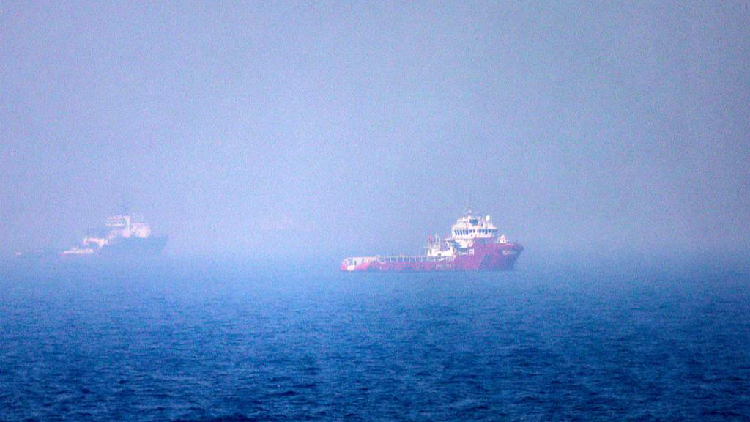
Our Privacy Statement & Cookie Policy By continuing to browse our site you agree to our use of cookies, revised Privacy Policy and Terms of Use. You can change your cookie settings through your browser. Ships seen near the Strait of Hormuz, July 13, 2026. /VCG A US naval blockade against Iran remains in full effect, the US military's Central Command (CENTCOM) said on Saturday. As of July 25, US forces had redirected 12 commercial vessels attempting to breach the blockade, disabled two that failed to comply and boarded two others to verify compliance, CENTCOM said in a statement on the social media platform X. US forces completed a verification boarding of the Comoros-flagged oil tanker M/T Charminar in the Arabian Sea earlier on Saturday, after which the vessel continued its journey, according to the command. CENTCOM also said US forces disabled the Mozambique-flagged M/T Lavine in the Gulf of Oman on Friday after its crew repeatedly attempted to violate the blockade and ignored multiple warnings. The vessel is no longer heading toward Iran, it added. As Washington insists on maintaining its maritime blockade, tensions in the Middle East remain volatile despite signs of a pause in direct US military action. Here are the latest developments on the front: Trump orders pause in air strikes on Iran US President Donald Trump has ordered a suspension of new air strikes against Iran on Friday after nearly two weeks of military operations. According to US media reports, the decision followed indications that Tehran may be willing to resume negotiations, although Trump warned that military operations could quickly resume if diplomatic efforts fail. The pause came after weeks of escalating hostilities between the two countries. During the conflict, US forces targeted Iranian military facilities, while Tehran responded with missile and drone attacks against American assets and regional interests across the Gulf. The White House has yet to describe the pause as a formal ceasefire, while signaling that the US is prepared to resort to military action if necessary. On Thursday, Trump said the US was "locked and loaded" and ready to launch a major military operation while talks with the Iranians continued. Attention is now focused on whether the temporary halt in fighting can pave the way for broader diplomatic progress. Trump has repeatedly asserted that Iran is interested in reaching an agreement, while insisting that Tehran must make significant concessions. Iranian leaders, however, have rejected what they describe as US pressure, as internal debate continues over whether to pursue negotiations or maintain a confrontational stance. US President Donald Trump is seen in the Oval Office of the White House in Washington, DC, July 24, 2026. /VCG Even as Washington considers its next steps, the repercussions of the conflict appear to be extending beyond the immediate US-Iran confrontation, raising concerns that instability could spread to other sensitive regions. Iran claims it destroyed multiple US military aircraft Iran claimed on Saturday that its armed forces destroyed 11 US warplanes and helicopters on the ground during the recent weeks-long conflict with the US. Speaking to the semi-official Tasnim News Agency, the Islamic Revolutionary Guard Corps (IRGC) said the attacks were carried out between July 8 and July 22. It claimed the destroyed equipment included 17 reconnaissance and operational drones, including eight that were brand new, one F-15 fighter jet inside a hardened shelter, one P-8 maritime patrol aircraft, one C-17 military transport aircraft and eight aerial refueling aircraft. The military said the aircraft were destroyed while stationed on the ground at US military bases but did not specify their locations. Netanyahu to brief Trump on Iran's alleged nuclear recovery efforts Israeli Prime Minister Benjamin Netanyahu is going to present US President Donald Trump with new intelligence on Iran's military and nuclear activities during their meeting at the White House on Tuesday, according to Israel's Channel 12. The report said Israeli officials believe Tehran has accelerated efforts to rebuild its military capabilities and advance its nuclear program under Supreme Leader Mojtaba Khamenei following the recent conflict. It did not provide details about the intelligence or the alleged activities. According to the media, Netanyahu hopes the intelligence will reinforce concerns over Iran's nuclear ambitions, after previous Israeli assessments reportedly helped persuade Washington to carry out strikes on Iranian targets. The report also mentioned Trump's recent blockade of a US strike on Iran in favor of allowing more time for diplomatic negotiations. However, a senior Israeli official was quoted as saying the prospects for a US-Iran agreement are "virtually nonexistent," warning that further escalation is likely. Iran urges EU action over Ukraine ship attack As Washington weighs its next steps toward Tehran, the alleged attack in the Caspian Sea has added a new dimension to the crisis, drawing Ukraine and the European Union into an already complex regional standoff. Iran's Foreign Minister Seyed Abbas Araghchi on Saturday called on the EU to take "decisive" action against Ukraine's targeting of an Iranian commercial ship in the Caspian Sea. Iranian Foreign Minister Seyed Abbas Araghchi at a press conference following a meeting with Iraqi Foreign Minister Fuad Hussein in Baghdad, Iraq, June 28, 2026. /VCG He made the remarks in a phone call with EU foreign policy chief Kaja Kallas, in which the two sides discussed the latest regional developments, according to a statement by the Iranian Foreign Ministry. Araghchi condemned the Ukrainian attack, urging the EU, UN Security Council, and international community to hold its "perpetrators" and supporters to account, according to the statement. The two sides also addressed developments in the Strait of Hormuz, stressing the need for diplomatic initiatives to manage regional tensions, it added. In a separate statement, the ministry said it summoned Ukraine's charge d'affaires in Tehran on Saturday over the attack, formally delivering a note of protest condemning the "hostile and criminal" act. Earlier in the day, the ministry said the Ukrainian attack had caused the vessel to explode, killing a sailor and wounding another. The ministry said Iran has never intervened in the conflict between Russia and Ukraine, adding the strike could further "spread the flames of the war and insecurity in a dangerous manner." Also on Saturday, Ukrainian President Volodymyr Zelenskyy said his country's forces had hit a Russian warship and vessels used for transporting Iran-linked military cargo in the Caspian Sea.المصدر: CGTN EN | Source: CGTN EN
→The US naval blockade on Iran remains active, with recent interceptions of vessels violating it.
→President Trump has ordered a pause in air strikes against Iran amid indications of possible negotiations.
ملاحظة تحريرية | Editorial Note: نُشر هذا المقال في الأصل بواسطة CGTN EN. خبر (Khabr) هي منصة إعلامية أردنية مرخّصة تعمل بالذكاء الاصطناعي. نضيف قيمة تحريرية من خلال: تحليل ذكي للأخبار، ملخصات تلقائية، رواية صوتية بالذكاء الاصطناعي، ترجمة متعددة اللغات، وتدقيق الحقائق. هدفنا جعل الأخبار أكثر وضوحاً وسهولةً للقارئ العربي.
This article was originally published by CGTN EN. Khabr is a licensed Jordanian AI-powered news platform (Registration #82086). We add editorial value through: AI-powered news analysis, automated summaries, AI audio narration, multi-language translation (Arabic, English, French, Turkish), and AI fact-checking. Our mission is to make news more accessible and understandable for Arabic-speaking audiences worldwide.