⚡ عاجل: كريستيانو رونالدو يُتوّج كأفضل لاعب كرة قدم في العالم●⚡ أخبار عاجلة تتابعونها لحظة بلحظة على خبر●⚡ تابعوا آخر المستجدات والأحداث من حول العالم●
AI اقتراحات ذكية
AI مباشر|--مشاهد مباشر
864,146مقال404مصدر نشط228قناة مباشرة5,647خبر اليوم
آخر تحديث:منذ 0 ثانية
US-Iran ceasefire: JD Vance says 21-hour talks end without deal - key takeaways
US Vice President JD Vance said negotiations between the United States and Iran ended after 21 hours in Islamabad without reaching an agreement, following Tehran’s refusal to accept Washington’s terms on nuclear restrictions.
He said the US was seeking an “affirmative commitment” that Iran would not pursue nuclear weapons, calling it the “core goal” of President Donald Trump.
Get updated faster and for FREE: Download the Gulf News app now - simply click here.
Constant White House contact during talks
Vance said he remained in continuous communication with President Trump and senior officials throughout the talks.
He said he spoke with Trump “a half dozen” to “a dozen times” during the negotiations, and also consulted top officials including Secretary of State Marco Rubio, Treasury Secretary Scott Bessent and US Central Command chief Adm. Brad Cooper.
US presents “final and best offer”
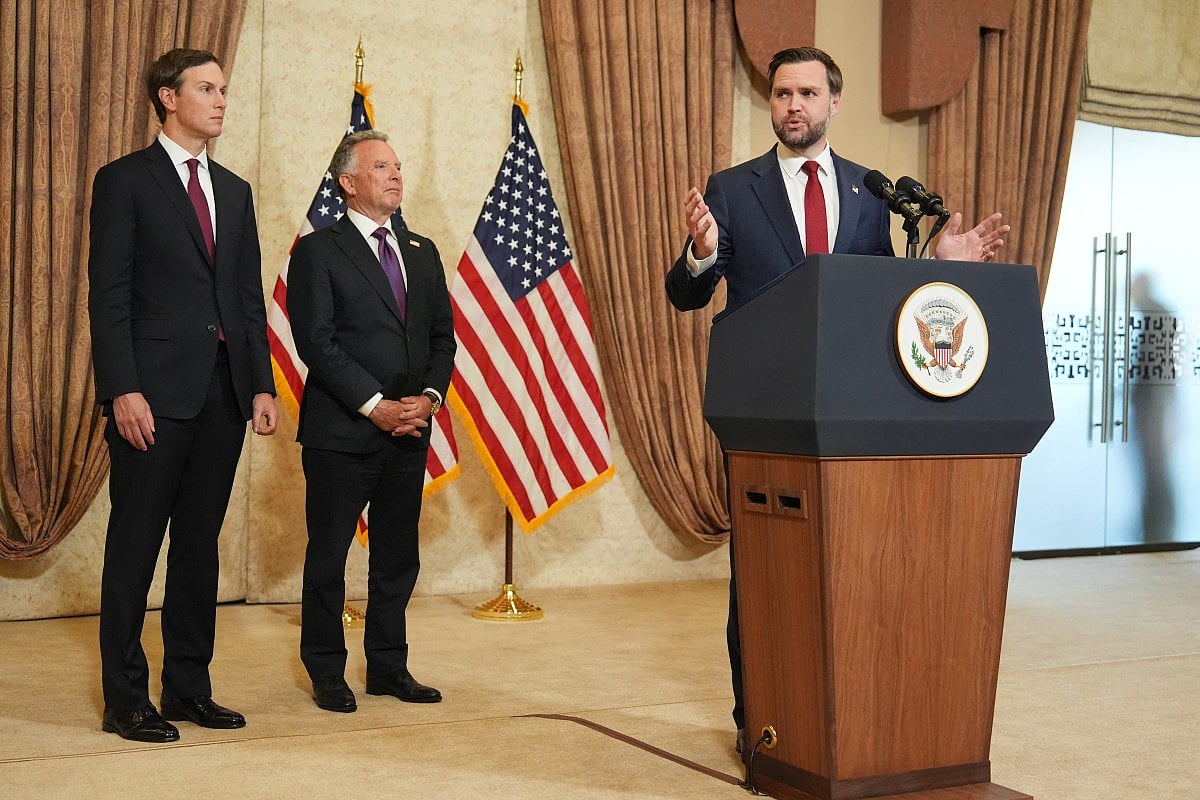
Standing alongside envoys Steve Witkoff and Jared Kushner, Vance said Washington had delivered its concluding proposal to Tehran.
“We leave here with a very simple proposal… our final and best offer. We’ll see if the Iranians accept it,” he said.
He departed Pakistan shortly after addressing reporters.
Talks held “in good faith” despite deadlock
Vance said the US delegation engaged “in good faith” but said Iran ultimately did not accept American terms.
“We just could not get to a situation where the Iranians would accept our terms,” he said.
He added that the outcome was “bad news for Iran much more than… the United States”.
Vice President JD Vance gives an update in Pakistan:
"The simple fact is that we need to see an affirmative commitment that they will not seek a nuclear weapon, and they will not seek the tools that would enable them to quickly achieve a nuclear weapon." pic.twitter.com/il4THN5DwV
Talks in Islamabad lasted 21 hours but ended without an agreement to halt the war
“We’ve had a number of substantive discussions… but we have not reached an agreement,” Vance said, calling it “bad news for Iran much more than… the United States”
“We just could not get to a situation where the Iranians would accept our terms,” he said
He thanked Pakistan’s leadership, praising Prime Minister Shehbaz Sharif and Field Marshal Asim Munir for facilitating the talks
Any shortcomings “wasn’t because of the Pakistanis, who did an amazing job”
Trump was closely involved, speaking with Vance “a half dozen” to “a dozen times” during negotiations
The US reiterated its position: “our final and best offer”
Pakistan praised for mediating role
Vance thanked Pakistan’s leadership, including Prime Minister Shehbaz Sharif and Field Marshal Asim Munir, saying any shortcomings in the process were not due to the host nation.
He described Pakistan’s facilitation as “an amazing job” in helping bring both sides to the table.
Core dispute remains nuclear programme
The central sticking point remained Iran’s nuclear programme, with the US insisting on verifiable limits to prevent any path to a weapon.
Iran maintains its programme is peaceful, while Washington continues to demand long-term guarantees against weaponisation.
What comes next
Despite the breakdown, US officials indicated the proposal remains on the table, leaving the door open for Iran to respond.
It remains unclear whether the fragile ceasefire framework will hold or whether tensions will escalate further after the talks’ collapse.
ملاحظة تحريرية | Editorial Note:
نُشر هذا المقال في الأصل بواسطة Gulf News.
خبر (Khabr) هي منصة إعلامية أردنية مرخّصة تعمل بالذكاء الاصطناعي.
نضيف قيمة تحريرية من خلال: تحليل ذكي للأخبار، ملخصات تلقائية، رواية صوتية بالذكاء الاصطناعي، ترجمة متعددة اللغات، وتدقيق الحقائق.
هدفنا جعل الأخبار أكثر وضوحاً وسهولةً للقارئ العربي.
This article was originally published by Gulf News.
Khabr is a licensed Jordanian AI-powered news platform (Registration #82086).
We add editorial value through: AI-powered news analysis, automated summaries, AI audio narration, multi-language translation (Arabic, English, French, Turkish), and AI fact-checking.
Our mission is to make news more accessible and understandable for Arabic-speaking audiences worldwide.
هذا الخبر ضمن تغطية خبر لقسم سياسة.
نقدّم لك تحليلات ذكية وملخصات يومية لأهم الأخبار من مصادر موثوقة متعددة.
المصدر: Gulf News.
يوجد 6 مقالات مرتبطة بهذا الموضوع.
This article is part of Khabr's coverage of Politics.
We provide AI-powered analysis, summaries, and multi-source aggregation to keep you informed.
Source: Gulf News.
Tags: US-Iran, ceasefire, diplomacy.
🍪 نستخدم ملفات تعريف الارتباط لتحسين تجربتك وعرض الإعلانات المخصصة. باستخدامك للموقع، فإنك توافق على سياسة ملفات تعريف الارتباط وسياسة الخصوصية.
We use cookies to enhance your experience and show personalized ads. By using this site, you agree to our Cookie Policy and Privacy Policy.
FREEFree 1GB Internet + Free International Calls
$1 trial — eSIM in 190+ countries — No roaming charges