US hosts global meet on ‘far-left terror’: Who’s attending, why it matters
•play Live Sign upShow navigation menuNavigation menuNewsShow more news sectionsAfricaAsiaUS & CanadaLatin AmericaEuropeAsia PacificWorld CupMiddle EastExplainedOpinionVideoMoreShow more sectionsFeatur...
•xwhatsapp-strokecopylinkgoogleAdd Al Jazeera on GoogleinfoUS Secretary of State Marco Rubio answers a question before a meeting with Chilean Foreign Minister Francisco Perez Mackenna at the State Depa...
•The “Ministerial on the Resurgence of Political Terrorism”, taking place on Thursday, brings together government representatives from around the world to coordinate on what the US Department of State...
هذا الخبر من Al Jazeera English. خبر يقدم أدوات ذكاء اصطناعي للتلخيص والترجمة والاستماع.
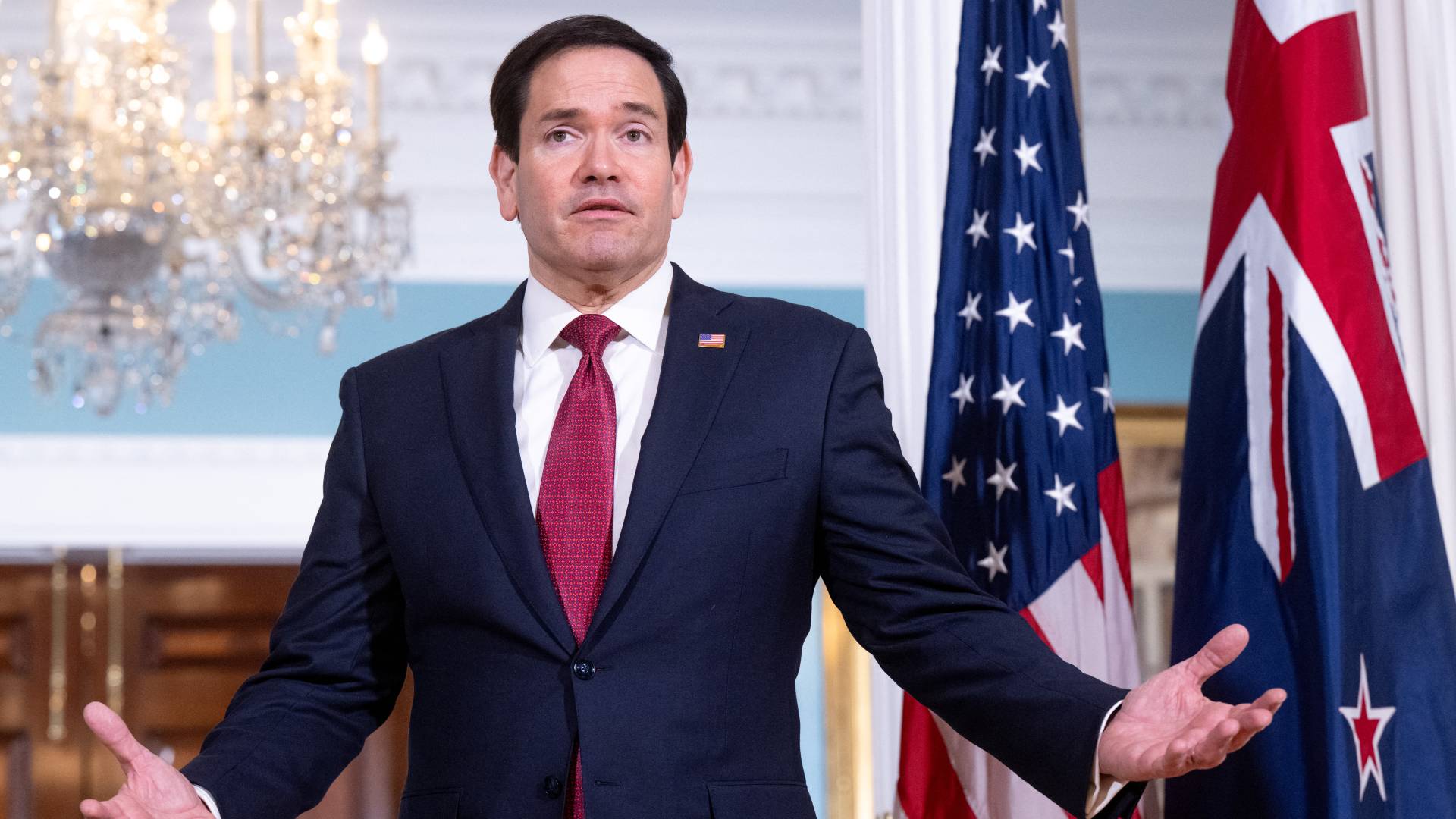
play Live Sign upShow navigation menuNavigation menuNewsShow more news sectionsAfricaAsiaUS & CanadaLatin AmericaEuropeAsia PacificWorld CupMiddle EastExplainedOpinionVideoMoreShow more sectionsFeaturesEconomySportHuman RightsClimate CrisisInvestigationsInteractivesIn PicturesScience & TechnologyPodcastsTravelSponsored Contentplay Live Click here to searchsearchSign upNavigation menucaret-leftDonald TrumpTrump’s primetime speechHow Iran war fallout may shape US electionsA visual guide to redistrictingcaret-rightEXPLAINERNews|CrimeUS hosts global meet on ‘far-left terror’: Who’s attending, why it mattersMore than 65 countries expected to attend meeting to address ‘renewed threats’ from ‘far-left political violence and terrorism’. xwhatsapp-strokecopylinkgoogleAdd Al Jazeera on GoogleinfoUS Secretary of State Marco Rubio answers a question before a meeting with Chilean Foreign Minister Francisco Perez Mackenna at the State Department on July 6, 2026 in Washington, DC [Finn Gomez/Getty Images via AFP]By Marthe van der WolfPublished On 16 Jul 202616 Jul 2026United States Secretary of State Marco Rubio is hosting more than 65 countries for a conference focused on political violence from the far left, a designation that a number of critics say is being used to target legitimate opposition. The “Ministerial on the Resurgence of Political Terrorism”, taking place on Thursday, brings together government representatives from around the world to coordinate on what the US Department of State calls a “renewed threat” that has “remained a blind spot in the international community’s counterterrorism focus”. Critics, including the American Civil Liberties Union, told the Reuters news agency that “the far-left terrorism designations could be used to target lawful protest activity and political opponents rather than genuine security threats.” Here’s what’s driving the summit and who’s attending: The Trump administration’s 2026 counterterrorism strategy identifies three primary threats: “Islamist terrorism”, “narco-terrorism”, and “violent left-wing extremists, including Anarchists and Anti-Fascists”. The strategy states that the third category of left-wing “extremists” has been traditionally ignored, and notes that Charlie Kirk’s assassination in September 2025 was executed “by a radical who espoused extreme transgender ideologies”. The counterterrorism strategy omits right-wing extremism and white supremacist groups, despite growing instances of violence that some of these outfits have been accused of – including several of those who attacked the Capitol on January 6, 2020, in an attempt to overturn the US presidential election that Donald Trump lost. Thomas Renard, director of The Hague-based International Centre for Counter-Terrorism, said the summit reflects a fundamental shift in how the US sees the threat. “What we are seeing now in the United States is that counterterrorism has been completely politicised, instrumentalised,” he told Al Jazeera. “For instance, the threat from far-right terrorism, which was for decades considered as the primary domestic threat, has now completely disappeared from the US counterterrorism strategy.” Invites went to more than 70 countries as the State Department wrote on social media that countries had shown “overwhelming interest”. It is reported that Israel’s Foreign Minister Gideon Saar will be present alongside representatives from multiple countries. The stated aim is to “expand coordination, enhance information sharing, and strengthen international law enforcement mechanisms”. The summit follows a series of smaller meetings held earlier this year, including one in The Hague with law enforcement officials. Renard says many European nations are expressing their unease with this ministerial meeting by sending relatively junior ministers. “They are not particularly convinced that this is a topic that justifies this type of gathering, but at the same time, they don’t want to antagonise the United States either. And therefore, this is the compromise they found,” he said. In November, 2025, the US designated four European groups as terrorist organisations: The German Antifa Ost, the Italian Informal Anarchist Federation/International Revolutionary Front (FAI/FRI), the Greek Armed Proletarian Justice and the Greek Revolutionary Class Self-Defense. The term is usually used by governments to describe movements accused of violence and driven by left-wing ideologies, including Marxism, socialism, or anarchism. Such movements usually describe themselves as anti-capitalist and anti-imperialist. Latin America saw several left-wing armed movements during the Cold War, a number of which carried out sustained campaigns of political violence, such as Colombia’s Revolutionary Armed Forces of Colombia (FARC), the Farabundo Marti National Liberation Front (FMNL) in El Salvador and the Tupamaros in Uruguay. Throughout the 20th century, Washington repeatedly backed hardline right-wing regimes that opposed left-wing movements across Latin America. India has been dealing with the Naxalite rebellion, a far-left Maoist movement that started in the 1960s and claims to fight for the rural population. The group is seen as one of India’s most serious internal security threats. At its peak, about the year 2000, thousands of people were killed due to the conflict with the Naxalite rebellion. During the 1970s and 1980s, Marxist groups like the Red Army Faction in West Germany were behind several assassinations, abductions and bombings that they argued were aimed at weakening the capitalist state. By contrast, the Antifa movement, which the Trump administration has consistently tried to portray as a major violent threat, is a loose, decentralised collection of socialist-leaning individuals opposed to far-right extremism, white supremacy and authoritarianism. Several individuals described by prosecutors as Antifa members have been indicted on accusations of violence in US courts, especially in states like Texas that are ruled by Trump’s Republican Party, since he returned to power. In June, eight such individuals were sentenced to several years in prison: Benjamin Hanil Song, convicted of the attempted murder of a law enforcement officer, was sentenced to 100 years in prison. But the same Trump administration has pardoned all those charged with violence during the January 6, 2023 insurrection, including individuals accused of beating police officers. This week’s summit also specifically focuses on far-left political violence but does not include the threat from far-right ideology and terrorism, similar to the counterterrorism strategy. This, even though the Oklahoma bombing, which killed 168 people and wounded nearly 700 in the deadliest act of domestic terrorism in the US, was carried out by the right-wing hardliner Timothy McVeigh. The Cato Institute, a US think tank in Washington, DC, stated in February that of politically motivated terrorism on US soil between 1975 and 2025, excluding the Oklahoma bombing and 9/11, “right-wing terrorists account for 45 percent of people murdered, Islamists are responsible for 32 percent, left-wing terrorists are responsible for 16 percent.” Renard says the summit creates the very problem it claims to solve: “The United States, with this summit and with its strategy, is creating, actually, a blind spot about far-right terrorist threats, as that threat is strongly anchored and rooted in the United States.” Advertisement AboutAboutShow moreAbout UsCode of EthicsTerms and ConditionsEU/EEA Regulatory NoticePrivacy PolicyCookie PolicyCookie PreferencesAccessibility StatementSitemapWork for usConnectConnectShow moreContact UsUser Accounts HelpAdvertise with usStay ConnectedNewslettersChannel FinderTV SchedulePodcastsSubmit a TipPaid Partner ContentOur ChannelsOur ChannelsShow moreAl Jazeera ArabicAl Jazeera EnglishAl Jazeera Investigative UnitAl Jazeera MubasherAl Jazeera DocumentaryAl Jazeera BalkansAJ+Our NetworkOur NetworkShow moreAl Jazeera Centre for StudiesAl Jazeera Media InstituteLearn ArabicAl Jazeera Centre for Public Liberties & Human RightsAl Jazeera ForumAl Jazeera Hotel PartnersFollow Al Jazeera English:المصدر: Al Jazeera English | Source: Al Jazeera English
ملاحظة تحريرية | Editorial Note: نُشر هذا المقال في الأصل بواسطة Al Jazeera English. خبر (Khabr) هي منصة إعلامية أردنية مرخّصة تعمل بالذكاء الاصطناعي. نضيف قيمة تحريرية من خلال: تحليل ذكي للأخبار، ملخصات تلقائية، رواية صوتية بالذكاء الاصطناعي، ترجمة متعددة اللغات، وتدقيق الحقائق. هدفنا جعل الأخبار أكثر وضوحاً وسهولةً للقارئ العربي.
This article was originally published by Al Jazeera English. Khabr is a licensed Jordanian AI-powered news platform (Registration #82086). We add editorial value through: AI-powered news analysis, automated summaries, AI audio narration, multi-language translation (Arabic, English, French, Turkish), and AI fact-checking. Our mission is to make news more accessible and understandable for Arabic-speaking audiences worldwide.