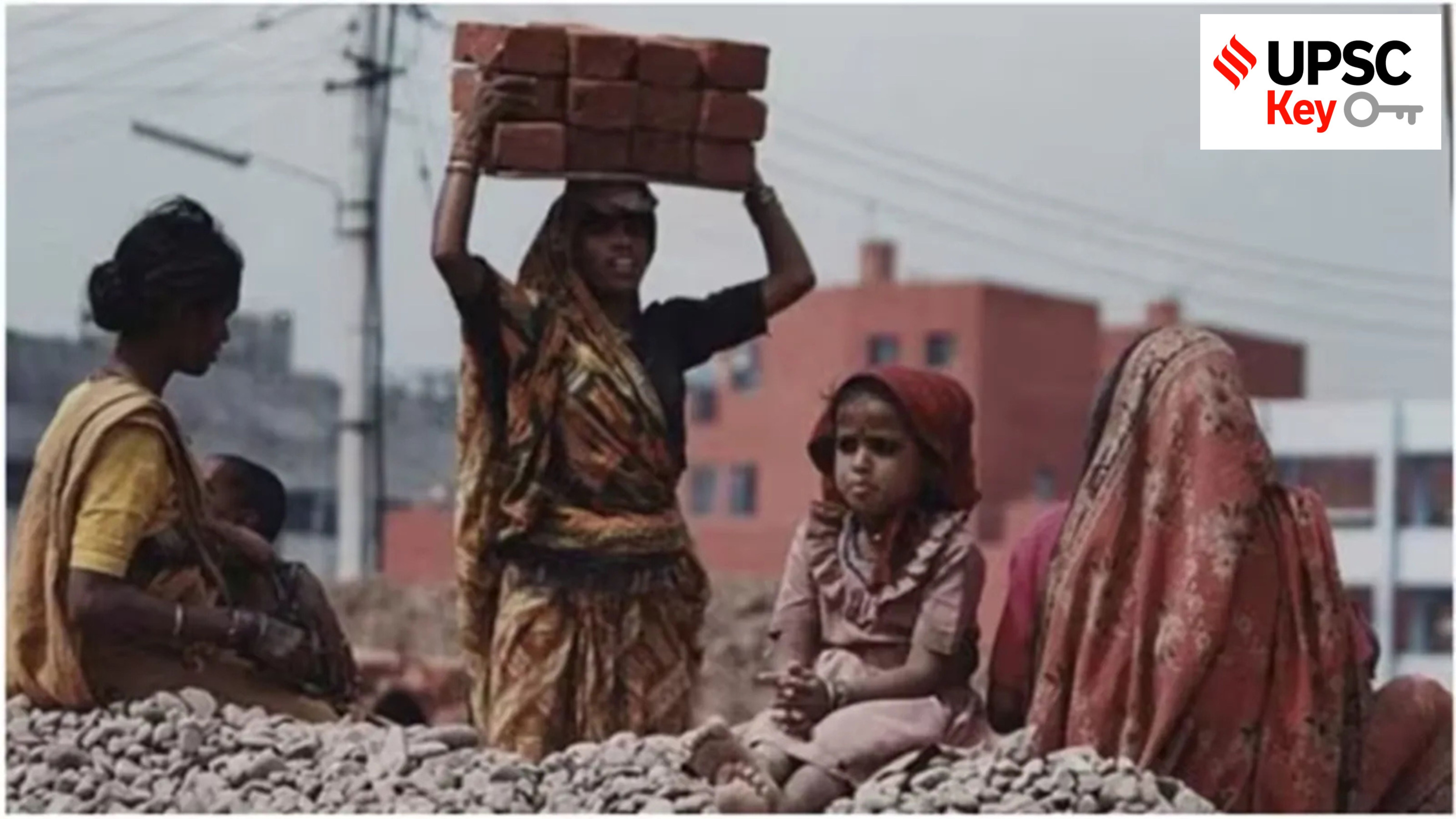
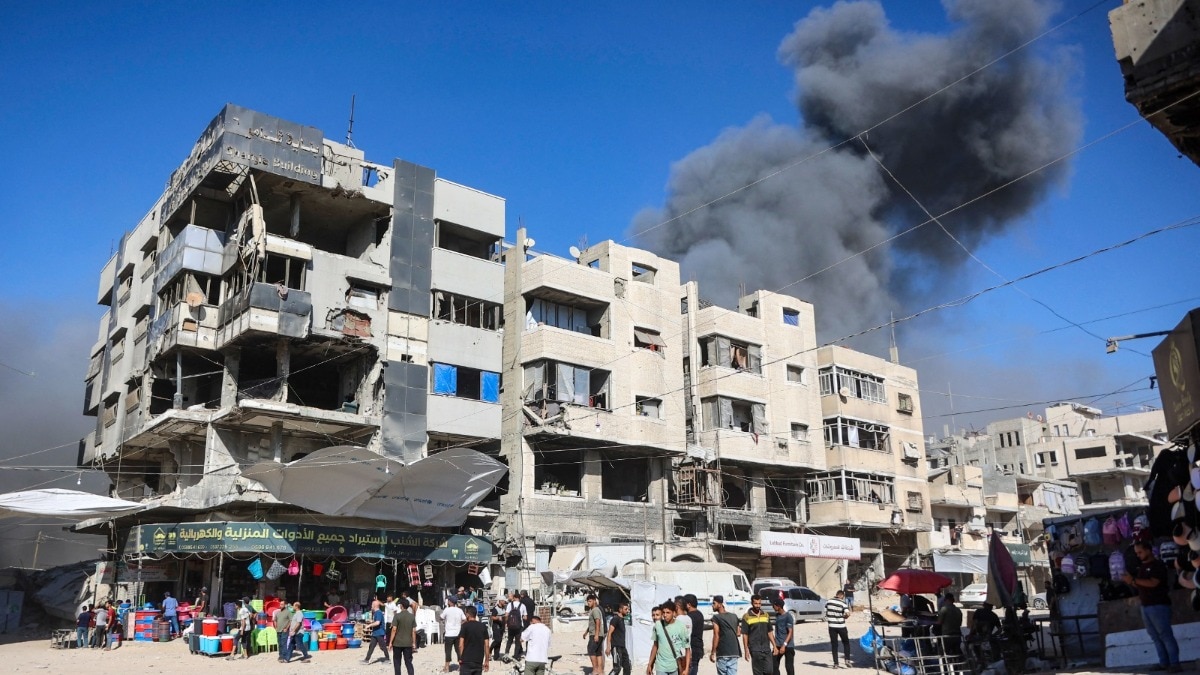
Weather ePaper Today’s Paper Journalism of Courage Home ePaper Politics Explained Opinion India Business Premium Cities UPSC Entertainment Sports World Lifestyle Tech Subscribe Sign In TrendingUPSC OfferIPL 2026US NewsPuzzles & GamesLegal NewsFresh TakeHealthResearch🎙️ Podcast Advertisement function checkAndLoadWindowSizeScript() { if (window.jQuery) { // jQuery is loaded, include your script jQuery(document).ready(function($) { // Your existing script for checking window width if (window.innerWidth) var page_w = window.innerWidth; else if (document.all) var page_w = document.body.clientWidth; if (page_w > 1024) { $(".add-left, .add-right").show(); } else { $(".add-left, .add-right").hide(); } }); } else { // jQuery is not loaded, check again after 0.2 seconds setTimeout(checkAndLoadWindowSizeScript, 200); } } // Initial call to the function checkAndLoadWindowSizeScript(); NewsUPSC Current AffairsUPSC Key: Delimitation, India-Sri Lanka and Female Labour Force Participation Rate Premium UPSC Key: Delimitation, India-Sri Lanka and Female Labour Force Participation Rate Why coercive diplomacy is relevant to the UPSC exam? What is the significance of topics such as Yellow Line, Meghalaya’s Early Childhood Development (ECD) model and Overseas Citizenship of India on both the preliminary and main exams? You can learn more by reading the Indian Express UPSC Key for April 20, 2026. Written by: Priya Kumari Shukla29 min readHyderabadApr 20, 2026 07:13 PM IST UPSC Key April 2026: Here's what you should be reading from the April 20, 2026 edition of The Indian Express Make us preferred source on Google Whatsapp twitter Facebook Reddit PRINT Important topics and their relevance in UPSC CSE exam for April 20, 2026. If you missed the April 19, 2026 UPSC CSE exam key from the Indian Express, read it here Armed Forces eye biogas, solar to cut fuel use amid West Asia crisis Preliminary Examination: Current events of national and international importance. Mains Examination: General Studies III: Security challenges and their management in border areas What’s the ongoing story: India’s Armed Forces are exploring various measures to conserve Liquefied Petroleum Gas (LPG) and fuel amid the ongoing global energy crisis triggered by the Iran war — from procuring alternative cooking sources, preferably biogas in the short term, to exploiting solar and wind energy on a larger scale over the next few months, senior officials told The Indian Express. • Why Armed Forces are exploring various measures to conserve Liquefied Petroleum Gas (LPG) and fuel? • How fuel crisis can impact Indian Armed Forces? • Fuel crisis and Security challenges-connect the dots • What alternative cooking sources are there? • Know the characteristics of biogas, Wind and solar energy. • What is the significance of biogas, Wind and solar energy adoption? • Wind and Solar energy in India-What are the Key facts about the same? • Wind and Solar energy in India-What is present status? • What are the issues and challenges with biogas, Wind and solar energy? • Can biogas, Wind and solar energy replace Liquefied Petroleum Gas (LPG) and fuel? • Orders to procure biogas stoves are in the pipeline and will be initiated soon by the Army, the officials said. • With the focus on conserving fuel, it is also being discussed whether the movement of large Army convoys for administrative purposes can be restricted to 400 km, while maximising the use of the rail network beyond that. • “Implementing limited restrictions on the routine movement of Army vehicles without affecting operational efficiency is being deliberated upon. This includes the pooling of vehicles and combining duties, such as the collection of rations, stores, and transportation of troops, wherever feasible. Furthermore, the use of CNG or electric civil hired transport will be encouraged where possible,” an official said. • Officials said some of these measures are in place, and others are in the process of being implemented. Other initiatives will be incorporated soon as part of the energy conservation efforts, and special drives towards their implementation are likely to be held over the next few weeks, they said. • According to officials, the conservation efforts will not impact operational flying although routine flights might be optimised. Operational flying can include those for recce, casualty evacuation, emergent relocation of troops, and transportation of ration and equipment. They said other measures to conserve fuel, oil and lubricants will also be encouraged at unit levels. Currently, 125-135 gm of gas is authorised per day for each soldier, for cooking food. • At present, every unit of the Army has four to six cookhouses feeding close to 125 to 150 soldiers every day, making cooking gas an essential commodity for troops deployed in various fields and peace units. • Officials indicated that approximately 156,000 kg of cooking gas is consumed daily in the Army, and about 20 per cent of that can be saved through biogas, amounting to 30,000 kg per day. • Besides, the Army alone has approximately over two lakh vehicles of various types, which are used regularly for administration, training, operations and maintenance, including transportation of stores, equipment, troops and rations. • In December last year, The Indian Express reported that the Armed Forces are planning to optimise thousands of acres of unutilised defence land across the country over the next three to five years for various projects — particularly those focusing on green energy initiatives, such as establishment of solar and biogas plants. • An estimated 46,000 acres of defence land are available for such projects, and options that were being explored include setting up solar plants, biogas plants, and afforestation and floriculture to earn carbon credits. • In October 2024, NTPC partnered with the Army to establish a solar hydrogen-based microgrid at Chushul in Ladakh to provide stable power supply at off-grid locations. Other Important Articles Covering the same topic: 📍Forces plan to optimise unused defence land for green energy Previous year UPSC Prelims Question Covering similar theme: 1) Consider the following statements: (UPSC CSE, 2016) 1. The International Solar Alliance was launched at the United Nations Climate Change Conference in 2015. 2. The Alliance includes all the member countries of the United Nations. Which of the statements given above is /are correct? (a) 1 only (b) 2 only (c) Both 1 and 2 (d) Neither 1 nor 2 ‘Why change delimitation framework based on old Census data? That has not been answered’ Preliminary Examination: Indian Polity and Governance-Constitution, Political System, Panchayati Raj, Public Policy, Rights Issues, etc Mains Examination: General Studies II: Parliament and State legislatures—structure, functioning, conduct of business, powers & privileges and issues arising out of these. What’s the ongoing story: “How will we find a reasonable population base? This needs to be studied … It should be considered whether population should be the only criterion … it is not a matter which the House can decide in a two or three-day special sitting,” P D T Achary says in an interview. • In simple terms, what is delimitation? • Why delimitation is necessary? • What is the job of Delimitation Commission? • How many members are there in the Delimitation Commission of India? • The members of the Delimitation Commission of India is appointed by whom? • The Delimitation Commission in India is a high power body whose orders have the force of law and cannot be called in question before any court-True or False? • Is the Delimitation Commission an independent body or is it supposed to take precise instructions from the political executive? • Which article(s) in the Constitution provide that delimitation of seats in Lok Sabha as well in the Legislative Assembly will be undertaken after every census and will be based on the latest census.? • As the delimitation row continues to simmer, former Lok Sabha Secretary General P D T Achary tells The Indian Express that it is the job of the Delimitation Commission and not the government to decide the allocation of seats to states as per Article 81 (2) (a). The Commission, he says, is supposed to be an independent body free of any interference from the Executive. • The Delimitation Commission’s task is to determine the number of seats each state should get as per the formula contained in Article 81 (2) (a). The other job of this Commission is to readjust the division of constituencies according to the number of seats each state gets. Therefore, the government can come before Parliament with the proposal to increase the total number of seats in the House. But the 50% increase can only be decided by the Commission and not the government. • Delimitation literally means the act or process of fixing limits or boundaries of territorial constituencies in a country or a province having a legislative body. The job of delimitation is assigned to a high power body. Such a body is known as Delimitation Commission or a Boundary Commission. • In India, such Delimitation Commissions have been constituted 4 times – in 1952 under the Delimitation Commission Act, 1952, in 1963 under Delimitation Commission Act, 1962, in 1973 under Delimitation Act, 1972 and in 2002 under Delimitation Act, 2002. The Delimitation Commission in India is a high power body whose orders have the force of law and cannot be called in question before any court. These orders come into force on a date to be specified by the President of India in this behalf. The copies of its orders are laid before the House of the People and the State Legislative Assembly concerned, but no modifications are permissible therein by them. • There is a clear link between delimitation and census. As the Article 82 of the Constitution of India calls for re-adjustment of boundaries after each Census. • Delimitation is carried out by an independent Delimitation Commission under the provisions of the Delimitation Commission Act. • The Delimitation Commission is appointed by the President of India and works in collaboration with the Election Commission of India. It is composed of the following: a retired Supreme Court judge, the Chief Election Commissioner of India and respective State Election Commissioners. The Constitution mandates that the Commission’s orders are final and cannot be questioned before any court as it would hold up an election indefinitely. Other Important Articles Covering the same topic: 📍UPSC Issue at a Glance | Census and Delimitation: 4 Key Questions You Must Know for Prelims and Mains 📍DMK’s resistance to delimitation evokes language debates of the past Previous year UPSC Prelims Question Covering similar theme: 2) How many Delimitation Commissions have been constituted by the Government of India till December 2023? (UPSC CSE, 2024) (a) One (b) Two (c) Three (d) Four 3) With reference to the Delimitation Commission consider the following statements: (UPSC CSE 2012) 1. The orders of the Delimitation Commission cannot be challenged in a Court of Law. 2. When the orders of the Delimitation Commission are laid before the Lok Sabha or State Legislative Assembly, they cannot effect any modification in the orders. Which of the statements given above is/are correct? (a) 1 only (b) 2 only (c) Both 1 and 2 (d) Neither 1 nor 2 India extends OCI card eligibility in Sri Lanka to sixth generation Preliminary Examination: Current events of national and international importance. Mains Examination: General Studies II: India and its neighbourhood- relations. What’s the ongoing story: ON A two-day official visit to Sri Lanka, Vice-President C P Radhakrishnan on Sunday announced the extension of the eligibility for Overseas Citizen of India (OCI) card for the Indian community in the island nation till the sixth generation. Until now, this was limited to the fourth generation. • India-Sri Lanka Relations-Know the historical background • How are India-Sri Lanka relations now? • What are the recent developments in India-Sri Lanka relations? • How does the Sri Lanka present opportunities and challenges for India? • What is the Overseas Citizenship of India scheme? • Person of Indian Origin (PIO) and Overseas Citizenship of India-compare and contrast • “In the case of Sri Lanka, this will now be extended to the fifth and sixth generations of the diaspora,” said Foreign Secretary Vikram Misri at a press briefing in Colombo on Sunday evening. “OCI cards would now be issued on the basis of documents that, in several cases, are issued by the government of Sri Lanka.” • Earlier in the day, Radhakrishnan met Sri Lankan President Anura Kumara Dissanayake to discuss the multifaceted bilateral ties, housing projects and fishermen issues between the two South Asian neighbours. • The two leaders also discussed the ongoing Indian project implementation in Sri Lanka with emphasis on the $450 million Cyclone Ditwah aid offered by India, according to the Ministry of External Affairs (MEA). • The two sides also discussed addressing fishermen issues in a humanitarian manner, considering the livelihoods of fishing communities on both sides. The fishermen issue is a contentious one in the ties between India and Sri Lanka. • The discussions, Misri said, underscored India’s evolution from a traditional neighbour to a reliable “first responder” during regional crises. Dissanayake expressed deep gratitude for India’s “Neighbourhood First” policy, citing three critical interventions that have stabilised the island nation: Economic Crisis in 2022: India’s financial lifelines during Sri Lanka’s debt crisis; and Cyclone Ditwah last year, as per the MEA. • Introduced in August 2005, the OCI scheme provides for registration of all Persons of Indian Origin (PIOs) who were citizens of India on January 26, 1950, or thereafter, or were eligible to become citizens of India on the said date. • An OCI card holder — essentially a foreign passport holder — gets a multiple entry, multi-purpose life-long visa for visiting India, and is exempt from registration with local police authority for any length of stay in the country. • An applicant is not eligible to get an OCI card if his/her parents or grandparents have ever been a citizen of Pakistan or Bangladesh. However, the spouse of foreign origin of a citizen of India or spouse of foreign origin of an OCI, whose marriage has been registered and subsisted for not less than two years, can apply for an OCI card. Foreign military personnel either in service or retired are also not entitled for grant of OCI. • An OCI card holder is not entitled to vote; to be a member of a Legislative Assembly or of a Legislative Council or of Parliament; to hold Indian constitutional posts such as that of the President, Vice President, Judge of the Supreme Court or High Court. Also, she cannot normally hold employment in the government. Other Important Articles Covering the same topic: 📍This word means: OCI (Overseas Citizen of India) Previous year UPSC Prelims Question Covering similar theme: 4) With reference to India, consider the following statements: (UPSC CSE, 2021) 1. There is only one citizenship and one domicile. 2. A citizen by birth only can become the Head of State. 3. A foreigner once granted the citizenship cannot be deprived of it under any circumstances. Which of the statements given above is/are correct? (a) 1 only (b) 2 only (c) 1 and 3 (d) 2 and 3 5) Consider the following statements: (UPSC CSE, 2020) 1. The value of Indo-Sri Lanka trade has consistently increased in the last decade. 2. “Textile and textile articles” constitute an important item of trade between India and Bangladesh. 3. In the last five years, Nepal has been the largest trading partner of India in South Asia. Which of the statements given above is/are correct? (a) 1 and 2 only (b) 2 only (c) 1 and 3 only (d) 1, 2 and 3 Previous year UPSC Main Question Covering similar theme: 📍‘India is an age-old friend of Sri Lanka.’ Discuss India’s role in the recent crisis in Sri Lanka in the light of the preceding statement. (2022) 📍In respect of India — Sri Lanka relations, discuss how domestic factors influence foreign policy. (2013) Meghalaya’s response to crisis in classroom is worth learning from Preliminary Examination: Indian Polity and Governance Mains Examination: General Studies II: Issues relating to development and management of Social Sector/Services relating to Health, Education, Human Resources. What’s the ongoing story: Swati Saxena, Sampath Kumar Writes- Children’s skills are best observed in natural, relational contexts, not sterile clinical settings. Early identification allows for low-cost, home-based interventions that can significantly alter developmental trajectories. • What are the basic components of early childhood development? • Why early childhood development is required? • What is the need for focusing on Early Childhood Care and Education (ECCE)? • Meghalaya’s Early Childhood Development (ECD) model-what are the key highlights? • How Meghalaya’s Early Childhood Development (ECD) model focuses on Early Childhood Care and Education (ECCE)? • What is the current literacy level of India? • What steps can enhance literacy in early childhood? Key Takeaways: Swati Saxena, Sampath Kumar Writes- • A crisis is unfolding in classrooms worldwide. The World Bank states that nearly 70 percent of children in low- and middle-income countries (LMIC) cannot read a simple text by age 10, pointing to deeper failures beyond schooling. • Literacy is not built in classrooms alone but is shaped in early years, reflecting a shift from education to governance. In India, this is reflected in efforts to strengthen platforms such as Anganwadis. Initiatives like Early Childhood Care and Education kits in Uttar Pradesh signal a move to embed early learning within frontline systems, recognising that foundational skills must be built well before children enter school. • Within this broader context, Meghalaya’s Early Childhood Development (ECD) model offers an instructive example. The state faces intersecting risks like high maternal mortality, widespread anaemia among women and children, low rural institutional deliveries, and gaps in antenatal care, compounded by poverty, remoteness, and low trust in health systems. • Critically, with nearly one-fifth of its population under six, early childhood becomes central to its development trajectory. Recognising the interlinked nature of nutrition, health, and developmental delays, it has adopted a systems-based ECD Mission that integrates services and prioritises early, coordinated action to improve long-term human-capital outcomes. • Early childhood development is no longer viewed as a narrow social-sector concern but as a cornerstone of human capital formation, equity, and long-term economic growth. • Research from the Harvard Centre on the Developing Child has shown that brain development is a cumulative, experiential process that begins before birth and is most rapid in the first five years of life. • Neural circuits governing language, cognition, emotional regulation, and executive function are built sequentially, simple connections first, followed by more complex ones, creating either a strong or fragile foundation for lifelong learning, health, and productivity. Do You Know: Swati Saxena, Sampath Kumar Writes- • Meghalaya’s Guide for Monitoring Child Development (GMCD) is designed to support early identification of developmental delays among children aged 1-42 months. Instead of relying on testing or rigid checklists, trained frontline workers, ASHAs, ANMs, Anganwadi workers, nurses, or paediatricians, engage caregivers in open-ended dialogue about how children play, communicate, move, relate, and manage simple self-care tasks. Caregivers are treated as co-observers and experts on their own children. This approach reflects a critical insight from developmental science: Children’s skills are best observed in natural, relational contexts, not sterile clinical settings. Early identification allows for low-cost, home-based interventions that can significantly alter developmental trajectories. • Preliminary data from Meghalaya’s GMCD rollout is promising. More than 80 per cent of assessed children showed no visible developmental delay, while around 12 per cent were identified as needing follow-up support, and a small proportion reflected uncertainty requiring closer monitoring. • This approach also involves a shift from top-down service delivery to decentralised leadership and grassroots agency. Frontline workers are empowered and communities are engaged through Village Health Councils and Self-Help Groups, building sustainable pathways to improved child outcomes. Other Important Articles Covering the same topic: 📍Meghalaya govt conceptualises early childhood development programme Previous year UPSC Prelims Question Covering similar theme: 6) Which of the following provisions of the Constitution does India have a bearing on Education? (UPSC CSE, 2012) 1. Directive Principles of State Policy 2. Rural and Urban Local Bodies 3. Fifth Schedule 4. Sixth Schedule 5. Seventh Schedule Select the correct answer using the codes given below: (a) 1 and 2 only (b) 3, 4 and 5 only (c) 1, 2 and 5 only (d) 1, 2, 3, 4 and 5 Women participation in economy rising, but presence at top dismal Preliminary Examination: Economic and Social Development-Sustainable Development, Poverty, Inclusion, Demographics, Social Sector Initiatives, etc. • General Studies I: Social empowerment • General Studies III: Inclusive growth and issues arising from it What’s the ongoing story: The Indian government has failed in its bid to get Parliamentary approval to bring forward the implementation of the Women’s Reservation Act, with its linkage to the delimitation bill proving to be a stumbling block. Greater participation of women in the economy, though — and not just at the legislative level — is necessary for India to become a developed economy. • What is female labour force participation rate (LFPR)? • What is female labour force participation rate (LFPR) in India? • What do you understand by Labour Force and Labour Force participation rate (LFPR)? • What is the present situation of female labour force participation rate in India? • What are the factors contributing to lower female labour force participation rate in India • How the lower female labour force participation rate impacts economy? • Employment Rate (ER) and Unemployment Rate (UER)-Know in Detail • What do you understand by “Informal economy” and “Unorganised Sector”? • What Is the Unemployment Rate? How it is Calculated by CMIE? • Centre for Monitoring Indian Economy (CMIE)-Role and Under which Ministry/Organisation? • In 2023, the World Bank said that for India to become a developed economy by 2047, it had to grow nearly 8% every year, which was not possible with the low level of female participation in the workforce. In fact, a 2018 paper found that Indian constituencies with women legislators saw higher economic performance of about 1.8 percentage points per year compared to those with male lawmakers. • With the economy posting impressive growth rates in recent years, the female Labour Force Participation Rate (LFPR) has risen from 33.9% in 2022 to 40% in 2025. • Yet, it remains well below the global average (49%) and emerging market peers like Brazil (53%) and Vietnam (69%). According to a new paper by Shishir Gupta and Aalhya Sabharwal of Centre for Social and Economic Progress, the promotion of labour-intensive industries is key to raising the female LFPR. • While the female LFPR is rising, their presence in senior positions in various spheres, such as the country’s top educational institutions, is much lower. In Indian Institutes of Technology, the proportion of female faculty is stagnant at around 14% of total strength. IIT-Jodhpur, at 22%, had the highest proportion of female faculty in academic year 2024-25: 57 out of 259. While this was a notable improvement from 14% (7 out of 49 in 2014-15, some IITs have even seen a decline. • The story is only slightly better at India’s other world-class higher education institutes, the Indian Institutes of Management, with IIM-Ahmedabad having 20% female faculty, Bangalore 26%, Calcutta 31%, Lucknow 24%, Indore 19%, and Kozhikode 30%. • As in academia, female representation is low in business decision making. As per the statistics ministry’s Annual Survey of Unincorporated Sector Enterprises, the share of female-owned proprietary establishments stood at 27% in 2025. Look a step below ownership and the situation is worse: for every 100 males working as legislators, senior officials, and managers in 2025, there were only 13 females in similarly high positions, as per the Periodic Labour Force Survey. While nearly all of India’s leading firms have a woman as a director on their boards, 77% had only 1-2 women as directors. Other Important Articles Covering the same topic: 📍Knowledge Nugget: What are key highlights of Periodic Labour Force Survey (PLFS) and why is it UPSC essential Previous year UPSC Prelims Question Covering similar theme: 7) With reference to the Indian economy after the 1991 economic liberalization, consider the following statements: (UPSC CSE, 2020) 1. Worker productivity (Rs. per worker at 2004 — 05 prices) increased in urban areas while it decreased in rural areas. 2. The percentage share of rural areas in the workforce steadily increased. 3. In rural areas, the growth in non-farm economy increased. 4. The growth rate in rural employment decreased. Which of the statements given above is/are Correct? (a) 1 and 2 only (b) 3 and 4 only (c) 3 only (d) 1, 2 and 4 only Why US and Iran are stuck in the threats-talks circle Preliminary Examination: Current events of national and international importance Mains Examination: General Studies II: Effect of policies and politics of developed and developing countries on India’s interests What’s the ongoing story: US President Donald Trump has announced that US representatives will be in Islamabad on Monday evening (April 20), and if Iran does not take the “very fair and reasonable deal” being offered, the US would “knock out every single Power Plant, and every single Bridge, in Iran.” Iran did not immediately confirm participation. • What are the reasons behind the US–Iran diplomatic deadlock? • What do you understand by ‘threats–talks cycle’ in international relations? • The ‘threats–talks cycle’ in international relations-does it goes with the principles of International ethics? • What is coercive diplomacy in international relations? • The role of coercive diplomacy in US–Iran relations-know in detail • Discuss the impact of US–Iran tensions on global energy markets. • The first round of negotiations last weekend did not lead to an agreement. Statements from both sides have since shown they are stuck in a quagmire of differing aims and a deep trust deficit. • There are two distinct negotiating efforts constantly merging into each other. The first is the historic political issue of US objections to Iran’s nuclear programme, an approximately 30-year-old dispute that has featured in recurring, usually indirect, negotiations between Washington and Tehran. • The second is the more recent military issue of the US/Israeli war on Iran that began on February 28, and is now centred around Iran’s control of the Strait of Hormuz. • Given that this new character of the Strait is a direct product of the war, the US looks to discuss it as part of the current ceasefire, and distinct from the nuclear issue. Functionally, this would mean Iran opens the Strait in return for the US extending the ceasefire, and this enables negotiations for a broader political agreement — another nuclear deal. • For Iran, control of Hormuz is not a presumed temporary aspect. Iran now looks to use its Hormuz leverage to force a dilution of US demands and gain concessions across the board. This includes US guarantees against further attacks, unfreezing of Iranian assets, sanctions relief, and recognition of US rights to Iranian enrichment, among others. • For Iran, extension of this ceasefire consistently included the need for Israel to stop attacking Lebanon, in return for opening the Strait (with continuing Iranian regulation), something Israel had stridently opposed. However, ceasefire in Lebanon was announced last week, with Trump even saying in a social media post, “Israel will not be bombing Lebanon any longer. They are PROHIBITED from doing so by the USA”. • The West Asia war that began on February 28 has created not just the largest supply disruption in the history of the global oil market, but is emerging as a key stress test: how the $117 trillion global economy can be held hostage to a 50-kilometre stretch of waterway being commandeered by a few hundred men with guns. In a little over a month and a half, the crisis has already sparked a change in energy consumption patterns. There are parallels here to the 2011 Fukushima nuclear power plant incident, triggered by the earthquake in Japan, which forced a worldwide shift away from nuclear power. • About 80% of oil and oil products transiting the strait in 2025 were destined for Asia. In addition, over 110 billion cubic metres (bcm) of LNG passed through the Strait of Hormuz in 2025. About 93% of Qatar’s and 96% of the UAE’s LNG exports transited through the strait, representing almost one-fifth of global LNG trade. There are no alternative routes to bring these volumes to market, the IEA noted in its April 2026 note, ‘The Middle East and Global Energy Markets’. • Only two possible solutions appear to be on the horizon: a deal that looks remarkably similar to what Iran was willing to consider before the war, or an expanded conflict with no clear endgame, according to Dennis Citrinowicz, a West Asia National Security and intelligence expert and a nonresident Fellow at the Atlantic Council. Other Important Articles Covering the same topic: 📍Sending team to Pak for talks, take deal or face attacks: Trump to Iran Yellow Line: How Israel is pushing boundaries, from Gaza to Lebanon Preliminary Examination: Current events of national and international importance Mains Examination: General Studies II: Effect of policies and politics of developed and developing countries on India’s interests What’s the ongoing story: When the 10-day ceasefire between Israel and Lebanon began on Thursday (April 16), there were hopes that the next round of talks, if it happens, would discuss the return of the Israel Defense Forces (IDF) soldiers from southern Lebanon. • Why Israel has created the “Yellow Line”? • What does the term signify in the Israeli security strategy? • How will it shape future conflict in the region? • Israel’s war against Lebanon-why? • Israel and Lebanon-know the historical background • What is the role of Hezbollah in Israel and Lebanon conflict? • When did Hezbollah become involved in the Iran war? • What has been the Lebanon government’s response so far? • However, on Saturday, Israel announced that it has created a buffer zone, named the “Yellow Line”, which will enable the forces to prevent the locals from returning to their homes, destroy Hezbollah infrastructure, and continue striking beyond the zone while enforcing a defence line reaching up to the Litani River. • Hardliners in Israel have adopted the phrase “Gaza Model” to describe the replication of this strategy in other theatres of conflict, most notably in southern Lebanon. When IDF stretched its operations northward in early 2026, figures like Defence Minister Israel Katz began referencing the “Gaza Model” to justify establishing a new “yellow line” stretching up to the Litani River. • The international community and global watchdogs view the Yellow Line as a violation of international humanitarian law and the original tenets of the ceasefire agreement. Human rights monitor Euro-Med has called the Yellow Line a tool for systematic land seizure and forced ghettoisation. • The Yellow Line was first introduced during the Gaza war in October 2025. It is a military demarcation and deployment boundary that effectively bifurcated the Gaza Strip between the territory under direct Israeli military control and Palestinian-controlled areas. • It was included in the geopolitical lexicon within the draft frameworks of the October 2025 Gaza peace plan, proposed and released by US President Donald Trump. In a bid to draw such a boundary on the ground, IDF deployed yellow-painted concrete bollards equipped with 3.5-metre-high poles spaced at 200-metre intervals deep inside the enclave. • According to the Israeli security perspective, the Line represents a forward defensive posture amid the security challenges posed by the October 7, 2023, attacks by the Hamas militants. IDF doctrine holds a buffer zone necessary to prevent militant groups like Hamas and Hezbollah from regaining operational capabilities close to the Israeli border. While initially used as an interim deployment to ensure the disarmament of militant groups, the Line seems to have become a regular feature of the Israeli security strategy. • Militarily, the Yellow Line represents IDF’s commitment to manage the challenges with available resources and a re-engineering of the operational theatre. The research group T-Politography conducted spatial analyses of the conflict in Gaza to understand the phenomenon, revealing that the line places approximately 58% of the Gaza Strip under direct, open-ended Israeli military control. IDF treats the area east of the line as a closed military and free-fire zone. Other Important Articles Covering the same topic: 📍Why Israel launched attacks on Lebanon, hours after ceasefire Previous year UPSC Prelims Question Covering similar theme: 8) Mediterranean Sea is a border of which of the following countries? (UPSC CSE, 2017) 1. Jordan 2. Iraq 3. Lebanon 4. Syria Select the correct answer using the code given below: (a) 1, 2 and 3 only (b) 2 and 3 only (c) 3 and 4 only (d) 1, 3 and 4 only 1.(a) 2.(d) 3.(c) 4.(a) 5.(b) 6.(d) 7.(b) 8.(c) For any queries and feedback, contact priya.shukla@indianexpress.com Subscribe to our UPSC newsletter. Stay updated with the latest UPSC articles by joining our Telegram channel – IndianExpress UPSC Hub, and follow us on Instagram and X. Priya Kumari Shukla is a Senior Copy Editor in the Indian Express (digital). She contributes to the UPSC Section of Indian Express (digital) and started niche initiatives such as UPSC Key, UPSC Ethics Simplified, and The 360° UPSC Debate. The UPSC Key aims to assist students and aspirants in their preparation for the Civil Services and other competitive examinations. It provides valuable guidance on effective strategies for reading and comprehending newspaper content. The 360° UPSC Debate tackles a topic from all perspectives after sorting through various publications. The chosen framework for the discussion is structured in a manner that encompasses both the arguments in favour and against the topic, ensuring comprehensive coverage of many perspectives. Prior to her involvement with the Indian Express, she had affiliations with a non-governmental organisation (NGO) as well as several coaching and edutech enterprises. In her prior professional experience, she was responsible for creating and refining material in various domains, including article composition and voiceover video production. She has written in-house books on many subjects, including modern India, ancient Indian history, internal security, international relations, and the Indian economy. She has more than eight years of expertise in the field of content writing. Priya holds a Master's degree in Electronic Science from the University of Pune as well as an Executive Programme in Public Policy and Management (EPPPM) from the esteemed Indian Institute of Management Calcutta, widely recognised as one of the most prestigious business schools in India. She is also an alumni of Jamia Milia Islamia University Residential Coaching Academy (RCA). Priya has made diligent efforts to engage in research endeavours, acquiring the necessary skills to effectively examine and synthesise facts and empirical evidence prior to presenting their perspective. Priya demonstrates a strong passion for reading, particularly in the genres of classical Hindi, English, Maithili, and Marathi novels and novellas. Additionally, she possessed the distinction of being a cricket player at the national level. Qualification, Degrees / other achievements: Master's degree in Electronic Science from University of Pune and Executive Programme in Public Policy and Management (EPPPM) from Indian Institute of Management Calcutta ... Read More
المصدر: Indian Express
| Source: Indian Express