Unsung Heroes | How a haemophilia-affected boy from Karnataka built a system that saved thousands
•Weather ePaper Today’s Paper Journalism of Courage Home ePaper Politics Explained Opinion India Business Premium Cities UPSC Entertainment Sports World Lifestyle Tech Subscribe Sign In TrendingUPSC Of...
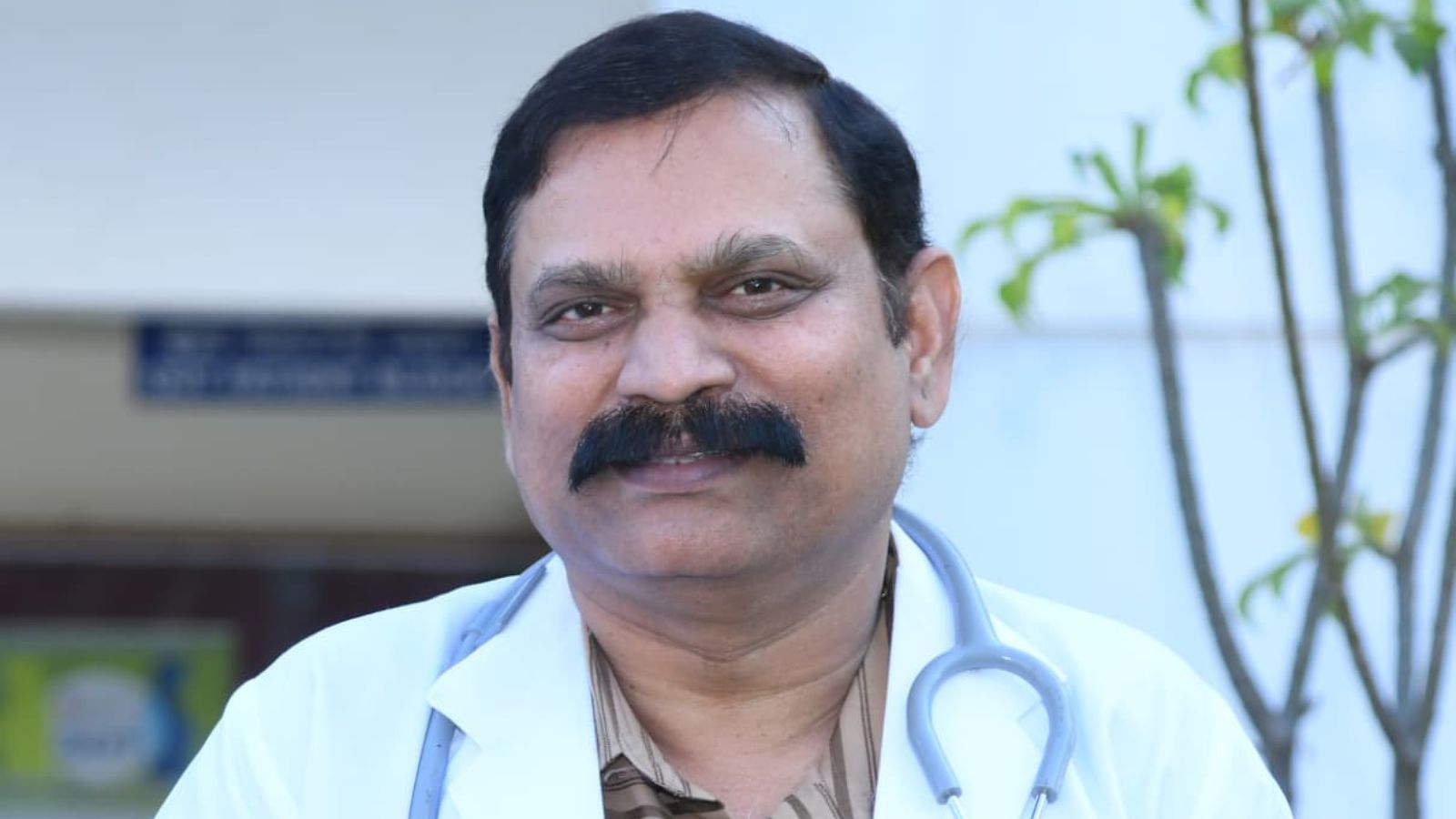
•Written by: Atiya Firdos13 min readBengaluruApr 18, 2026 08:00 AM IST Dr Suresh Hanagavadi (Photo Credit: Special Arrangement) Make us preferred source on Google Whatsapp twitter Facebook Reddit PRINT...
•“I can feel the bleeding in my brain,” his uncle had pleaded.
هذا الخبر من Indian Express. خبر يقدم أدوات ذكاء اصطناعي للتلخيص والترجمة والاستماع.
Weather ePaper Today’s Paper Journalism of Courage Home ePaper Politics Explained Opinion India Business Premium Cities UPSC Entertainment Sports World Lifestyle Tech Subscribe Sign In TrendingUPSC OfferIPL 2026US NewsPuzzles & GamesLegal NewsFresh TakeHealthResearch🎙️ Podcast Advertisement function checkAndLoadWindowSizeScript() { if (window.jQuery) { // jQuery is loaded, include your script jQuery(document).ready(function($) { // Your existing script for checking window width if (window.innerWidth) var page_w = window.innerWidth; else if (document.all) var page_w = document.body.clientWidth; if (page_w > 1024) { $(".add-left, .add-right").show(); } else { $(".add-left, .add-right").hide(); } }); } else { // jQuery is not loaded, check again after 0.2 seconds setTimeout(checkAndLoadWindowSizeScript, 200); } } // Initial call to the function checkAndLoadWindowSizeScript(); NewsCitiesBangaloreUnsung Heroes | How a haemophilia-affected boy from Karnataka built a system that saved thousands Unsung Heroes | How a haemophilia-affected boy from Karnataka built a system that saved thousands Today, Dr Suresh Hanagavadi is a leading hematologist from Karnataka and has been awarded the Padma Shri in 2026 for his decades-long service to patients. Written by: Atiya Firdos13 min readBengaluruApr 18, 2026 08:00 AM IST Dr Suresh Hanagavadi (Photo Credit: Special Arrangement) Make us preferred source on Google Whatsapp twitter Facebook Reddit PRINT One summer afternoon in Harihar, Karnataka, a young boy watched his uncle walk out of a hospital – angry, unheard, and in pain. “I can feel the bleeding in my brain,” his uncle had pleaded. Instead, he was dismissed. Pushed out of the OPD, humiliated. Minutes later, sitting outside, he clutched his head and told the boy beside him: “This is why you must become a doctor.” The boy was Suresh Hanagavadi. He was in Class 9. And like his uncle, he too had haemophilia. Today, a Padma Shri awardee, Suresh Hanagavadi’s life changed direction after the traumatic death of his uncle – denied proper care despite pleading that he was bleeding internally. The incident not only exposed the harsh realities of the disorder but also set him on a path of purpose. Who knew that he would go on to build the Karnataka Haemophilia Society and, in a powerful full circle, work as a doctor in the very medical college from where his uncle had once been pushed out – transforming a place of neglect into one of care, awareness, and change. Haemophilia is a rare, inherited bleeding disorder in which the blood does not clot properly due to the absence or deficiency of specific clotting factors – Factor VIII in haemophilia A (the most common type) and Factor IX in haemophilia B. Because of this, even minor injuries can lead to prolonged bleeding, and in severe cases, internal bleeding can occur in joints, muscles, or the brain. The condition is usually genetic and linked to the X chromosome; it mainly affects males, while females are typically carriers. However, in some cases, it can arise from spontaneous mutations without any family history. Inside the body, the normal clotting process is incomplete, making it difficult to stop bleeding once it starts. This leads to symptoms such as frequent nosebleeds, easy bruising, prolonged bleeding after injuries or surgery, and painful joint swelling caused by internal bleeding. Over time, repeated joint bleeds can result in permanent damage and disability. “Most people think it’s just about bleeding longer after a cut,” says Hanagavadi. “But the real danger is internal bleeding – especially in joints and the brain – which can be life-threatening if not treated in time.” Globally, haemophilia affects roughly 1 in 10,000 births for type A and 1 in 30,000 for type B – though many remain undetected. In India, an estimated 50,000 to 1,00,000 people may be living with the condition, but underdiagnosis remains a major challenge due to limited awareness, inadequate testing facilities, and high treatment costs. While there is no permanent cure yet, haemophilia is manageable. Treatment mainly involves replacing the missing clotting factors through injections, along with preventive therapy in severe cases and physiotherapy to manage joint damage. With timely and consistent care, individuals with haemophilia can lead near-normal lives. When it was called the ‘royal disease’ For decades, haemophilia was often referred to as the “royal disease” – a name rooted in its strong historical association with European monarchies. Even today, medical students study this condition through that lens. The term traces back to Queen Victoria, who is widely believed to have been a carrier of the gene responsible for haemophilia. Through her descendants, the condition spread across several royal families in Europe, including those in Spain, Germany, and Russia. Because royal marriages were frequently arranged between closely related families, the gene was passed along generations, with male heirs most visibly affected. Many princes suffered from recurrent internal bleeding, particularly in the joints, at a time when there was little medical understanding or effective treatment. One of the most well-documented cases was Alexei Nikolaevich, the son of Czar Nicholas II. His haemophilia had a significant impact on the Russian royal household. In an effort to manage his condition, the family placed considerable trust in the mystic Grigori Rasputin, who was believed to ease the boy’s suffering. Rasputin’s growing influence over the royal family became a source of political controversy and public distrust. While haemophilia itself was not a direct cause of the Russian Revolution, the circumstances surrounding Alexei’s illness contributed to weakening confidence in the monarchy. This, combined with larger forces such as war, economic hardship, and political unrest, played a role in the eventual collapse of imperial rule. Although once associated with royalty, haemophilia today is understood as a genetic disorder that affects people across all backgrounds. In countries like India, it is no longer a ‘royal’ condition but a public health challenge – one that disproportionately impacts those with limited access to timely diagnosis and treatment. When bruises were seen as a ‘witch’s curse’ Dr Suresh Hanagavadi never initially wanted to become a doctor. As a child, he dreamed of becoming a pilot. But the slow, painful death of his uncle in 1980 due to haemophilia and the complete absence of medical understanding around the disorder altered the course of his life. “Growing up, treatment options were almost non-existent. Pain was managed with rudimentary care, and joint damage was seen as inevitable,” says Dr Suresh Hanagavadi. His mother carried the quiet emotional burden of being a carrier, often blaming herself for his condition – an experience Dr Suresh Hanagavadi describes as central to understanding the need for psychosocial counselling alongside medical treatment. Recalling his early years with the disorder, he says that a lack of awareness often allowed superstition to replace medical understanding. He remembers how young boys with haemophilia would develop unexplained bluish patches on their bodies due to internal bleeding beneath the skin. In the absence of medical explanation, these sudden bruises were often misinterpreted in some communities as signs of a “witch’s curse” or supernatural influence. Families, acting on such beliefs, sometimes resorted to painful traditional practices, such as heating metal bangles and pressing them onto the bruises in an attempt to “draw out” the illness. He further recalls that joint bleeds, a common symptom of haemophilia, often led to severe swelling and restricted movement, which was misunderstood as stiffness requiring physical correction. In one deeply painful memory from his childhood, he describes how his uncle – who later succumbed to the disease – was made to sit on a ladder while bricks were tied to his limbs in an attempt to “straighten” or restore mobility. Instead of relief, the practice only worsened the suffering, reflecting how misinformation and fear shaped responses to a condition that medicine itself had yet to fully explain. Dr Suresh Hanagavadi says these experiences stayed with him even after he began experiencing symptoms himself, shaping both his emotional understanding of the disease and his later scientific curiosity. He went on to complete his MBBS in Davanagere and later pursued MD in Pathology from KIMS, Hubballi, a choice many questioned at the time for its lack of financial incentive. For him, however, pathology offered both security and purpose. It allowed him to continue working even if his physical condition worsened, while also placing him at the centre of blood science – the field most directly connected to his lived reality. “I knew that if my condition worsened physically, I could still continue working. And more importantly, I wanted to understand blood disorders at their core,” he says. Today, he lives with disability caused by repeated joint bleeds from haemophilia, which have severely damaged both his leg joints, though he continues his medical practice and advocacy work. He attributes much of this disability to the lack of timely access to treatment in earlier years and says prevention of such outcomes must be a primary responsibility of both state and central governments through early diagnosis and affordable care. Building a system where none existed While serving as a lecturer, he founded the Karnataka Haemophilia Society at a time when there was no database, no awareness, and no system for haemophilia care. Starting entirely from scratch, he travelled across districts, combed through hospital records, and identified just nine patients, bringing them together as a community seeking visibility and care. The early days were modest and improvised – the “office” was a table in his home, later shifting to a rented house where a hall with two beds and even a kitchen converted into a laboratory served multiple roles, including a daycare centre and dormitory for children. At the same time, he trained medical students to properly diagnose haemophilia, correcting widespread misdiagnosis. Cost remained the biggest barrier. Treatment could run up to Rs 1 lakh, while most patients could afford only a fraction of that. Through networks linked with the World Health Organization, he secured medicines at subsidised rates. When that wasn’t enough, he mobilised students through Kusuma (launched in 1996), organising cultural events across colleges to raise funds. Media coverage amplified the effort, bringing in new patients with each mention. The need was vast and growing. In 1999, students approached playback singer S P Balasubrahmanyam for a fundraising concert. Moved by their story, he agreed to perform without remuneration. On April 17, recognised globally as World Haemophilia Day, he performed in Davanagere – an event that transformed the organisation’s reach. Funds increased, visibility surged, and he continued his association for years, eventually becoming Patron-in-Chief. The growing momentum drew support from philanthropists like Kiruvadi Girijamma, whose contribution enabled the purchase of land for a permanent centre. The real shift, however, came when personal tragedy exposed a deeper systemic failure. In a small town in Sagara, Shivamogga, a child bit his lip while eating chocolate, and the bleeding would not stop. For six to eight days, his family moved from one hospital to another, unaware that he had a bleeding disorder. No diagnosis came. By the time he was referred to Davanagere, he had lost too much blood, arrived in shock, and died soon after due to cardiac arrest. The incident occurred in the constituency of Kagodu Thimmappa. When Dr Suresh Hanagavadi recounted the case to him, it underscored a deeper systemic failure – patients were not dying because treatment did not exist, but because life-saving clotting-factor medicines were either unavailable or unaffordable. “I had seen this suffering again and again. It was not an isolated case; it was the system,” Dr Suresh Hanagavadi says, recalling how such moments pushed him to escalate the issue beyond individual care. Drawing from his own experience of spending nearly his entire income on treatment, he directly appealed for government intervention. What followed became a key policy inflection point. Thimmappa, then health minister and MLA from the Sagara constituency, was invited as a guest for the foundation-laying ceremony of the land that would eventually house the care centre in Davanagere. What made the moment significant was its symbolism; the same constituency that witnessed the fatal incident was now directly linked to the push for systemic reform. By the early 2000s, these discussions translated into concrete policy action. Around 2005, Karnataka became one of the first states in India to begin procurement of clotting-factor medicines through the public health system. This marked a decisive shift from dependence on private purchase and charitable access to structured state-supported care. Dedicated budget allocations followed, ensuring sustained supply. Over time, haemophilia treatment, particularly clotting-factor concentrates, became available free of cost in government hospitals, including district-level facilities. What was once an inaccessible and expensive therapy gradually entered the public healthcare system as an essential service. In 2007, the Karnataka Haemophilia Care Centre was inaugurated in Davanagere. Today, it serves around 1,200 registered patients across North Karnataka, offering diagnostic laboratories, inpatient care, physiotherapy, and hydrotherapy – most of it free of cost. A lifetime spent fighting haemophilia Today, Dr Suresh Hanagavadi is a leading hematologist from Karnataka and has been awarded the Padma Shri in 2026 for his decades-long service to patients with haemophilia. A patient himself, Hanagavadi rose from a modest background to become a lifeline for thousands, providing treatment, free medication, and rehabilitation for over four decades. He has treated more than 7,500 patients, often ensuring access to costly clotting factor therapy for those who could not afford it. Recalling the moment he learnt about the Padma honour, Hanagavadi says he was attending a friend’s son’s wedding when he received the call. “My heart skipped a beat,” he adds, describing the recognition as unexpected after a lifetime of quiet service. Today, the scale of the challenge remains significant. According to estimates, India has nearly 1 lakh people living with haemophilia, though many remain undiagnosed due to a lack of awareness and diagnostic facilities. In Karnataka alone, around 7,000 patients are registered, with experts cautioning that the real number is likely higher. People living with haemophilia are covered under India’s Rights of Persons with Disabilities (RPwD) Act, 2016. This provides access to disability benefits, including reservations, medical support, and rehabilitation, though implementation varies across states. But Dr Suresh Hanagavadi argues for stronger policy support for people with blood disorders, particularly job reservations under disability provisions. He notes that patients often face major challenges in education, employment, and social integration due to physical limitations and repeated medical emergencies. According to him, ensuring structured job reservations and workplace support can significantly improve their ability to become financially independent and lead dignified lives. Building on this framework, Dr Suresh Hanagavadi has led awareness campaigns across Karnataka focused on early diagnosis, timely therapy, and prevention of joint damage. He works closely with children and mothers – many of whom are carriers – to reduce stigma, improve genetic understanding, and guide informed family decisions. His outreach also extends to adolescents and youth with haemophilia, with counselling sessions addressing both medical needs and psychological well-being. The aim is to shift care from emergency treatment to early, continuous, and preventive management. As Hanagavadi’s journey shows, the fight against haemophilia in India is not just medical – it is also about awareness, early diagnosis, and dismantling deep-rooted misconceptions that once turned a treatable disorder into a life-threatening condition. Stay updated with the latest - Click here to follow us on Instagramالمصدر: Indian Express | Source: Indian Express
ملاحظة تحريرية | Editorial Note: نُشر هذا المقال في الأصل بواسطة Indian Express. خبر (Khabr) هي منصة إعلامية أردنية مرخّصة تعمل بالذكاء الاصطناعي. نضيف قيمة تحريرية من خلال: تحليل ذكي للأخبار، ملخصات تلقائية، رواية صوتية بالذكاء الاصطناعي، ترجمة متعددة اللغات، وتدقيق الحقائق. هدفنا جعل الأخبار أكثر وضوحاً وسهولةً للقارئ العربي.
This article was originally published by Indian Express. Khabr is a licensed Jordanian AI-powered news platform (Registration #82086). We add editorial value through: AI-powered news analysis, automated summaries, AI audio narration, multi-language translation (Arabic, English, French, Turkish), and AI fact-checking. Our mission is to make news more accessible and understandable for Arabic-speaking audiences worldwide.