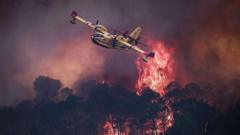
Understanding Fire Clouds: The Devastating Role They Play in Europe's Wildfire Crisis
•Fire clouds, or pyrocumulonimbus, form from intense heat generated by wildfires and can lead to severe weather events.
•The increase in fire clouds in Europe is linked to the growing severity of wildfires, complicating firefighting efforts.
•Climate change is exacerbating wildfire conditions, necessitating improved land management and community preparedness strategies.
المصدر: خبر - ترند | Source: خبر - ترندWhat Are Fire Clouds?
Fire clouds, also known as pyrocumulonimbus clouds, are a result of intense heat generated by wildfires. When a fire burns intensely, it can create updrafts of hot air that carry smoke and moisture high into the atmosphere, leading to the formation of these towering cloud structures.
The Formation Process
Typically, fire clouds form when the temperatures near the fire exceed 1000 degrees Fahrenheit. The heat causes air to rise rapidly, pulling in surrounding cooler air, which can lead to the creation of thunderstorms. These storms, fueled by the smoke and particulates released by the fire, can lead to severe weather events, including lightning strikes that ignite new fires.
Impact on Wildfire Severity
In recent years, particularly during the summer months, Europe has seen a rise in the occurrence of fire clouds, which directly correlates with the increasing severity of wildfires. The presence of fire clouds can lead to more erratic fire behavior, including rapid spread and spot fires far from the original blaze. This can challenge firefighting efforts, complicating containment strategies and putting additional lives at risk.
Recent Wildfire Incidents in Europe
Countries such as Greece, Spain, and Italy have reported record-setting wildfires in 2023, with fire clouds playing a crucial role. In some cases, these clouds have contributed to firestorms, creating a feedback loop of intensified burning and new ignitions. The extreme heat and dry conditions across Europe have acted as a perfect storm for the development of these dangerous weather phenomena.
Climate Change and Its Role
Experts warn that climate change is escalating the frequency and intensity of wildfires and their associated phenomena, such as fire clouds. Rising temperatures and prolonged drought conditions are expected to increase the number of days conducive to wildfire activity, further exacerbating the situation.
What Can Be Done?
To combat the growing wildfire threat and mitigate the effects of fire clouds, it is essential to implement effective land and forest management practices. Strategies such as controlled burns, creating firebreaks, and improving community preparedness are vital in reducing the risk of catastrophic wildfires.
Looking Ahead
As Europe continues to face the challenges posed by climate change, understanding fire clouds and their impact on wildfires is more important than ever. Communities must adapt to new realities, implementing strategies that prioritize both ecological health and human safety.
→Fire clouds, or pyrocumulonimbus, form from intense heat generated by wildfires and can lead to severe weather events.
→The increase in fire clouds in Europe is linked to the growing severity of wildfires, complicating firefighting efforts.
ملاحظة تحريرية | Editorial Note: نُشر هذا المقال في الأصل بواسطة خبر - ترند. خبر (Khabr) هي منصة إعلامية أردنية مرخّصة تعمل بالذكاء الاصطناعي. نضيف قيمة تحريرية من خلال: تحليل ذكي للأخبار، ملخصات تلقائية، رواية صوتية بالذكاء الاصطناعي، ترجمة متعددة اللغات، وتدقيق الحقائق. هدفنا جعل الأخبار أكثر وضوحاً وسهولةً للقارئ العربي.
This article was originally published by خبر - ترند. Khabr is a licensed Jordanian AI-powered news platform (Registration #82086). We add editorial value through: AI-powered news analysis, automated summaries, AI audio narration, multi-language translation (Arabic, English, French, Turkish), and AI fact-checking. Our mission is to make news more accessible and understandable for Arabic-speaking audiences worldwide.