Ukraine’s Zelenskyy fires his commander-in-chief after protests and major rift
•Ukrainian President Zelenskyy fired commander-in-chief Oleksandr Syrskyi amid protests following the removal of Defense Minister Mykhailo Fedorov.
•Mykhailo Drapatyi was announced as Syrskyi's replacement after public outcry over military strategy disagreements.
•Concerns over Ukraine's military advancements in drone warfare have fueled protests, with citizens demanding Fedorov's reinstatement.
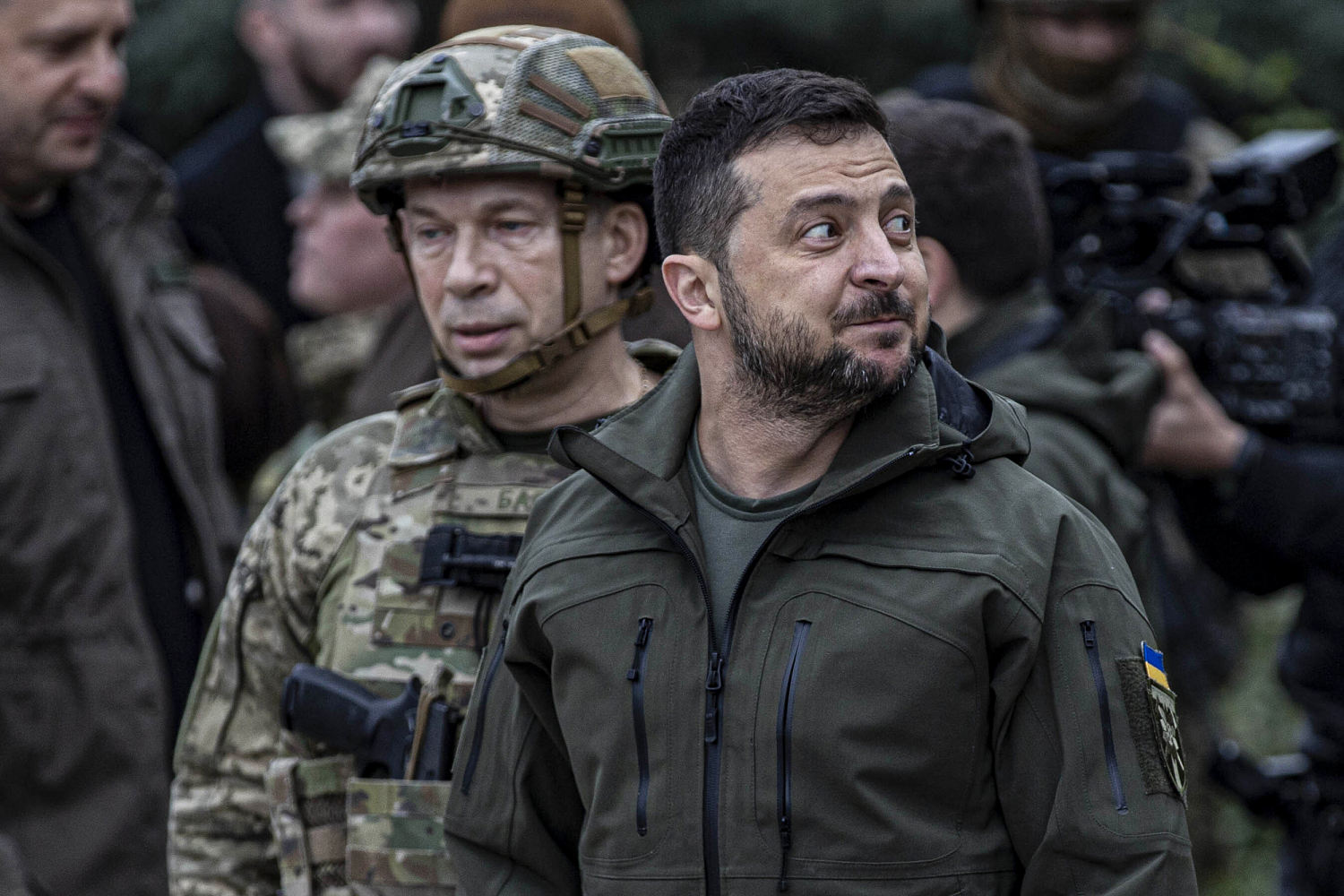
The Ukrainian president fired his commander-in-chief Oleksandr Syrskyi on Tuesday, bowing to pressure after the removal of popular Defense Minister Mykhailo Fedorov sparked the fiercest leadership crisis of his presidency. President Volodomyr Zelenskyy announced in a post on Telegram that Syrskyi will be replaced by Mykhailo Drapatyi. Zelenskyy’s decision to fire Fedorov, one of his closest allies, led to rare wartime protests on the streets of Kyiv. Fedorov publicly aired his disagreements over military strategy with Syrskyi, known as “The Butcher.” Syrskyi, 60, is a more traditional military commander focused on infantry and artillery, while Fedorov, 35, is seen as a modernizer, whose focus on technological advancements in drone warfare has led to Ukraine’s recent successes in hitting Russia. Worried Ukrainians, fearing that Fedorov’s removal could wipe out those gains, took to the streets calling for Fedorov to be reinstated and Syrskyi forced out instead. A senior air force commander also quit in protest. Zelenskyy spent the weekend speaking to other top military commanders in an apparent interview process to potentially replace Syrsky. It is unclear whether Fedorov will remain in the government and, if so, in what capacity. “Change is inevitable,” Fedorov said in a post on social media Saturday. “The dialogue is happening. I believe we will succeed.” Zelenskyy did not give a reason for firing Fedorov last week but said he was effectively left with a choice between the defense minister and Syrskyi, who was heading the country’s armed forces. The two were no longer communicating with each other, he said. Fedorov confirmed his spat with Syrskyi, saying that the commander-in-chief was not willing to discuss “problems” directly and resisted reform of Ukraine’s defense apparatus. While he credited the commander-in-chief for Ukraine’s wins in the early days of the war, “the war has changed” because of drone advancements, he argued. “Why is this trajectory breaking now, and why are we veering off course? There is such a risk. And the Ukrainian people have taken to the streets for that,” Fedorov said in a news conference. Ukraine’s deployment of low-cost drones has upended the battlefield and the traditional model of warfare, with Kyiv demonstrating a growing ability to hit strategic sites deep inside Russia, in addition to critical Russian-held targets within Ukraine’s territory. At the same time, Russian troops continue to slowly advance in eastern Ukraine, while a dwindling supply of missile interceptors has left Kyiv and other Ukrainian cities vulnerable to intense bombardment.المصدر: NBC News | Source: NBC News
→Ukrainian President Zelenskyy fired commander-in-chief Oleksandr Syrskyi amid protests following the removal of Defense Minister Mykhailo Fedorov.
→Mykhailo Drapatyi was announced as Syrskyi's replacement after public outcry over military strategy disagreements.
ملاحظة تحريرية | Editorial Note: نُشر هذا المقال في الأصل بواسطة NBC News. خبر (Khabr) هي منصة إعلامية أردنية مرخّصة تعمل بالذكاء الاصطناعي. نضيف قيمة تحريرية من خلال: تحليل ذكي للأخبار، ملخصات تلقائية، رواية صوتية بالذكاء الاصطناعي، ترجمة متعددة اللغات، وتدقيق الحقائق. هدفنا جعل الأخبار أكثر وضوحاً وسهولةً للقارئ العربي.
This article was originally published by NBC News. Khabr is a licensed Jordanian AI-powered news platform (Registration #82086). We add editorial value through: AI-powered news analysis, automated summaries, AI audio narration, multi-language translation (Arabic, English, French, Turkish), and AI fact-checking. Our mission is to make news more accessible and understandable for Arabic-speaking audiences worldwide.