📱حمّل تطبيق خبر الآن!— تابع الأخبار لحظة بلحظة
App Store
...|🕐--:--
------
عاجل
⚡ عاجل: كريستيانو رونالدو يُتوّج كأفضل لاعب كرة قدم في العالم●⚡ أخبار عاجلة تتابعونها لحظة بلحظة على خبر●⚡ تابعوا آخر المستجدات والأحداث من حول العالم●
AI اقتراحات ذكية
AI مباشر|--مشاهد مباشر
1,078,930مقال401مصدر نشط228قناة مباشرة4,010خبر اليوم
آخر تحديث:منذ 0 ثانية
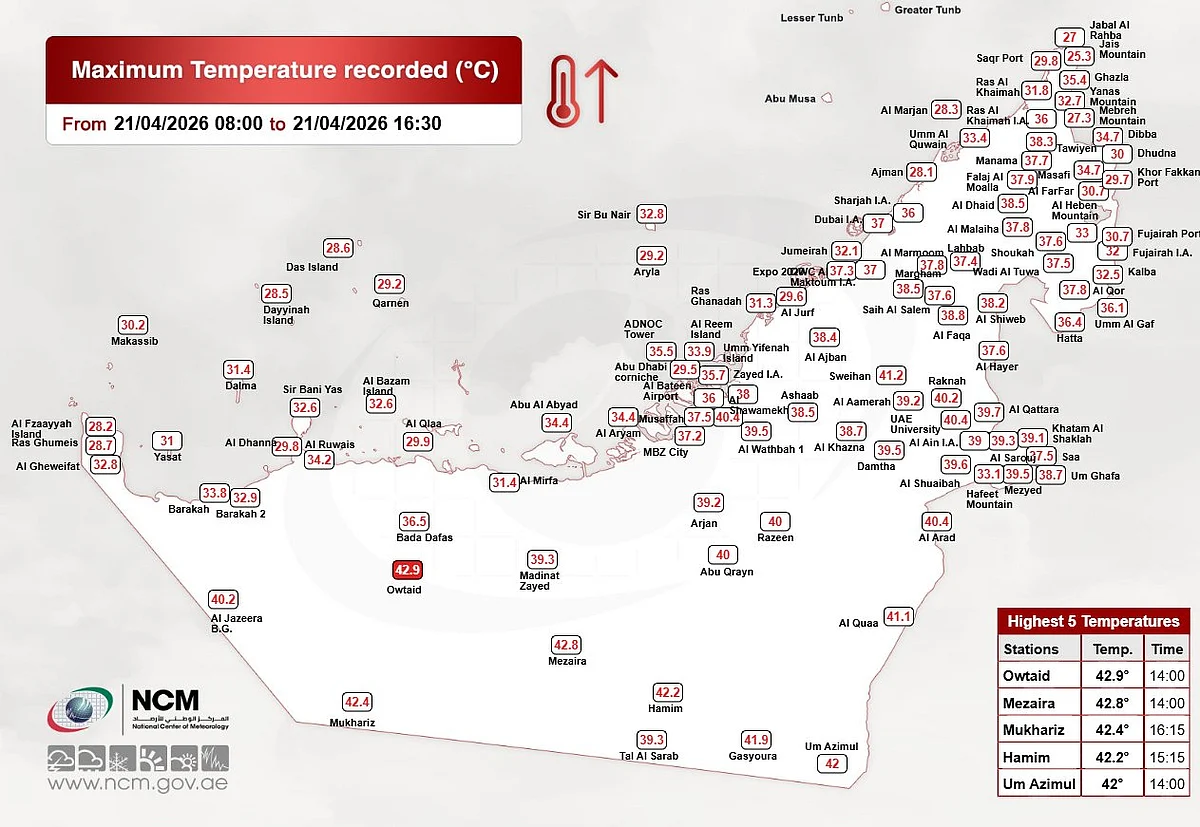
UAE records highest temperature of 42.9°C ahead of summer
•The UAE recorded its highest temperature on April 21 at 42.9°C, according to the National Centre of Meteorology (NCM).The reading was recorded in Owtaid, in the Al Dhafra Region, at 2pm UAE local time...
•On April 15, the highest temperature in the UAE stood at 35°C in Um Azimul, Al Ain, recorded at 1.45pm.Despite the recent spike, residents have been enjoying breezy mornings and unusually mild afterno...
•For many, the cooler air has felt more like UAE winter lingering than the usual transition into summer.Stay up to date with the latest news.
هذا الخبر من Khaleej Times. خبر يقدم أدوات ذكاء اصطناعي للتلخيص والترجمة والاستماع.
The UAE recorded its highest temperature on April 21 at 42.9°C, according to the National Centre of Meteorology (NCM).
The reading was recorded in Owtaid, in the Al Dhafra Region, at 2pm UAE local time, marking a sharp rise compared to just days earlier. On April 15, the highest temperature in the UAE stood at 35°C in Um Azimul, Al Ain, recorded at 1.45pm.
Despite the recent spike, residents have been enjoying breezy mornings and unusually mild afternoons over the past few weeks — a welcome break from the typical April heat in previous years. For many, the cooler air has felt more like UAE winter lingering than the usual transition into summer.
The shift has been noticeable, from dust-laden winds sweeping across inland areas to cloud cover building from multiple directions.
Meteorologists earlier told Khaleej Times that these cooler weather conditions in the UAE are part of a broader atmospheric pattern rather than an anomaly.
Changing wind systems, interacting air masses and cloud formations are all playing a role in shaping this mid-April weather.
And while temperatures may soon climb again, the coming days will continue to bring a mix of cloud, wind and occasional light rain across different parts of the country.
Summer 2026 in the UAE, GCC
The UAE and the wider Gulf region could be heading for a hotter, more humid summer, with early indicators pointing to the possible return of the El Niño climate phenomenon later this year.
Storm Centre reported that El Niño is likely to begin between May and July 2026, with an estimated 61 per cent chance of persisting through the end of the year. The account cited updates from the National Oceanic and Atmospheric Administration, along with projections from the European Centre for Medium-Range Weather Forecasts and the North American Multi-Model Ensemble.
The outlook is supported by a clear rise in subsurface ocean temperatures across the Pacific and a forecast weakening of equatorial trade winds, both key indicators of El Niño development.
The event is expected to peak during the autumn and early winter of 2026–2027. There is also the possibility that it could intensify significantly, potentially approaching a 'Super El Niño' threshold of +2°C if westerly wind bursts persist through the summer, although this scenario remains uncertain.
Globally, El Niño typically weakens the Atlantic hurricane season, disrupts the Indian monsoon, increases rainfall across parts of the Americas, and contributes to additional global warming that could extend into 2027.
Regionally, its effects may be felt across the Arabian Peninsula. Disruptions to the Indian monsoon could shift moisture westward, enhancing humidity over the Arabian Sea and improving rainfall prospects for Yemen and Oman in late summer and autumn.
ملاحظة تحريرية | Editorial Note:
نُشر هذا المقال في الأصل بواسطة Khaleej Times.
خبر (Khabr) هي منصة إعلامية أردنية مرخّصة تعمل بالذكاء الاصطناعي.
نضيف قيمة تحريرية من خلال: تحليل ذكي للأخبار، ملخصات تلقائية، رواية صوتية بالذكاء الاصطناعي، ترجمة متعددة اللغات، وتدقيق الحقائق.
هدفنا جعل الأخبار أكثر وضوحاً وسهولةً للقارئ العربي.
This article was originally published by Khaleej Times.
Khabr is a licensed Jordanian AI-powered news platform (Registration #82086).
We add editorial value through: AI-powered news analysis, automated summaries, AI audio narration, multi-language translation (Arabic, English, French, Turkish), and AI fact-checking.
Our mission is to make news more accessible and understandable for Arabic-speaking audiences worldwide.
هذا الخبر ضمن تغطية خبر لقسم صحة.
نقدّم لك تحليلات ذكية وملخصات يومية لأهم الأخبار من مصادر موثوقة متعددة.
المصدر: Khaleej Times.
يوجد 6 مقالات مرتبطة بهذا الموضوع.
This article is part of Khabr's coverage of Health.
We provide AI-powered analysis, summaries, and multi-source aggregation to keep you informed.
Source: Khaleej Times.
Tags: temperature, UAE, summer.
🍪 نستخدم ملفات تعريف الارتباط لتحسين تجربتك وعرض الإعلانات المخصصة. باستخدامك للموقع، فإنك توافق على سياسة ملفات تعريف الارتباط وسياسة الخصوصية.
We use cookies to enhance your experience and show personalized ads. By using this site, you agree to our Cookie Policy and Privacy Policy.
🔍
FREEFree 1GB Internet + Free International Calls
$1 trial — eSIM in 190+ countries — No roaming charges