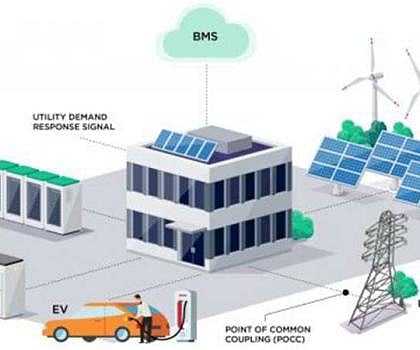
The Ministry of Energy and Infrastructure has announced the launch of a pioneering strategic project to implement microgrid systems in federal government buildings—marking a significant step in advancing the UAE’s approach to building a smart, flexible energy ecosystem capable of responding to changing conditions. The initiative strengthens energy security, sustainability, and efficiency, while supporting the objectives of the “We the UAE 2031” vision to develop advanced, future-ready infrastructure.
Get updated faster and for FREE: Download the Gulf News app now - simply click here.
The first of its kind nationwide
The project is the first of its kind nationwide. It was developed and implemented at the Ministry’s headquarters in the Emirate of Sharjah in 2025, as part of a forward-looking strategy aimed at enhancing national preparedness to address power outage scenarios during emergencies and crises. This is achieved through an integrated operational model that combines clean energy generation, storage, and management using advanced digital solutions.
Enhancing the reliability of electricity supply
Engineer Sharif Al Olama, Undersecretary for Energy and Petroleum Affairs at the Ministry, stated that the project represents a paradigm shift in building-level energy management—from a traditional centralized grid model to a smart, decentralized system with independent operational capability. This transition enhances the reliability of electricity supply, ensures continuity of critical services, improves resource efficiency, and reduces both costs and emissions.
He added that during its pilot phase, the project delivered tangible operational, environmental, and economic outcomes. These include reducing energy consumption by approximately 362,000 kWh annually, achieving cost savings of around Dh110,000 per year, cutting carbon emissions by 76 tonnes annually, and increasing the contribution of solar energy to 30% of total electrical load. The system also demonstrated 100% operational resilience during unexpected outages, ensuring uninterrupted service delivery.
Al Olama emphasised that the microgrid project marks a transformative milestone in how energy systems in buildings are planned and operated. It reflects the UAE’s commitment to building a smarter, more flexible, and sustainable energy ecosystem—one that not only enhances operational efficiency but also establishes a comprehensive national model to ensure continuity of critical services under all conditions and strengthen infrastructure readiness for future challenges.
He noted that the results underscore that investment in smart energy solutions is no longer optional, but a strategic necessity to enhance energy security, reduce costs and emissions, and optimize resource efficiency. The Ministry is working in collaboration with public and private sector partners to scale up the implementation of this model nationwide.
Looking ahead, the next phase will focus on expanding the deployment of the model across the UAE, alongside the development of a national technical and regulatory framework to establish the necessary standards and guidelines for microgrid implementation. This will ensure unified efforts and greater integration between federal and local entities, as well as the private sector.
The project forms part of a broader national vision to reshape the country’s energy landscape by adopting innovative solutions based on renewable energy and advanced digital technologies—enhancing infrastructure efficiency, reducing carbon footprint, and reinforcing the UAE’s position as a global model in developing sustainable and resilient future energy systems.
Microgrid
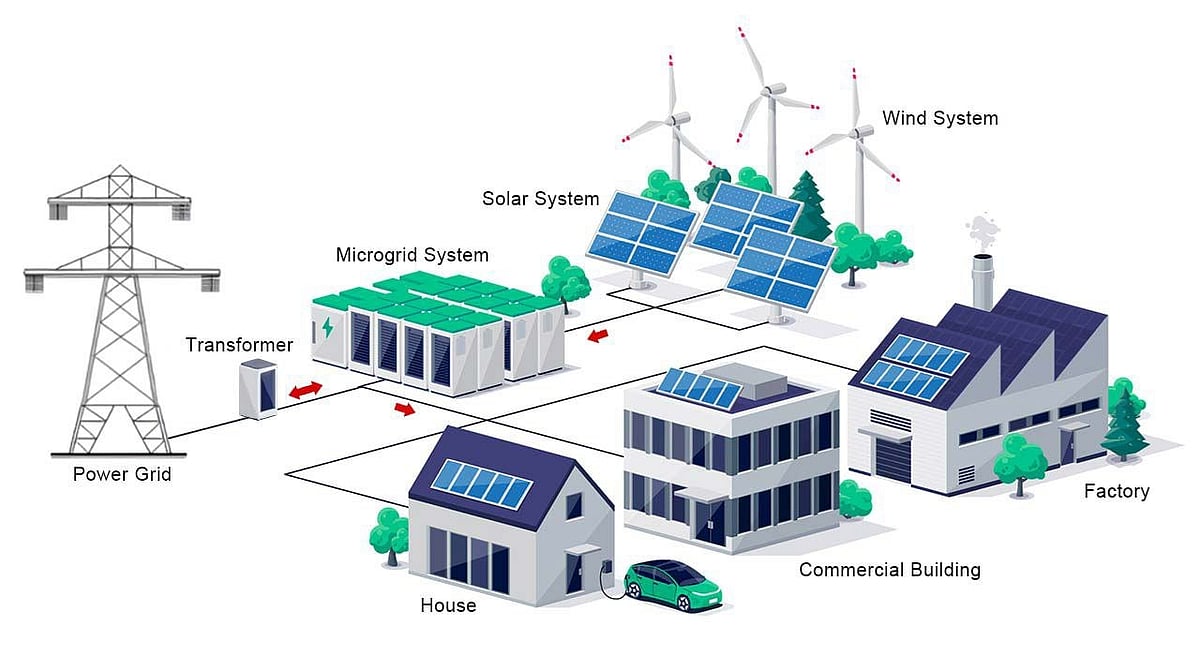
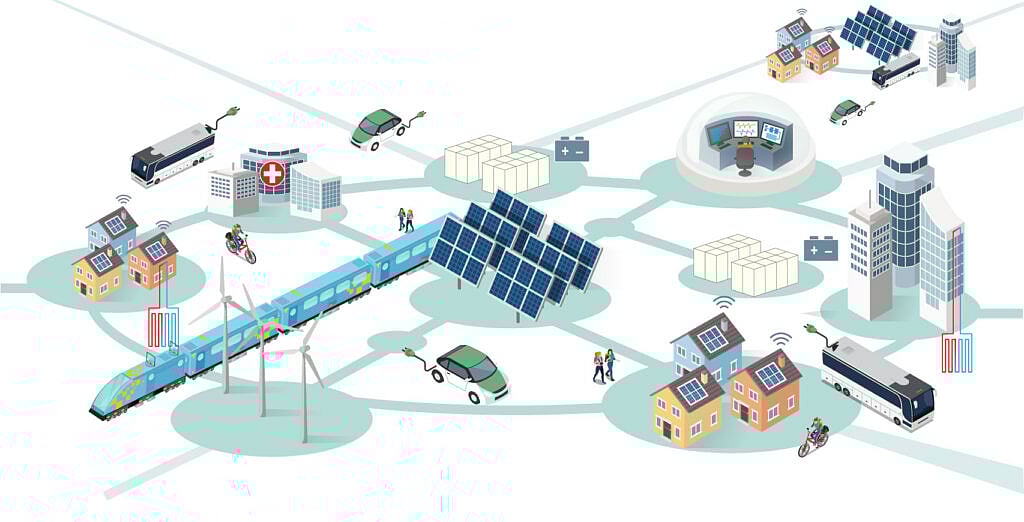
A microgrid is a decentralized grouping of electricity sources and loads that normally operates connected to and synchronized with the traditional wide-area synchronous grid (the macrogrid). However, it can disconnect from the main grid and operate autonomously in “island mode,” as dictated by technical or economic conditions. In this way, microgrids enhance the security of supply within their network boundary, provide backup or emergency power, and enable seamless transitions between islanded and grid-connected modes.
Another key application is off-grid deployment—commonly referred to as a standalone or isolated Microgrid.
These systems are particularly effective when powered by local energy resources, especially in locations where transmission and distribution from a distant central power plant are impractical or prohibitively expensive. As such, microgrids offer a viable solution for rural electrification in remote areas and smaller geographic islands.
As controllable entities, microgrids can efficiently integrate diverse distributed generation (DG) sources, particularly renewable energy technologies.
Despite their advantages, microgrids present technical challenges, especially in control and protection. All ancillary services required for system stability must be established within the microgrid itself, and low short-circuit levels can complicate the selective operation of protection systems. An important additional feature of microgrids is their ability to meet multiple energy demands—such as heating and cooling alongside electricity—enabling energy carrier substitution and improving overall efficiency by utilizing waste heat for space heating, domestic hot water, and cooling applications (sector coupling).