UAE bans junk food, sugary drinks in schools under new health guide
•The UAE’s health authorities have issued the National Guide for Food and Beverages in the School Environment, designed to support school administrations, food suppliers, and service providers in makin...
•It emphasizes the importance of offering age-appropriate, nutritious food options that support both physical and cognitive development.
•By promoting balanced meals, the guide seeks to enhance concentration and memory, improve academic achievement, reduce obesity and malnutrition, and instill sustainable healthy eating behaviors.Get up...
هذا الخبر من Gulf News. خبر يقدم أدوات ذكاء اصطناعي للتلخيص والترجمة والاستماع.
المصدر: Gulf News | Source: Gulf NewsThe UAE’s health authorities have issued the National Guide for Food and Beverages in the School Environment, designed to support school administrations, food suppliers, and service providers in making informed choices that ensure students have access to a diverse range of healthy and nutritious food and beverages throughout the school day.
The guide aims to help students develop healthy eating habits while ensuring they receive the energy and nutrients needed to sustain them academically. It emphasizes the importance of offering age-appropriate, nutritious food options that support both physical and cognitive development. By promoting balanced meals, the guide seeks to enhance concentration and memory, improve academic achievement, reduce obesity and malnutrition, and instill sustainable healthy eating behaviors.
Get updated faster and for FREE: Download the Gulf News app now - simply click here.Additionally, the guide provides practical, evidence-based information on key nutrition concepts and recommendations to encourage healthy eating habits among students. It outlines clear standards and requirements for the sourcing, production, and storage of food and beverages to ensure both their nutritional value and safety.
School food and beverage framework
The guide establishes a structured approach to managing food and beverages sold, provided, or promoted within school premises. It also ensures alignment and coordination among relevant authorities without conflicting with existing national and local food safety regulations, which remain under the jurisdiction of competent entities.
It standardizes criteria across all schools and educational institutions in the UAE and sets mechanisms for monitoring implementation, enhancing students’ health and nutrition outcomes. The guide also clearly defines the roles and responsibilities of both local and federal authorities across implementation, oversight, and evaluation stages.
Guidelines applicable to all educational institutions
The document confirms that its guiding principles apply to public, private, independent, and vocational schools, as well as centers for People of Determination across the UAE, in addition to food suppliers and any entities managing or handling school canteen services.
Local authorities are entrusted with four key responsibilities:
Supervising schools’ compliance with health and nutrition standards
Designating entities responsible for monitoring and inspection within each emirate
Establishing appropriate procedures and penalties to ensure compliance
Following up on corrective actions in cases of violations
They are also responsible for collecting and analyzing data related to implementation and submitting periodic reports to the Ministry of Health and Prevention. These reports must include compliance levels, inspection outcomes, corrective actions taken, recorded violations, and proposed initiatives to further enhance implementation.
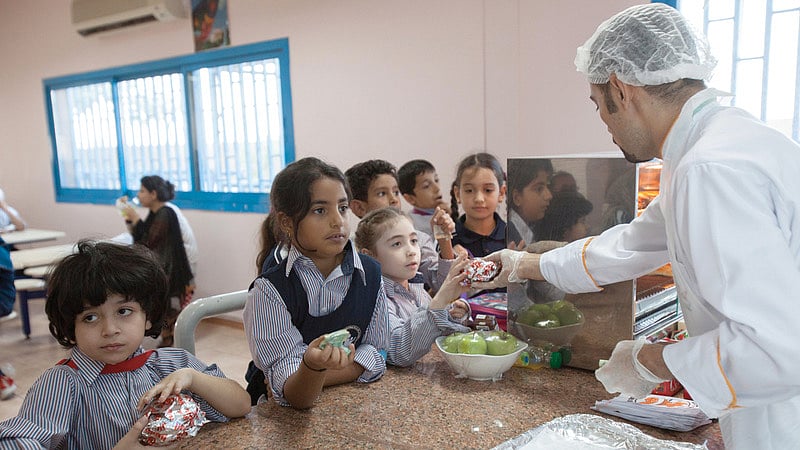
Three types of school canteens
The guide classifies school canteens into three categories:
Canteens selling and distributing pre-packaged food items
Cafeterias preparing sandwiches
Full-service kitchens (school restaurants)
3 responsibilities assigned to schools
Schools are tasked with 13 key responsibilities, including full compliance with all food service standards and requirements. School canteens must meet strict specifications related to food safety, hygiene, and quality. Staff responsible for canteens must also receive proper training in nutrition and hygiene standards.
Food suppliers must hold valid permits issued by local municipalities and comply with all stipulated standards. School administrations are required to regularly verify that products meet nutritional guidelines.
Parents are granted access to canteen menus, and all food-related complaints must be documented along with the actions taken. Schools must also regularly review roles and responsibilities outlined in the national guide.
Responsibilities of food suppliers
The guide outlines strict obligations for food suppliers, including:
Obtaining and maintaining valid permits
Continuous and strict compliance with nutritional standards
Conducting nutritional assessments for all food items based on ingredients and portion sizes
Providing relevant information to schools and regulatory authorities when required
Nutritional data must be updated whenever there are changes in products, ingredients, proportions, or portion sizes. Suppliers must also comply with contractual obligations and coordinate with schools to address individual dietary needs and differences among students. Additionally, all food handlers must meet health fitness requirements set by relevant authorities.
List of prohibited foods and beverages in schools
The guide strictly bans a range of unhealthy and allergen-related items within school environments, including:
All sugary drinks such as soft drinks, energy drinks, and flavored beverages
Tea and coffee
Hard and soft candies, gum, and lollipops
Chocolate and chocolate-coated biscuits
Fried foods, potato chips, French fries, cakes, and donuts
Nuts and any products containing traces of nuts, including nut pastes and nut-based biscuits
Processed meats such as mortadella and sausages
This landmark guide marks a significant step toward fostering a healthier school environment across the UAE, reinforcing the nation’s commitment to student well-being and long-term public health.
ملاحظة تحريرية | Editorial Note: نُشر هذا المقال في الأصل بواسطة Gulf News. خبر (Khabr) هي منصة إعلامية أردنية مرخّصة تعمل بالذكاء الاصطناعي. نضيف قيمة تحريرية من خلال: تحليل ذكي للأخبار، ملخصات تلقائية، رواية صوتية بالذكاء الاصطناعي، ترجمة متعددة اللغات، وتدقيق الحقائق. هدفنا جعل الأخبار أكثر وضوحاً وسهولةً للقارئ العربي.
This article was originally published by Gulf News. Khabr is a licensed Jordanian AI-powered news platform (Registration #82086). We add editorial value through: AI-powered news analysis, automated summaries, AI audio narration, multi-language translation (Arabic, English, French, Turkish), and AI fact-checking. Our mission is to make news more accessible and understandable for Arabic-speaking audiences worldwide.