Turkiye’s Davutoglu steps back from politics: A timeline of his career
•play Live Sign upShow navigation menuNavigation menuNewsShow more news sectionsAfricaAsiaUS & CanadaLatin AmericaEuropeAsia PacificMiddle EastExplainedSportOpinionVideoMoreShow more sectionsFeaturesEc...
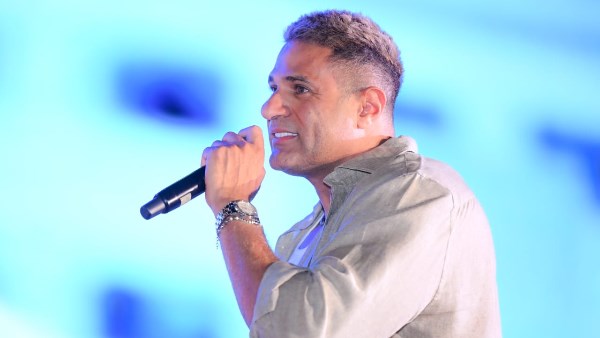
•xwhatsapp-strokecopylinkgoogleAdd Al Jazeera on GoogleinfoOnce one of the leading figures in the ruling Justice and Development Party (AKP), Davutoglu later became a critic of President Recep Tayyip E...
•Once one of the leading figures in the ruling Justice and Development Party (AKP), Davutoglu later became a critic of President Recep Tayyip Erdogan.
هذا الخبر من Al Jazeera English. خبر يقدم أدوات ذكاء اصطناعي للتلخيص والترجمة والاستماع.
play Live Sign upShow navigation menuNavigation menuNewsShow more news sectionsAfricaAsiaUS & CanadaLatin AmericaEuropeAsia PacificMiddle EastExplainedSportOpinionVideoMoreShow more sectionsFeaturesEconomyHuman RightsClimate CrisisInvestigationsInteractivesIn PicturesScience & TechnologyPodcastsTravelSponsored Contentplay Live Click here to searchsearchSign upEXPLAINERNews|PoliticsTurkiye’s Davutoglu steps back from politics: A timeline of his careerAhmet Davutoglu, a former Turkish PM and Erdogan ally-turned-critic, has stepped down from politics. xwhatsapp-strokecopylinkgoogleAdd Al Jazeera on GoogleinfoOnce one of the leading figures in the ruling Justice and Development Party (AKP), Davutoglu later became a critic of President Recep Tayyip Erdogan [File: Burak Kara/Getty Images]By Al Jazeera staffPublished On 31 Jul 202631 Jul 2026Ahmet Davutoglu, a former Prime Minister of Turkiye, has announced he is stepping down from politics and dissolving his party this week. Once one of the leading figures in the ruling Justice and Development Party (AKP), Davutoglu later became a critic of President Recep Tayyip Erdogan. Here is a recap of what he said, alongside a timeline of his political career. Davutoglu announced the dissolution of his Future Party (Gelecek Partisi) on Wednesday, and that he is stepping aside from politics. He attributed this decision to the “dirty political climate” in Turkiye. “This is not a decision of surrender. It is a decision to distance ourselves morally. This is not giving up on politics; it is a call for everyone to rethink politics,” he wrote in a statement, originally in Turkish, posted to his X account on Wednesday. “Corruption, favouritism and lack of accountability are eroding our moral values. The decline in perceptions of corruption has reached a point that can no longer be denied,” he wrote. The normalisation of party switching by politicians, together with the practice of appointing government trustees, or kayyum, in place of elected officials, had become a major blow to democratic ethics, he said. He cautioned that the introduction of the presidential system in 2018 paved the way for authoritarianism and did away with checks and balances. Born in 1959 in Konya, central Turkiye, Davutoglu studied political science and economics at Bogazici University or Bosphorus University in Turkish capital Istanbul, graduating in 1983. He also received his PhD in Political Science and International Relations from Bosphorus University. He was well-regarded as an academic. In 1990, he went on to become an assistant professor at the International Islamic University of Malaysia, where he established and led the Political Science Department. Between 1995 and 1999, he was a lecturer at Marmara University in Istanbul, at the Institute for Middle Eastern Studies. Then, between 1998 and 2002, he served as a visiting lecturer at the Turkish Military Academy and the War Academy in Istanbul. From 1999 to 2004, he was a professor and head of the Department of International Relations at Beykent University in Istanbul and sat on both the university senate and its board of management. At the same time, he also taught as a visiting scholar at Marmara University. He wrote and published several books about foreign policy in English and Turkish. After the November 2002 election, which brought the AKP to power, he joined the party and became the chief adviser to the prime minister. Davutoglu was a key adviser to Erdogan during his rise to power and helped shape Turkiye’s foreign policy under the AKP. He played a major role in Turkiye’s “zero problems with neighbours” foreign policy doctrine adopted in the 2000s, which aimed to strengthen trade and reduce conflict with the country’s neighbours in the Middle East and the Balkans. After the 2011 Syrian uprising, he was key to forming Turkiye’s policy in backing rebels opposed to Bashar al-Assad’s government, saying it was morally the right thing to do. He was criticised by some in the region of seeking to expand Turkiye’s regional influence through the Syrian war. Davutoglu served as foreign minister between 2009 and 2014 and later as prime minister, and after Erdogan became president in 2014, he became prime minister. However, a conflict began to emerge between the two leaders who disagreed on several key issues, including negotiations with the European Union and governance. In August 2015, Davutoglu met Erdogan to formally acknowledge he could not form a coalition government with opposition parties. After the AKP failed to win a parliamentary majority in the June 2015 elections – its first such setback since coming to power in 2002 – Davutoglu held coalition talks with both the second-placed Republican People’s Party (CHP) and the third-placed Nationalist Movement Party (MHP). He was unable to reach a deal with either. In 2016, Davutoglu and Erdogan’s political differences led to another disagreement, with Davutoglu replaced by Binali Yildrim as prime minister. “The problem is the constitution is not clear on where the prime minister and president’s power and authority begins and ends,” Nurettin Canikli, the head of AKP’s parliamentary bloc, told Al Jazeera back in 2016. “Even though they’re very good friends, and have the same political background, it’s still possible for them to have different views on each topic. When they tried to use their authority at the same time, they failed to meet in the middle.” In September 2019, Davutoglu announced his resignation from the AKP, adding that he would launch his own party. “It is our historical responsibility and duty to the nation … to set up a new political movement,” Davutoglu then told reporters in Ankara. The AKP had decided to send him to its disciplinary board for dismissal. In the months preceding his withdrawal from AKP, Davutoglu accused it of deviating from its core principles, hitting out at the government’s economic record and Erdogan himself. In December 2019, Davutoglu then launched the Future Party as a conservative but pro‑democracy alternative to AKP during an event in Ankara. However, it did not prove to be a viable contender, winning 0.11 percent of the vote in the 2024 elections. Advertisement AboutAboutShow moreAbout UsCode of EthicsTerms and ConditionsEU/EEA Regulatory NoticePrivacy PolicyCookie PolicyCookie PreferencesAccessibility StatementSitemapWork for usConnectConnectShow moreContact UsUser Accounts HelpAdvertise with usStay ConnectedNewslettersChannel FinderTV SchedulePodcastsSubmit a TipPaid Partner ContentOur ChannelsOur ChannelsShow moreAl Jazeera ArabicAl Jazeera EnglishAl Jazeera Investigative UnitAl Jazeera MubasherAl Jazeera DocumentaryAl Jazeera BalkansAJ+Our NetworkOur NetworkShow moreAl Jazeera Centre for StudiesAl Jazeera Media InstituteLearn ArabicAl Jazeera Centre for Public Liberties & Human RightsAl Jazeera ForumAl Jazeera Hotel PartnersFollow Al Jazeera English:المصدر: Al Jazeera English | Source: Al Jazeera English
ملاحظة تحريرية | Editorial Note: نُشر هذا المقال في الأصل بواسطة Al Jazeera English. خبر (Khabr) هي منصة إعلامية أردنية مرخّصة تعمل بالذكاء الاصطناعي. نضيف قيمة تحريرية من خلال: تحليل ذكي للأخبار، ملخصات تلقائية، رواية صوتية بالذكاء الاصطناعي، ترجمة متعددة اللغات، وتدقيق الحقائق. هدفنا جعل الأخبار أكثر وضوحاً وسهولةً للقارئ العربي.
This article was originally published by Al Jazeera English. Khabr is a licensed Jordanian AI-powered news platform (Registration #82086). We add editorial value through: AI-powered news analysis, automated summaries, AI audio narration, multi-language translation (Arabic, English, French, Turkish), and AI fact-checking. Our mission is to make news more accessible and understandable for Arabic-speaking audiences worldwide.