Tunisia grapples with five years of crisis since Saied’s power grab
•play Live Sign upShow navigation menuNavigation menuNewsShow more news sectionsAfricaAsiaUS & CanadaLatin AmericaEuropeAsia PacificMiddle EastExplainedSportOpinionVideoMoreShow more sectionsFeaturesEc...
•xwhatsapp-strokecopylinkgoogleAdd Al Jazeera on GoogleinfoPeople gather to protest Tunisia's President Kais Saied during a demonstration marking five years since his suspension of parliament and assum...
•Saied’s supporters continue to view the measures taken by him in July 2021 – when he suspended parliament and dismissed Prime Minister Hichem Mechichi – as a necessary “correction” to save the country...
هذا الخبر من Al Jazeera English. خبر يقدم أدوات ذكاء اصطناعي للتلخيص والترجمة والاستماع.
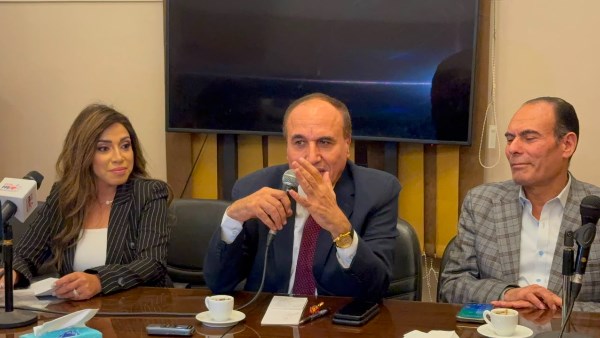
play Live Sign upShow navigation menuNavigation menuNewsShow more news sectionsAfricaAsiaUS & CanadaLatin AmericaEuropeAsia PacificMiddle EastExplainedSportOpinionVideoMoreShow more sectionsFeaturesEconomyHuman RightsClimate CrisisInvestigationsInteractivesIn PicturesScience & TechnologyPodcastsTravelSponsored Contentplay Live Click here to searchsearchSign upNavigation menucaret-leftIranIran’s ‘axis’ in disarrayWill Gulf states join war?Iran’s weaponsWho's in charge in Iran?caret-rightEconomy|Business and EconomyTunisia grapples with five years of crisis since Saied’s power grabThousands protest, political prisoners languish, and US lawmakers threaten sanctions as Tunisia marks five years of Saied’s rule. xwhatsapp-strokecopylinkgoogleAdd Al Jazeera on GoogleinfoPeople gather to protest Tunisia's President Kais Saied during a demonstration marking five years since his suspension of parliament and assumption of emergency powers, in Tunis on July 25, 2026 [AFP]By Mohammad MansourPublished On 26 Jul 202626 Jul 2026Five years after Tunisian President Kais Saied suspended parliament and attained sweeping powers, the country remains sharply divided, grappling with a severe economic downturn and a worsening political deadlock. Saied’s supporters continue to view the measures taken by him in July 2021 – when he suspended parliament and dismissed Prime Minister Hichem Mechichi – as a necessary “correction” to save the country. The opposition says that since then, state institutions have collapsed, promises have gone unfulfilled, and there has been an unprecedented concentration of power in his hands. Speaking to Al Jazeera’s Ma Waraa al-Khabar (Behind the News) programme, political and economic experts debated the legacy of Saied’s five-year rule, painting a picture of an economy hindered by a poor business climate, populist policies, and a lack of clear vision. Since Saied assumed near-total control of the levers of power five years ago, Tunisia’s economic indicators have largely plummeted. Ridha Chkoundali, an economics professor at the University of Tunisia, said that the investment rate in the country has dropped from an average of 20 percent of the gross domestic product (GDP) between 2015 and 2019 to just 8 percent in 2023. Chkoundali attributed this sharp decline to an environment that drives away investment, exacerbated by a significant burden from taxes, which have risen by five percentage points since 2015. Taxation, he argued, is no longer used to stimulate investment but simply to collect revenues at the expense of economic growth. The crisis has hit ordinary Tunisians the hardest. Food inflation has reached nearly three times the general average, severely eroding purchasing power. Meanwhile, unemployment has surged, particularly among university graduates, pushing many to leave the country for better economic opportunities abroad. Mohamed Abbou, a former minister of state and former secretary-general of the Democratic Current party, argued that the crisis is rooted in Saied’s style of governance, adding that the rule of law has been replaced by a climate of intimidation and threats. “Tunisia has lost all credibility,” Abbou said. “Everyone fears the situation in Tunisia because there is no rationality… there is no stability in laws, taxes, or anything else.” Abbou particularly criticised Saied’s approach to international finance, pointing out that the president rejected a deal with the International Monetary Fund (IMF) purely to maintain a populist image. At the same time, he quietly implemented many of the IMF’s harsh austerity demands, such as halting public sector hiring and reducing imports. However, supporters of the current government argue that it is unfair to blame Saied’s administration entirely for an economic crisis that predates his rule. Political analyst Souhaib Mezrigui says the current situation is the result of an absence of any clear economic or social vision over the past 10 years. He placed blame for the current crisis squarely on the political class that has ruled Tunisia since the 2011 revolution. Tunisia’s economic stagnation has manifested into tangible anger on the streets. Coinciding with the five-year anniversary, thousands of Tunisians rallied in the capital’s Habib Bourguiba Avenue on Saturday, protesting against deteriorating living conditions, rolling water and electricity cuts, and a backsliding in democracy. Organised by a coalition of opposition parties and the “Nafas” civil initiative, the crowds called for Saied to “leave” and revived the 2011 democratic revolution’s rallying cry: “The people want the fall of the regime”. A central demand of the protests was the release of political prisoners, who have filled Tunisia’s jails since Saied began his crackdown on dissent. Among the most prominent detainees is Rached Ghannouchi, the 85-year-old former parliament speaker and Ennahdha leader, who was recently sentenced to life in prison. Ghannouchi’s health has rapidly deteriorated in detention. He recently fainted in Mornaguia prison, where temperatures reportedly reached 52 degrees Celsius (126 degrees Fahrenheit). Rights groups and families of detainees, such as opposition politician Ahmed Nejib Chebbi, have repeatedly warned about the dire conditions inside the detention facility and the toll it is taking on elderly inmates. Imed al-Khamiri, a spokesman for the Ennahdha party, told Al Jazeera that the continued detention of political figures and opposition leaders remains a “disgrace to the Tunisian state”. Saied’s consolidation of power has also drawn renewed international condemnation. Marking the anniversary, US Representative Joe Wilson issued a scathing statement, accusing Saied of transforming the Arab world’s only constitutional democracy into a “one-man dictatorship”. Wilson accused the Tunisian regime of phenomenally increasing corruption, destroying opportunities for the youth, and shifting its alliances to become a close associate of Russian President Vladimir Putin, Iran, and Hezbollah. Noting that Saied’s government has even jailed US citizens, Wilson urged the US State Department to issue a “Level 4: Do Not Travel” advisory for Tunisia. “I will also continue to work to pass the Tunisia Democracy Restoration Act imposing sanctions on Saied and his inner circle,” Wilson stated on the social media platform X, adding: “Democracy in Tunisia will win in the end. Madmen tyrants will not last.” Advertisement AboutAboutShow moreAbout UsCode of EthicsTerms and ConditionsEU/EEA Regulatory NoticePrivacy PolicyCookie PolicyCookie PreferencesAccessibility StatementSitemapWork for usConnectConnectShow moreContact UsUser Accounts HelpAdvertise with usStay ConnectedNewslettersChannel FinderTV SchedulePodcastsSubmit a TipPaid Partner ContentOur ChannelsOur ChannelsShow moreAl Jazeera ArabicAl Jazeera EnglishAl Jazeera Investigative UnitAl Jazeera MubasherAl Jazeera DocumentaryAl Jazeera BalkansAJ+Our NetworkOur NetworkShow moreAl Jazeera Centre for StudiesAl Jazeera Media InstituteLearn ArabicAl Jazeera Centre for Public Liberties & Human RightsAl Jazeera ForumAl Jazeera Hotel PartnersFollow Al Jazeera English:المصدر: Al Jazeera English | Source: Al Jazeera English
ملاحظة تحريرية | Editorial Note: نُشر هذا المقال في الأصل بواسطة Al Jazeera English. خبر (Khabr) هي منصة إعلامية أردنية مرخّصة تعمل بالذكاء الاصطناعي. نضيف قيمة تحريرية من خلال: تحليل ذكي للأخبار، ملخصات تلقائية، رواية صوتية بالذكاء الاصطناعي، ترجمة متعددة اللغات، وتدقيق الحقائق. هدفنا جعل الأخبار أكثر وضوحاً وسهولةً للقارئ العربي.
This article was originally published by Al Jazeera English. Khabr is a licensed Jordanian AI-powered news platform (Registration #82086). We add editorial value through: AI-powered news analysis, automated summaries, AI audio narration, multi-language translation (Arabic, English, French, Turkish), and AI fact-checking. Our mission is to make news more accessible and understandable for Arabic-speaking audiences worldwide.