Trump's war powers deadline expires Friday as officials cite ceasefire loophole
•President Donald Trump faces a critical legal deadline on Friday that could determine the future of US military operations against Iran, even as his administration signals it may rely on a controversi...
•Under the War Powers Resolution of 1973, a US president must terminate military action within 60 days of notifying Congress unless lawmakers authorise the operation.
•The Trump administration formally notified Congress on March 2 following joint US-Israeli strikes launched on February 28, setting up a May 1 deadline.
هذا الخبر من Dawn. خبر يقدم أدوات ذكاء اصطناعي للتلخيص والترجمة والاستماع.
المصدر: Dawn | Source: DawnPresident Donald Trump faces a critical legal deadline on Friday that could determine the future of US military operations against Iran, even as his administration signals it may rely on a controversial legal interpretation to bypass congressional approval.
Under the War Powers Resolution of 1973, a US president must terminate military action within 60 days of notifying Congress unless lawmakers authorise the operation.
The Trump administration formally notified Congress on March 2 following joint US-Israeli strikes launched on February 28, setting up a May 1 deadline.
But administration officials now argue that the deadline may not apply, claiming that a ceasefire with Iran — in place since April 7 — effectively ended “hostilities” under the law. A senior official told reporters the conflict had “terminated” for War Powers purposes, allowing the White House to continue operations without seeking congressional approval.
US Defence Secretary Pete Hegseth reinforced that position during congressional testimony on Thursday, saying the statutory clock “pauses or stops in a ceasefire.”
The claim has triggered sharp pushback from lawmakers and legal experts, who argue that the War Powers Resolution contains no such provision.
Democratic Senator Tim Kaine rejected the interpretation outright, saying “the statute does not allow the president to suspend the 60-day limit” based on a truce. His objection reflects broader concerns among Democrats that the administration is attempting to sidestep Congress’s constitutional authority to declare war.
The War Powers Resolution was enacted in the aftermath of the Vietnam War to prevent presidents from engaging in prolonged military conflicts without legislative oversight. It requires presidents to either obtain congressional authorisation or withdraw forces within 60 days, with a possible 30-day extension in limited circumstances.
Legal analysts say the administration’s reliance on a ceasefire loophole is highly questionable. Experts note that the law makes no mention of ceasefires as grounds for resetting or pausing the clock, particularly when military pressure — including a naval blockade — continues.
Some legal scholars also point out that previous presidents have stretched or ignored the War Powers Resolution, often arguing that it is unconstitutional or does not apply to limited military engagements.
However, critics argue that the scale of the current conflict with Iran — including sustained strikes and economic warfare — makes that argument harder to sustain.
The political response in Congress remains deeply divided. Democrats have repeatedly introduced resolutions to compel the administration to either seek authorisation or end military operations. All such efforts have failed in both chambers, largely along party lines.
Republicans, who control Congress by narrow margins, have mostly backed the president or avoided direct confrontation. Senate Majority Leader John Thune indicated “there are no immediate plans to hold a vote authorizing the war, reflecting a broader reluctance within the party to challenge Trump’s authority.
At the same time, some Republicans have expressed unease. Senator Susan Collins said the 60-day limit “is not a suggestion; it is a requirement,” and warned that any further military action must be supported by a clear strategy and congressional approval.
The debate underscores a longstanding constitutional tension in the United States between the executive and legislative branches over war-making powers. While the president serves as commander-in-chief, the Constitution grants Congress the authority to declare war — a balance that has increasingly tilted toward the executive in recent decades.
Beyond Washington, the legal uncertainty comes amid a fragile and incomplete ceasefire between the United States and Iran. Although direct military exchanges have paused, both sides continue to exert pressure through economic and strategic means.
Iran has effectively restricted shipping through the Strait of Hormuz, a vital artery for global energy supplies, while the United States has responded with a naval blockade targeting Iranian oil exports. The standoff has contributed to volatility in global oil markets, with prices rising sharply in recent days amid fears of prolonged disruption.
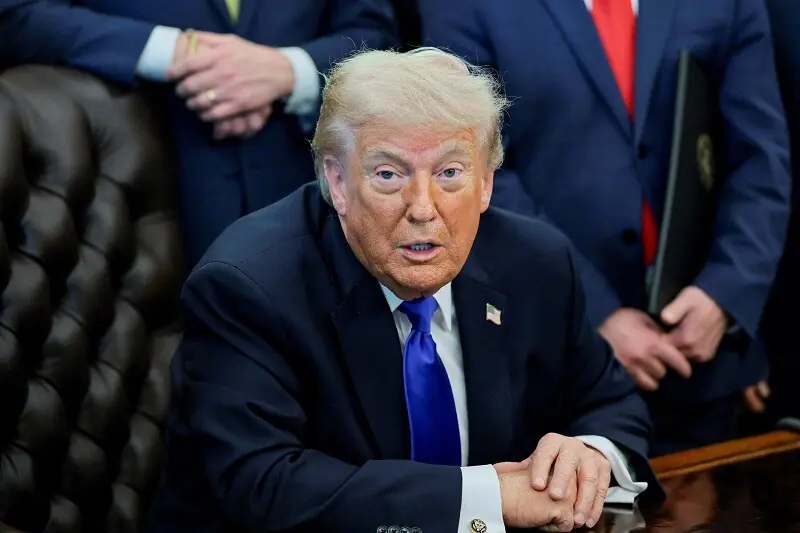
Diplomatic efforts have so far failed to produce a breakthrough. President Trump, speaking at the White House, dismissed suggestions that negotiations had stalled, saying only a small circle of officials was aware of the details and insisting that Iran “wants to make a deal badly.”
Meanwhile, US military planners are preparing options should the ceasefire collapse. Reports indicate that the US Central Command has developed plans for a “short and powerful” wave of strikes aimed at forcing Iran back to negotiations.
Other options under consideration include securing Iran’s stockpile of highly enriched uranium or expanding control over key maritime routes.
Analysts say the Trump administration may ultimately choose to ignore the deadline or reinterpret the ceasefire as marking the end of one phase of the conflict and the beginning of another — effectively resetting the legal clock.
Such a move would likely intensify legal and political challenges, potentially setting the stage for a broader constitutional confrontation between Congress and the White House.
ملاحظة تحريرية | Editorial Note: نُشر هذا المقال في الأصل بواسطة Dawn. خبر (Khabr) هي منصة إعلامية أردنية مرخّصة تعمل بالذكاء الاصطناعي. نضيف قيمة تحريرية من خلال: تحليل ذكي للأخبار، ملخصات تلقائية، رواية صوتية بالذكاء الاصطناعي، ترجمة متعددة اللغات، وتدقيق الحقائق. هدفنا جعل الأخبار أكثر وضوحاً وسهولةً للقارئ العربي.
This article was originally published by Dawn. Khabr is a licensed Jordanian AI-powered news platform (Registration #82086). We add editorial value through: AI-powered news analysis, automated summaries, AI audio narration, multi-language translation (Arabic, English, French, Turkish), and AI fact-checking. Our mission is to make news more accessible and understandable for Arabic-speaking audiences worldwide.