⚡ عاجل: كريستيانو رونالدو يُتوّج كأفضل لاعب كرة قدم في العالم●⚡ أخبار عاجلة تتابعونها لحظة بلحظة على خبر●⚡ تابعوا آخر المستجدات والأحداث من حول العالم●
AI اقتراحات ذكية
AI مباشر|--مشاهد مباشر
1,056,233مقال401مصدر نشط228قناة مباشرة4,224خبر اليوم
آخر تحديث:منذ 8 ثواني
Trump’s war is reshaping the Middle East – but not how he expected
•In a speech last week to mark the annual Hajj pilgrimage, Iran’s Supreme Leader, Mojtaba Khamenei, claimed a landmark achievement in the war with the US.
•“The nations and lands of the region will no longer serve as shields for American bases,” he said.
•“America will no longer have a secure foothold for its mischief or military presence in the region.”
For decades, Iran’s clerical regime has made the expulsion of US forces from the Middle East a cen...
هذا الخبر من i News. خبر يقدم أدوات ذكاء اصطناعي للتلخيص والترجمة والاستماع.
In a speech last week to mark the annual Hajj pilgrimage, Iran’s Supreme Leader, Mojtaba Khamenei, claimed a landmark achievement in the war with the US.
“The nations and lands of the region will no longer serve as shields for American bases,” he said. “America will no longer have a secure foothold for its mischief or military presence in the region.”
For decades, Iran’s clerical regime has made the expulsion of US forces from the Middle East a central aim. Tehran believes that Trump’s war is bringing that vision closer to reality.
Many of the largest US bases in the region, especially those closest to Iran, have been targeted by missiles and drones. Meanwhile, Gulf states that host US military assets are wondering if they have become liabilities rather than assets.
In leaked drafts of a peace deal, Iran is pushing for the US to withdraw its forces from the region. The US has not said it is considering this.
Dina Esfandiary, an Iran specialist and Middle East lead for Bloomberg Economics, said the Iranian regime “100 per cent feels there is an opportunity” to push for its “ultimate goal” to force America out of the region.
It is extremely unlikely that the US military would pull out entirely. But the Trump administration is under increasing domestic and international pressure over its role in the region.
Andreas Krieg, a Gulf security expert at King’s College London, said dynamics in the Middle East and the US could align with Iran’s interests. “As a lot of people in the Maga world are saying do we actually need to be there, a lot of voices in the Gulf are saying, why are we paying for the Americans to be here?” he said.
A satellite view of the US-led coalition base of Ali Al Salem in Kuwait, after Iranian strikes (Photo: Planet Labs PBC via Reuters)
Bases under attack
Washington has established a network of dozens of military facilities in the Middle East since the first Gulf War in 1991, including air and naval bases, radars and living quarters. Most major sites are concentrated in the Gulf states: Qatar, Kuwait, the United Arab Emirates, Saudi Arabia, Bahrain and Oman.
US military officials estimated that around 40,000 troops were positioned in the region during the build-up to the assault on Iran that began on 28 February.
But as the war began, US bases came under heavy fire and their defences failed, forcing the evacuation of thousands of soldiers.
By the end of March, the New York Times reported that many of the 13 bases in the region used by American troops were “all but uninhabitable”. One estimate put the cost of the damage at $40-50 billion (£29.7-37.1 bn).
Mark Cancian, a retired US Army colonel and military analyst at the Center for Strategic and International Studies, believes this suggests some bases will not return.
Pete Hegseth, the US Secretary of Defence, said last week that no decision had been taken on reconstruction and the Pentagon has not included the costs of repairing the bases in its war cost estimates.
“That would indicate that they are thinking about rearranging forces,” he said. “I would expect that we might thin out some of the forces, more heavily protect the ones that are there, and put them in bases that are further away from Iran.”
The US has moved military assets to the relative safe-haven of Israel during the war, and Cancian said that it was “almost certain” that the Pentagon would not seek to rebuild the US Navy Fifth Fleet Headquarters in Bahrain.
The base was heavily damaged by Iranian strikes early in the conflict, with several structures destroyed, satellite images showed. A Pentagon assessment found that one strike on 28 February caused damages of about $200m. Hundreds of troops were reportedly evacuated from the base and it is unclear what operational activity is ongoing there.
Kristian Ulrichsen, a Middle East scholar with a focus on the Persian Gulf at Baker University’s Rice Institute, said the war will force a larger re-evaluation of US posture in the region.
“The bases were there to defend and assert US interests in the region, and when they have been put to the test, they had to be evacuated,” Ulrichsen said, predicting the Pentagon could shift to a pared-back posture focused on air defence with fewer boots on the ground.
Domestic pressure to withdraw
In the US, the experience of another costly and largely unsuccessful Middle East war could fuel domestic support for the kind of isolationism that Trump originally campaigned on, as well as pressure to withdraw some military assets from the region.
“I think it’s obvious that the war in Iran has not gone well,” said Ulrichsen. “The objectives were not achieved and it has created a situation where the US cannot force a decisive breakthrough. That may give talking points to the groups in DC who make the argument that actually we should leave the region.”
Both Trump and his predecessor, Joe Biden, responded to earlier public pressure by reducing the US presence in the Middle East. Both played a part in engineering the controversial withdrawal from Afghanistan in 2021 that saw the Taliban return to power. US troops also completed the handover of bases in Iraq and Syria to domestic security forces this year.
But the US is still deeply embedded in the Middle East and even a staunch isolationist would struggle to significantly sever ties, said Ulrichsen.
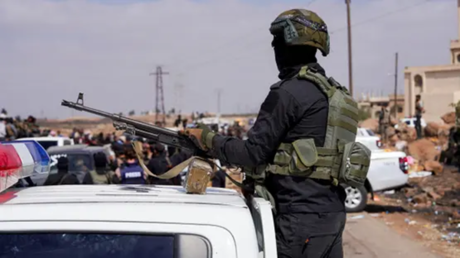
Syrians guard as a convoy of US military equipment is transported after the evacuation of US personnel from the country in April 2026 (Photo: Bakr Alkasem/AFP/Getty)
“There’s a lot of investment coming from the Gulf into the US, a lot of defence security partnerships that are valuable from a US perspective,” he said. “And the US and Israel do not want a security vacuum to form.”
Michael Mulroy, Trump’s former assistant secretary of defence for the Middle East, told The i Paper: “The Middle East is critical to US national security… Our main strategic competitors are all trying to expand their presence there. And now it’s even more important to maintain our presence there. For deterrence and because a withdrawal would look like a victory for Iran.”
Gulf grievances
The impact of the war has raised concerns among US allies that host its military bases.
Iranian air strikes, ostensibly targeted at those bases, have also hit energy infrastructure, airports and hotels across the Gulf, hurting economies and damaging hard-won reputations for stability.
Abdulkhaleq Abdulla, a prominent commentator from the UAE, wrote in April: “It is time to think about closing the American bases, as they are a burden and not a strategic asset.”
Such dramatic action is unlikely in the short term, said Krieg, as there is no obvious candidate to replace the US as a security sponsor. But he believes Gulf regimes will leverage their grievances “to renegotiate the relationship [with the US] and get more out of it”.
That could include demands for access to more advanced military technology, which could ultimately reduce the need for American troops in the countries, he said.
Smoke rising from a fire at Dubai International Airport on 16 March, 2026 after a drone strike attack (Photo: AFP via Getty Images)
“I don’t think that 10 years from now the US presence in the region will be the same,” Krieg added. “I think we will see a downsizing of US commitment in this part of the world, and we will see a completely changed relationship between Washington and the Gulf states.”
This could play into Iran’s hands.
Sina Toossi, a specialist on Iran and US foreign policy at the Center for International Policy think-tank in Washington DC, said that eroding the ties between the US and its Gulf allies is a top priority for Iran.
“The war may have strengthened the Iranian narrative that US military primacy cannot fully insulate regional partners from instability,” he said. “For Iranian officials, that is precisely the message they have sought to send for decades: that the security architecture built around American military power is costly, vulnerable, and increasingly difficult to sustain indefinitely.”
Toossi added that the immediate question is “not whether the United States leaves tomorrow, but whether Washington gradually shifts toward a lighter footprint… That would be viewed in Tehran as a major strategic success.”
ملاحظة تحريرية | Editorial Note:
نُشر هذا المقال في الأصل بواسطة i News.
خبر (Khabr) هي منصة إعلامية أردنية مرخّصة تعمل بالذكاء الاصطناعي.
نضيف قيمة تحريرية من خلال: تحليل ذكي للأخبار، ملخصات تلقائية، رواية صوتية بالذكاء الاصطناعي، ترجمة متعددة اللغات، وتدقيق الحقائق.
هدفنا جعل الأخبار أكثر وضوحاً وسهولةً للقارئ العربي.
This article was originally published by i News.
Khabr is a licensed Jordanian AI-powered news platform (Registration #82086).
We add editorial value through: AI-powered news analysis, automated summaries, AI audio narration, multi-language translation (Arabic, English, French, Turkish), and AI fact-checking.
Our mission is to make news more accessible and understandable for Arabic-speaking audiences worldwide.
هذا الخبر ضمن تغطية خبر لقسم سياسة.
نقدّم لك تحليلات ذكية وملخصات يومية لأهم الأخبار من مصادر موثوقة متعددة.
المصدر: i News.
يوجد 6 مقالات مرتبطة بهذا الموضوع.
This article is part of Khabr's coverage of Politics.
We provide AI-powered analysis, summaries, and multi-source aggregation to keep you informed.
Source: i News.
Tags: Trump, Middle East, foreign policy.
🍪 نستخدم ملفات تعريف الارتباط لتحسين تجربتك وعرض الإعلانات المخصصة. باستخدامك للموقع، فإنك توافق على سياسة ملفات تعريف الارتباط وسياسة الخصوصية.
We use cookies to enhance your experience and show personalized ads. By using this site, you agree to our Cookie Policy and Privacy Policy.
🔍
FREEFree 1GB Internet + Free International Calls
$1 trial — eSIM in 190+ countries — No roaming charges