When Operation Epic Fury began almost two months ago, Washington’s class of self-proclaimed foreign policy experts began warning that it would lead to several unintended and alarmingly negative secondary consequences.
The general consensus seemed to be that, from President Trump on down, the administration was not doing the long-term planning to prevent these bad outcomes, notably countries in the region shifting away from the U.S. to China, a broadening war led by Iran’s proxies, and devastating spikes in energy prices. Even more shockingly, according to these experts, the president had not consulted with NATO allies before the action, depriving America of their critical support.
While Epic Fury is certainly not over and outcomes remain uncertain, we now have enough perspective to determine whether these dire prognostications have come to pass. The experts’ scorecard to date is not good.
First and foremost, China has not been anywhere near the conflict, either in terms of projecting power into the region to protect its own vital energy imports from the Gulf or in terms of bolstering its regional influence. On the contrary, angered by Iran’s ill-advised attacks on its neighbors, America’s partners in the Middle East have drawn closer together — and moved toward the U.S., not to mention Israel. The PRC has already lost Venezuela as a petro-vassal nation this year; now it faces the loss of Iran as well.
LIZ PEEK: TRUMP IS PUTTING AMERICA FIRST BY BACKING IRAN INTO A CORNER
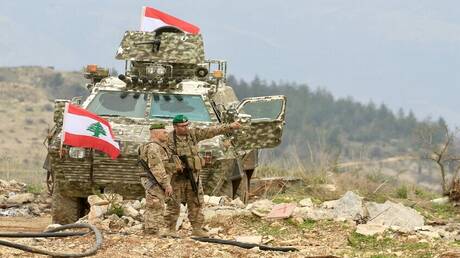
The much-vaunted "ring of fire" around Israel, coordinated by Iran’s terrorist proxies such as the Houthis, Hamas, the Shiite militias in Iraq, and Hezbollah, has failed to materialize. The first three parties have been largely quiet to date, and the Jewish state has gone on the offensive against Hezbollah while engaging in historic diplomacy with Lebanon to come to a ceasefire, with the prospects of a normalization deal on the horizon. Iran and its proxies are very much on the outside looking in on this process, which makes them ever more irrelevant.
And then there are energy prices. While Iran’s threats to constrict global energy supplies through its claimed control of the Strait of Hormuz have caused prices to rise, predictions of $200-a-barrel oil have not been realized. Certainly, prices for products such as gasoline and jet fuel are uncomfortably high, but so far, an overall energy crisis has been averted.
One reason has been the successful regional pivot to pipelines bypassing the strait, notably by Saudi Arabia and the United Arab Emirates. Another is burgeoning U.S. production of oil and natural gas, both of which hit record highs during Epic Fury.
While this increased production has not entirely offset the restriction of exports from the Gulf, it has absorbed some of the shock to the U.S. economy that this would have caused historically. In particular, American production of natural gas has acted as a critical buffer as prices have remained stable while supply was restricted and prices soared in Europe and Asia.
CLICK HERE FOR MORE FOX NEWS OPINION
Finally, the withholding of support from what Donald Rumsfeld would have called "old Europe" has not been material — primarily because it has been revealed that those countries do not have much to provide. After the original fit of pique with which Brussels, Paris, London and Madrid greeted Epic Fury, they have resorted to strongly worded statements and performative Zoom calls to demonstrate their solidarity, followed by pledges to secure Hormuz, on which they are highly dependent, after the real fighting has concluded. Their impotence is embarrassing, but at least it has been exposed, which can lead to the difficult but necessary discussions about the commitment of Europe’s largest economies to their own defense.
In better news, European members of NATO have not proven monolithic. "New Europe" countries such as the Baltics and Scandinavian countries, as well as Poland and Romania, have been supportive of the United States, possibly because they understand that while The New York Times was technically mistaken when it referred to the alliance as the "North American Treaty Organization," it was substantively correct that without America, NATO would not exist. Those countries seem much more concerned about protecting their security and economic ties with the U.S. than with posturing about capabilities that no longer endure.
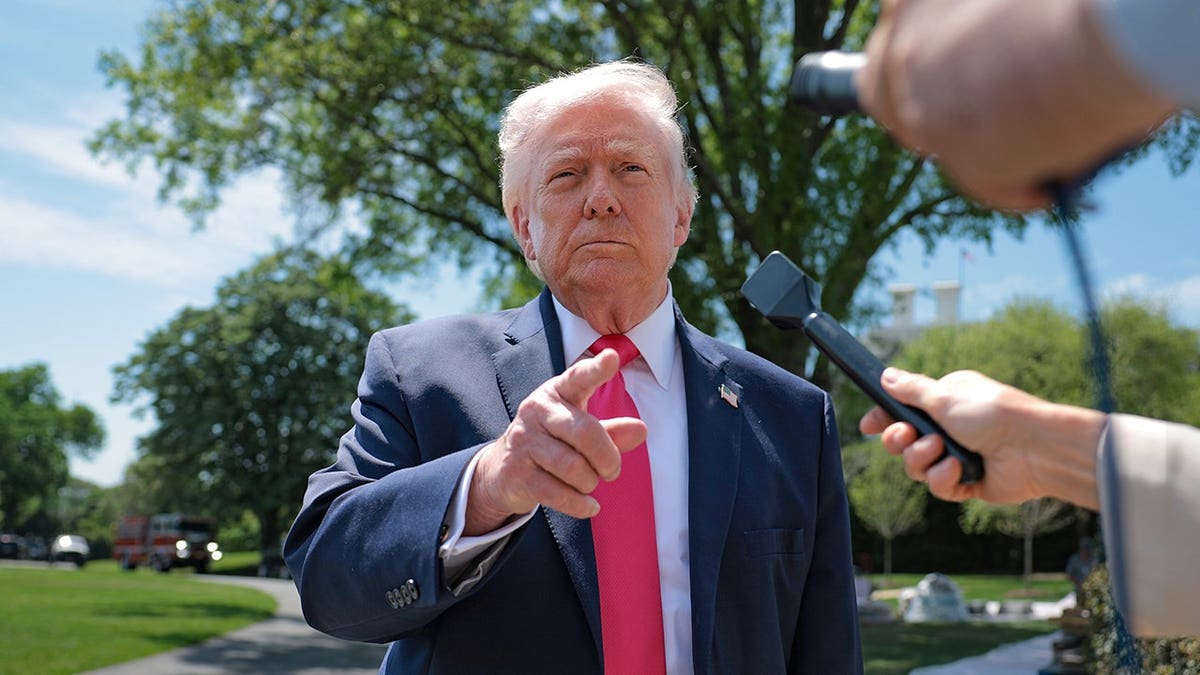
As President Trump offers the Iranian regime a diplomatic ultimatum to accept an end to its nuclear program and to remove its highly enriched uranium or face military escalation, the situation remains fluid and tense, but the fact remains that many of the dire predictions experts made at the beginning of the war have not come to pass.
It remains to be seen how many other cherished assumptions will be shattered in the aftermath of Epic Fury, but one thing seems certain: President Trump has fundamentally reshaped the Middle East — and its future. Experts should take note.