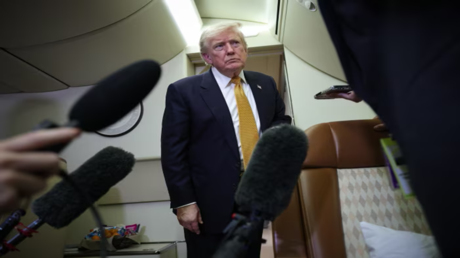
Trump's Iran Strike Strategy Divides Republicans: A Critical Crossroad Ahead
•Trump's renewed calls for military action against Iran have divided the Republican Party.
•Traditional hawks support Trump's aggressive stance, while a growing faction favors a more restrained foreign policy.
•With rising public opposition to military intervention, GOP leaders are concerned about alienating moderate voters ahead of the 2024 election.
المصدر: خبر - ترند | Source: خبر - ترندIntroduction
In a striking turn of events, former President Donald Trump has reignited discussions surrounding military action against Iran, creating a rift among Republicans. His renewed calls for strikes come amidst rising tensions in the Middle East and pose significant challenges for GOP leaders who must navigate the complex intersection of foreign policy, party unity, and electoral strategy.
Trump's Position on Iran
Trump's stance on Iran has historically been aggressive, advocating for maximum pressure through sanctions and military deterrence. Recently, he has suggested that a more direct approach, including airstrikes, might be necessary to curb Iran's nuclear ambitions and regional influence. This shift has alarmed many within the party, who fear that such actions could lead to an escalation of conflicts, drawing the United States into another prolonged military engagement.
The Republican Divide
The renewed discussion of military action against Iran exposes a deep divide among Republicans. On one hand, there are traditional hawks who support Trump's approach, believing that a show of military strength is essential to deter Iran's aggressive posturing. On the other hand, a growing faction within the party advocates for a more restrained foreign policy, arguing that military interventions have often led to unintended consequences and prolonged conflicts.
Political Ramifications
As the 2024 election looms, many Republican lawmakers are concerned about the potential fallout from Trump's provocative statements. With an electorate that is increasingly skeptical of military interventions, there is worry that endorsing strikes could alienate moderate voters. Some party leaders are urging a more diplomatic approach, promoting negotiations over military action as a means to resolve tensions with Tehran.
Public Opinion and Voter Sentiment
Public opinion plays a crucial role in shaping the debate. Recent polls indicate that a majority of Americans are opposed to military action in Iran, fearing it could lead to a wider conflict. This sentiment is particularly strong among younger voters, who prioritize diplomatic solutions over military engagement. Republican leaders must weigh these opinions carefully as they formulate their stances on foreign policy issues.
Conclusion
The question of how to handle Iran remains a contentious issue for the Republican Party. As Trump continues to assert his influence, party members will need to decide whether to align with his hawkish views or pursue a more cautious approach. In the coming months, the party's ability to present a unified front on foreign policy may prove critical as they prepare for the 2024 presidential election.
→Trump's renewed calls for military action against Iran have divided the Republican Party.
→Traditional hawks support Trump's aggressive stance, while a growing faction favors a more restrained foreign policy.
ملاحظة تحريرية | Editorial Note: نُشر هذا المقال في الأصل بواسطة خبر - ترند. خبر (Khabr) هي منصة إعلامية أردنية مرخّصة تعمل بالذكاء الاصطناعي. نضيف قيمة تحريرية من خلال: تحليل ذكي للأخبار، ملخصات تلقائية، رواية صوتية بالذكاء الاصطناعي، ترجمة متعددة اللغات، وتدقيق الحقائق. هدفنا جعل الأخبار أكثر وضوحاً وسهولةً للقارئ العربي.
This article was originally published by خبر - ترند. Khabr is a licensed Jordanian AI-powered news platform (Registration #82086). We add editorial value through: AI-powered news analysis, automated summaries, AI audio narration, multi-language translation (Arabic, English, French, Turkish), and AI fact-checking. Our mission is to make news more accessible and understandable for Arabic-speaking audiences worldwide.