⚡ عاجل: كريستيانو رونالدو يُتوّج كأفضل لاعب كرة قدم في العالم●⚡ أخبار عاجلة تتابعونها لحظة بلحظة على خبر●⚡ تابعوا آخر المستجدات والأحداث من حول العالم●
AI اقتراحات ذكية
AI مباشر|--مشاهد مباشر
865,947مقال404مصدر نشط228قناة مباشرة5,618خبر اليوم
آخر تحديث:منذ ثانيتين
Trump’s Hormuz gamble: Showdown for control of the key strait
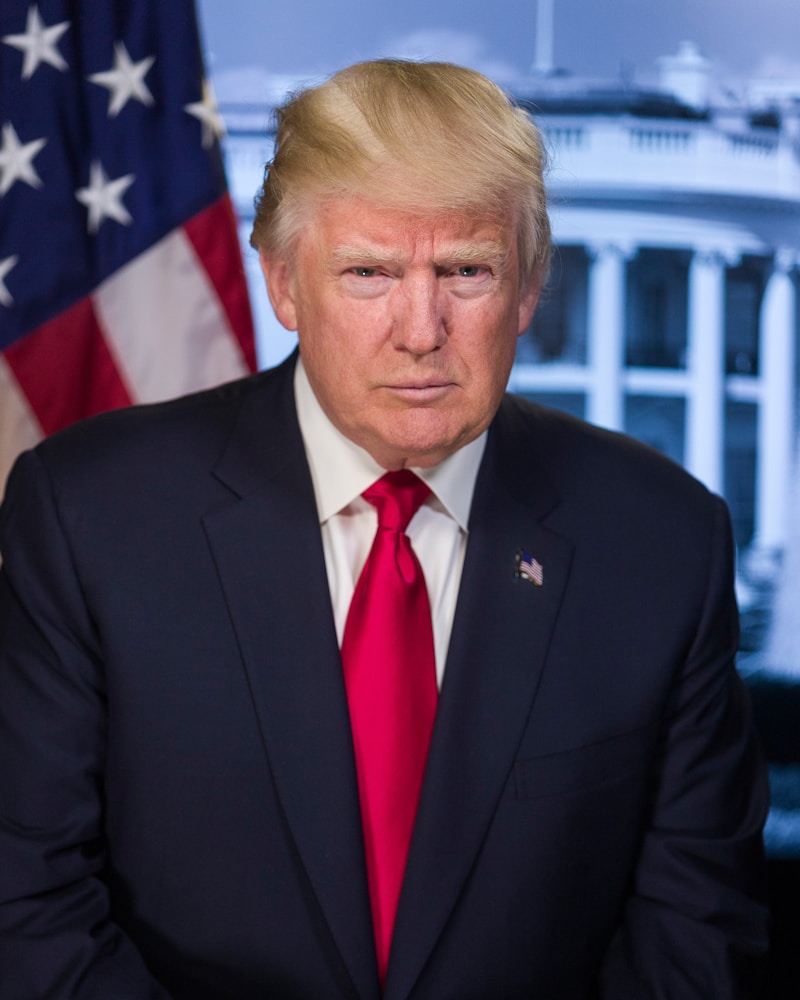
Dubai: President Donald Trump has escalated the battle for the Strait of Hormuz, ordering a US naval blockade targeting ships linked to Iran — a move that risks sending global oil prices higher even as Washington says it wants the vital artery reopened.
After weeks of allowing limited flows to keep markets stable, the United States is now shifting strategy: Squeeze Iran’s oil revenues, even if it means short-term pain for the global economy.
From stabilising markets to squeezing Iran
Until recently, Washington had tolerated a grey-zone reality in Hormuz. Iran slowed traffic, imposed conditions and reportedly extracted hefty transit fees, while still exporting its own crude — roughly 1.8 million barrels per day — to keep cash flowing.
That uneasy balance helped prevent a full-blown oil shock. Iran has also reportedly charged some vessels up to $2 million per transit, underlining how the strait has become both a source of leverage and revenue.
Now, with ceasefire talks stalled and pressure mounting, the US is moving to disrupt that revenue stream. The blockade — as clarified by US Central Command — focuses on vessels tied to Iranian ports, rather than a total shutdown of the strait.
The goal is clear: deny Tehran the ability to fund its war machine through oil exports.
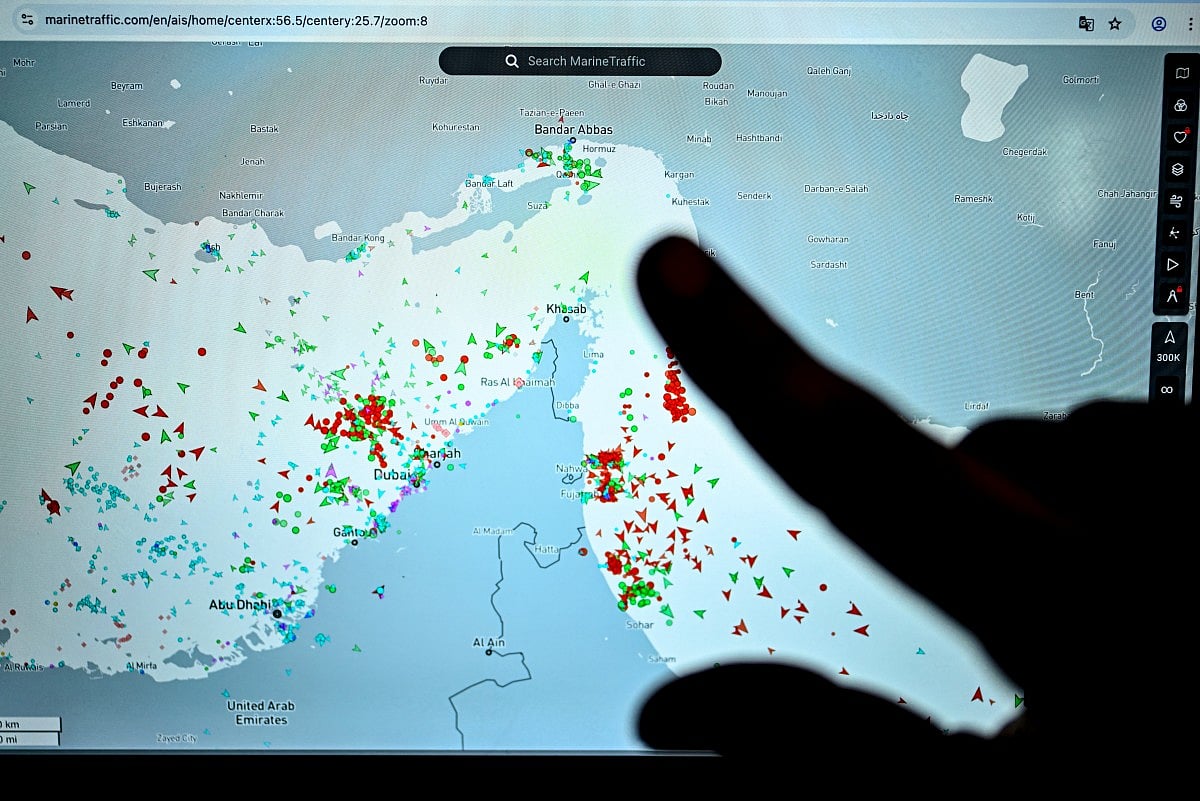
A person points at a page on the Marinetraffic website that shows commercial boats traffic on the edge of the Strait of Hormuz near the Iranian coast, in Paris on March 4, 2026.
At a glance: Hormuz flashpoints
Targeted blockade: US focuses on ships linked to Iranian ports, not a full closure
Iran’s leverage intact: Tehran still influences transit and sets conditions for passage
Oil market shock risk: Even partial disruption threatens global supply and prices
Strategic shift: US moves from stabilising markets to choking Iran’s revenues
Standoff at sea: Hormuz remains open — but under competing control
A high-risk economic bet
The shift carries significant risks.
Hormuz handles roughly a fifth of the world’s oil supply. Any disruption — even partial — tightens markets instantly. Prices have already surged sharply since the conflict began, and traders fear further spikes if flows are curtailed.
Washington knows this.
That is why it had earlier coordinated emergency oil releases and even eased some restrictions on Iranian crude — a controversial move that allowed tens of millions of barrels to reach global markets.
Now, that logic is being reversed.
The US is effectively betting that economic pressure on Iran will outweigh the global cost of higher energy prices.
Hormuz: Not closed, but contested
Despite the rhetoric, the strait is not fully closed. Instead, it is increasingly controlled and contested.
Iran insists it retains “full control” over the waterway, allowing civilian vessels under specific conditions while warning military ships of consequences. At the same time, US naval forces are stepping in to police access and restrict Iranian-linked traffic.
The result is a tense standoff: A critical global chokepoint where two rival powers are asserting overlapping control, and where freedom of navigation exists more in theory than in practice.
Diplomacy falters, pressure mounts
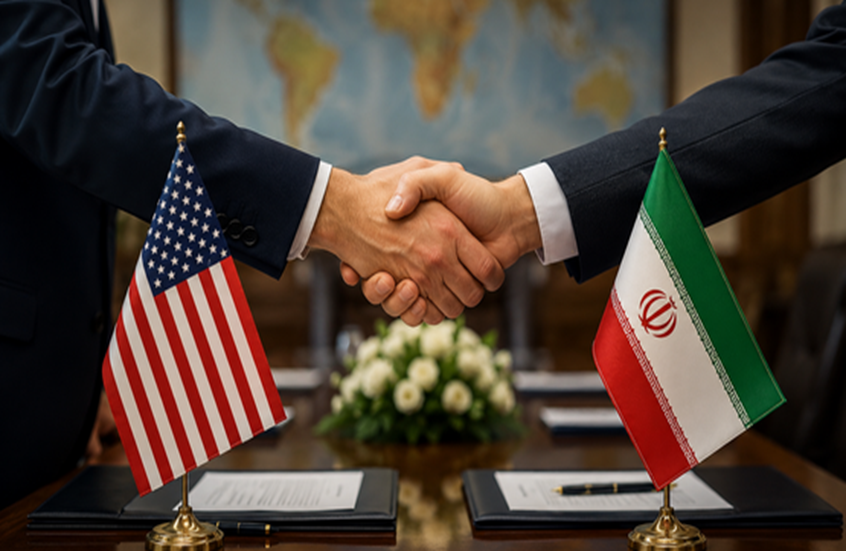
The blockade move follows the collapse of US-Iran talks in Pakistan, raising fears of further escalation in a war now entering its seventh week.
Global powers are urging restraint. Britain has distanced itself from the blockade, while countries from Japan to Southeast Asia are calling for de-escalation and the reopening of shipping lanes.
But on the ground — and at sea — pressure is building.
For Trump, the calculation is blunt: Tighten the economic noose until Iran yields.
ملاحظة تحريرية | Editorial Note:
نُشر هذا المقال في الأصل بواسطة Gulf News.
خبر (Khabr) هي منصة إعلامية أردنية مرخّصة تعمل بالذكاء الاصطناعي.
نضيف قيمة تحريرية من خلال: تحليل ذكي للأخبار، ملخصات تلقائية، رواية صوتية بالذكاء الاصطناعي، ترجمة متعددة اللغات، وتدقيق الحقائق.
هدفنا جعل الأخبار أكثر وضوحاً وسهولةً للقارئ العربي.
This article was originally published by Gulf News.
Khabr is a licensed Jordanian AI-powered news platform (Registration #82086).
We add editorial value through: AI-powered news analysis, automated summaries, AI audio narration, multi-language translation (Arabic, English, French, Turkish), and AI fact-checking.
Our mission is to make news more accessible and understandable for Arabic-speaking audiences worldwide.
هذا الخبر ضمن تغطية خبر لقسم سياسة.
نقدّم لك تحليلات ذكية وملخصات يومية لأهم الأخبار من مصادر موثوقة متعددة.
المصدر: Gulf News.
يوجد 6 مقالات مرتبطة بهذا الموضوع.
This article is part of Khabr's coverage of Politics.
We provide AI-powered analysis, summaries, and multi-source aggregation to keep you informed.
Source: Gulf News.
Tags: Trump, Hormuz, geopolitics.
🍪 نستخدم ملفات تعريف الارتباط لتحسين تجربتك وعرض الإعلانات المخصصة. باستخدامك للموقع، فإنك توافق على سياسة ملفات تعريف الارتباط وسياسة الخصوصية.
We use cookies to enhance your experience and show personalized ads. By using this site, you agree to our Cookie Policy and Privacy Policy.
FREEFree 1GB Internet + Free International Calls
$1 trial — eSIM in 190+ countries — No roaming charges