⚡ عاجل: كريستيانو رونالدو يُتوّج كأفضل لاعب كرة قدم في العالم●⚡ أخبار عاجلة تتابعونها لحظة بلحظة على خبر●⚡ تابعوا آخر المستجدات والأحداث من حول العالم●
AI اقتراحات ذكية
AI مباشر|--مشاهد مباشر
843,177مقال403مصدر نشط224قناة مباشرة5,033خبر اليوم
آخر تحديث:منذ 4 ثواني
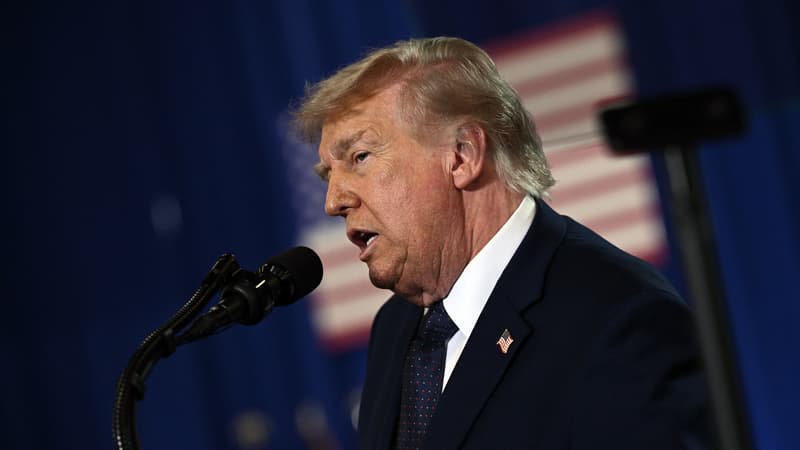
Trump is haunted by the ghost of Obama’s ‘worst deal ever’
Donald Trump’s fixation with reaching an Iran deal that he can sell as an improvement on Barack Obama‘s agreement is hindering efforts to end his war in the Middle East for good.
Trump is also under pressure from Israel and hawkish Republicans to strike a deal that goes further than the 2015 nuclear deal with Iran agreed by former president Obama.
However, a draft memorandum of understanding (MoU) under negotiation with Tehran appears increasingly reminiscent of the 2015 deal that Trump has repeatedly attacked in a politically damaging comparison he is desperate to avoid.
While firm details of the MoU are unclear and still under negotiation, reports suggest it includes a further 60-day ceasefire, the reopening of the Strait of Hormuz and a framework to restart negotiations on Iran’s nuclear programme.
The US is pushing for a 20-year moratorium on enrichment and an agreement that Iran will never pursue a nuclear weapon. Trump has also repeatedly demanded an end to any uranium enrichment, a red line for Iran.
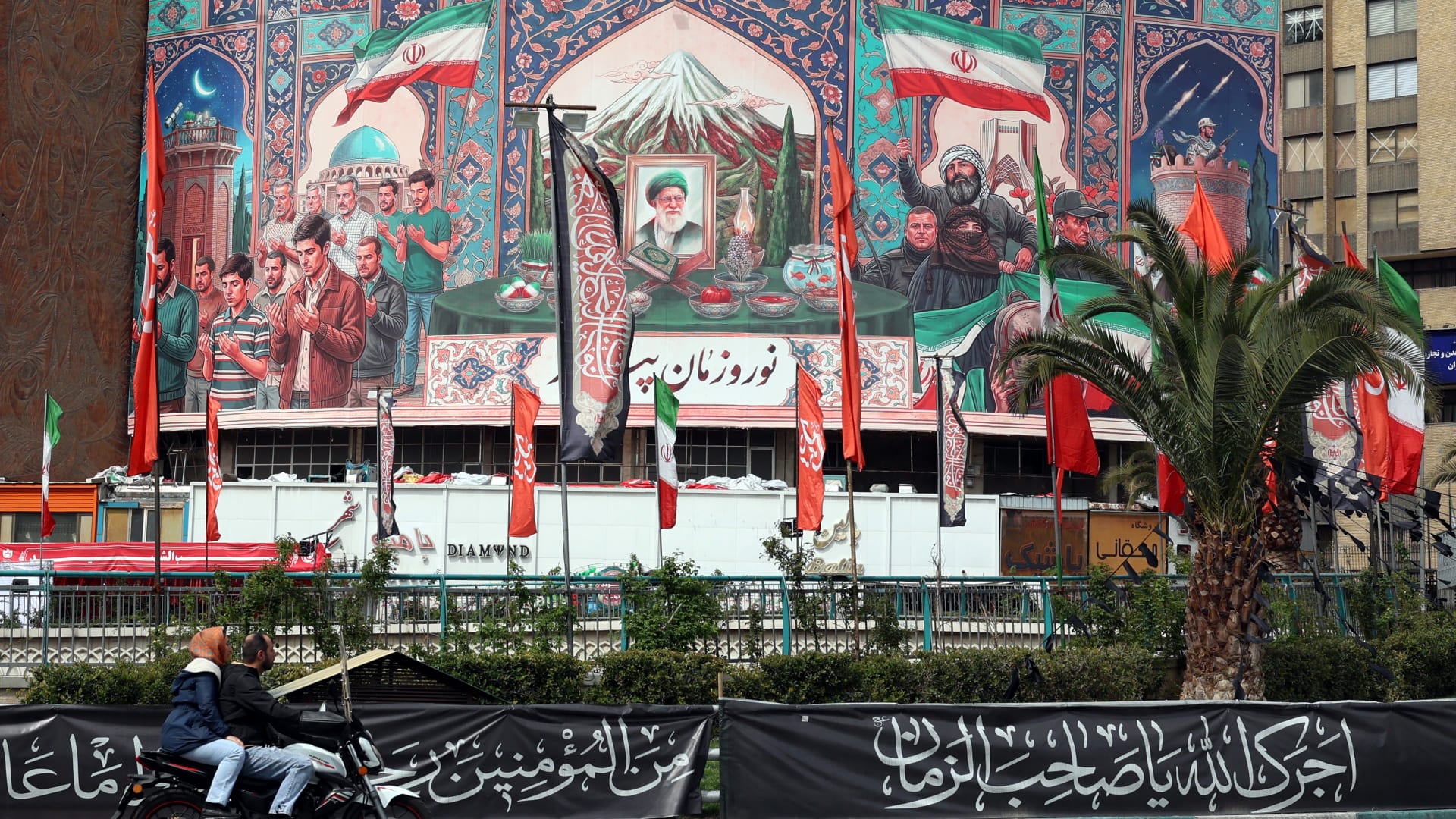
Tthe regime in Tehran is still in place and maintains near-total control of the Strait of Hormuz (Photo: Majid Saeedi/Getty)
Trump is struggling to improve on ‘worst deal ever’
The President now appears increasingly desperate to show an improvement on Obama’s achievement.
That deal did not address Iran’s ballistic missile programme, support for armed proxy groups or terror attacks across the world and Trump, who called the JCPOA “the worst deal ever”, has repeatedly railed against it. He has continued to post memes and comments on social media throughout his war, attempting to distinguish his own Iran policy from Obama’s.
Under the 2015 deal, Iran’s enrichment of uranium was restricted to 3.67 per cent for 15 years, far below the level required to make an atomic bomb, in exchange for sanctions relief. UN officials regularly inspected Iran’s nuclear sites to ensure it was not secretly building a nuclear weapon.
The JCPOA also limited Iran’s stockpile of uranium at 3.65 per cent to 300kg. After the US withdrawal, Iran accelerated its nuclear programme and has amassed a 440.9kg stockpile of uranium enriched to 60 per cent – just below weapons-grade level.
“Trump will be very worried about his deal being compared to Obama’s because ripping up the JCPOA was a centrepiece of the early days of his first administration,” Andrew Moran, a professor of politics and international relations at the London Metropolitan University, said. “If that deal had stayed in place, it is unlikely that we would be in the situation that we’re in now.”
Ships remain anchored last month in the Strait of Hormuz near Larak Island, Iran (Photo: Majid Saeedi/Getty Images)
Yet Trump is struggling to secure any deal with Iran, never mind one that supersedes Obama’s. With the Strait of Hormuz closed and the Iranian regime holding the global economy to ransom, he faces an uphill battle even to return to the deal on offer in Geneva before he launched the war on 28 February.
Trump has been “fixated on ensuring the deal can be marketed as stronger than the 2015 Obama-era nuclear deal that he withdrew from,” according to a report from CNN and backed up by sources speaking to numerous US media sites. “Trump — who has been under pressure from members of his own party and Netanyahu not to agree to a deal that would ease pressure on Iran — has been seeking advice to ensure the deal is strong enough,” CNN said, citing a person familiar with the matter.
Trump faces his own ‘pallets of cash’ criticism
Many provisions in Trump’s agreement appear similar to those in Obama’s 2015 deal. “Trump’s deal is looking very similar to the JCPOA,”Mark Shanahan, associate professor of political engagement at the University of Surrey, told The i Paper. “It feels like the whole framework of these negotiations is based on the Obama deal, the only difference being the reopening of the Strait of Hormuz, which was open and running freely, until Trump started this war.”
One of the most striking similarities between Trump’s deal and the JCPOA is the unfreezing of Iranian assets.
Around the time as the 2015 deal was being carried out, Obama gave Iran $1.7bn (£1.26bn), part of a decades-old financial dispute. Trump attacked repeatedly Obama for the release of “planeloads” or “pallets” of cash to Iran.
A Truth Social post from Trump last week contrasting his policy on Iran’s to Obama’s
Yet in exchange for concessions on its nuclear programme, Tehran is now demanding sanctions relief and the unfreezing of up to $24bn (£17.8bn) of its assets abroad. This will particularly awkward for the administration if – like Obama – it is forced to release billions to Iran in exchange for a deal, and with no say over how that money is spent.
Shanahan said: “It is not clear yet how that money should be spent. Even if it is decreed by the Americans that the Iranians have to use it to repair the damage across Iran, there is no guarantee that the regime will hold to that whatsoever.
“It is unlikely that there will be tight controls on how the regime uses that money, so they may just use it to rebuild Hamas, rebuild Hezbollah, rebuild their own military resources. They may even use it to rebuild their nuclear infrastructure.”
One of the major issues for Trump that has landed Iran in a far stronger position than in 2015 is its effective control over the Strait of Hormuz, the strategic waterway through which 20 per cent of the world’s energy usually travels. Since the closure of the Strait, Iran has made moves towards securing its control over it, threatening strikes on ships passing through and demanding tolls.
Shanahan said that this was another sign that “America had not won this war in any sense. I think the most likely outcome is that the Iranian regime will have lost some people but will be embedded ever more firmly in charge”.
A satellite image shows a closer view of Iran’s Natanz nuclear facility after it was hit by a US strike in March. (Picture: Handout via Reuters)
“They will have access to more money, and they may well have a new revenue stream for charging shipping to go through the straits. That will affect the cost of living for the rest of the world for a long time to come. Negotiations are now about trying to get out of a war and preserving some dignity.”
Even Republican senators have come out against the President’s deal. Texas senator Ted Cruz said he was “deeply concerned”, adding: “If the result of [the war] is to be an Iranian regime – still run by Islamists who chant ‘death to America’ – now receiving billions of dollars, being able to enrich uranium and develop nuclear weapons, and having effective control over the Strait of Hormuz, then that outcome would be a disastrous mistake.”
Trump’s grand bargain
Trump last week attempted to tie a deal with Iran to normalisation of ties between Arab states and Israel, in a move that aimed to expand a major achievement of his first term, the Abraham Accords.
The President has been pressing regional leaders to join the Accords – a series of US-brokered diplomatic agreements signed in 2020 designed to normalise relations between Israel and other powers in the region including theUAE and Bahrain were already members – alongside his negotiations with Iran.
The President claimed last week that he spoke by phone with leaders including Saudi Arabia, Qatar, Pakistan, Egypt, Jordan, Bahrain, Turkey and the UAE.
“I stated that, after all the work done by the United States to try and pull this very complex puzzle together, it should be mandatory that all of these Countries, at a minimum, simultaneously, sign onto the Abraham Accords,” Trump wrote on Truth Social.
Yet the demand has had little success so far, reportedly prompting silence from the countries’ leaders on the call, before Pakistan rejected it outright.
Shanahan said further normalisation could bring some “gloss” to the deal, but it was unlikely to happen.
“It’s hard to see that happening because [Israeli Prime Minister Benjamin] Netanyahu will likely be a barrier to peace,” he said. “Netanyahu operates in a state of war. As long as Israel is in a state of war, he stays in power. It is dangerous for him if there is peace, especially as he has an election coming up.
“Given the unlikeliness of the Gulf nations joining the Abraham Accords, it is looking like Trump’s deal could actually be weaker than the JCPOA.”
ملاحظة تحريرية | Editorial Note:
نُشر هذا المقال في الأصل بواسطة i News.
خبر (Khabr) هي منصة إعلامية أردنية مرخّصة تعمل بالذكاء الاصطناعي.
نضيف قيمة تحريرية من خلال: تحليل ذكي للأخبار، ملخصات تلقائية، رواية صوتية بالذكاء الاصطناعي، ترجمة متعددة اللغات، وتدقيق الحقائق.
هدفنا جعل الأخبار أكثر وضوحاً وسهولةً للقارئ العربي.
This article was originally published by i News.
Khabr is a licensed Jordanian AI-powered news platform (Registration #82086).
We add editorial value through: AI-powered news analysis, automated summaries, AI audio narration, multi-language translation (Arabic, English, French, Turkish), and AI fact-checking.
Our mission is to make news more accessible and understandable for Arabic-speaking audiences worldwide.
هذا الخبر ضمن تغطية خبر لقسم سياسة.
نقدّم لك تحليلات ذكية وملخصات يومية لأهم الأخبار من مصادر موثوقة متعددة.
المصدر: i News.
يوجد 6 مقالات مرتبطة بهذا الموضوع.
This article is part of Khabr's coverage of Politics.
We provide AI-powered analysis, summaries, and multi-source aggregation to keep you informed.
Source: i News.
Tags: Trump, Obama, deal.
🍪 نستخدم ملفات تعريف الارتباط لتحسين تجربتك وعرض الإعلانات المخصصة. باستخدامك للموقع، فإنك توافق على سياسة ملفات تعريف الارتباط وسياسة الخصوصية.
We use cookies to enhance your experience and show personalized ads. By using this site, you agree to our Cookie Policy and Privacy Policy.
FREEFree 1GB Internet + Free International Calls
$1 trial — eSIM in 190+ countries — No roaming charges