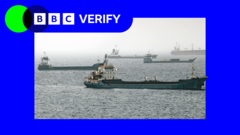
Traffic through Strait of Hormuz falls steeply after new US-Iran strikes
•Traffic through Strait of Hormuz falls steeply after new US-Iran strikesByThomas Copeland and Libby Rogers, BBC VerifyPublished6 minutes agoTraffic through the Strait of Hormuz has fallen steeply afte...
•Iran has repeatedly said the only "safe" route is separate route through its waters.For decades vessels have been given free passage through the strait, through which more than a fifth of the world's...
•Washington also agreed to lift its naval blockade and ease sanctions on Iranian oil exports.Following the agreement overall traffic levels in the strait did initially increase to a peak of 72 ships on...
هذا الخبر من BBC News. خبر يقدم أدوات ذكاء اصطناعي للتلخيص والترجمة والاستماع.
Traffic through Strait of Hormuz falls steeply after new US-Iran strikesByThomas Copeland and Libby Rogers, BBC VerifyPublished6 minutes agoTraffic through the Strait of Hormuz has fallen steeply after a series of tit-for-tat strikes by the US and Iran following an attack on three tankers earlier this week.Just 23 tankers and cargo ships crossed the critical Gulf waterway on Wednesday, according to the maritime intelligence firm Kpler, down from 47 from a week beforeThe three ships that were struck this week were using a US-recommended route through Omani waters. Iran has repeatedly said the only "safe" route is separate route through its waters.For decades vessels have been given free passage through the strait, through which more than a fifth of the world's oil and gas supplies as well as fertiliser shipments and other vital goods flow.Before the conflict began an average of 138 ships crossed through the strait each day, according to the Joint Maritime Information Center (JMIC), a multinational maritime group including the US.After the US and Israel launched its first strikes on Iran on 28 February, this fell to just a handful of ships per day,Iran effectively closing the strait by attacking ships attempting to cross and laying mines and the US responded with a blockade on all shipping to and from Iranian ports.A deal to end the war, which was signed on 17 June, included steps to re-open the strait. Washington also agreed to lift its naval blockade and ease sanctions on Iranian oil exports.Following the agreement overall traffic levels in the strait did initially increase to a peak of 72 ships on 24 June.What led up to this latest violence?Throughout its negotiations with the US, Iran has insisted it has the right to control movement through the strait and introduce fees for ships to pass.The US and its Gulf allies, as well as governments in Europe and Asia, oppose this and say passage through the strait must return to being free and open as it was...المصدر: BBC News | Source: BBC News
ملاحظة تحريرية | Editorial Note: نُشر هذا المقال في الأصل بواسطة BBC News. خبر (Khabr) هي منصة إعلامية أردنية مرخّصة تعمل بالذكاء الاصطناعي. نضيف قيمة تحريرية من خلال: تحليل ذكي للأخبار، ملخصات تلقائية، رواية صوتية بالذكاء الاصطناعي، ترجمة متعددة اللغات، وتدقيق الحقائق. هدفنا جعل الأخبار أكثر وضوحاً وسهولةً للقارئ العربي.
This article was originally published by BBC News. Khabr is a licensed Jordanian AI-powered news platform (Registration #82086). We add editorial value through: AI-powered news analysis, automated summaries, AI audio narration, multi-language translation (Arabic, English, French, Turkish), and AI fact-checking. Our mission is to make news more accessible and understandable for Arabic-speaking audiences worldwide.