⚡ عاجل: كريستيانو رونالدو يُتوّج كأفضل لاعب كرة قدم في العالم●⚡ أخبار عاجلة تتابعونها لحظة بلحظة على خبر●⚡ تابعوا آخر المستجدات والأحداث من حول العالم●
AI اقتراحات ذكية
AI مباشر|--مشاهد مباشر
864,357مقال404مصدر نشط228قناة مباشرة5,615خبر اليوم
آخر تحديث:منذ ثانيتين
‘This likely isn’t over’: Journalists, analysts react to ‘stalemate’ in US-Iran talks
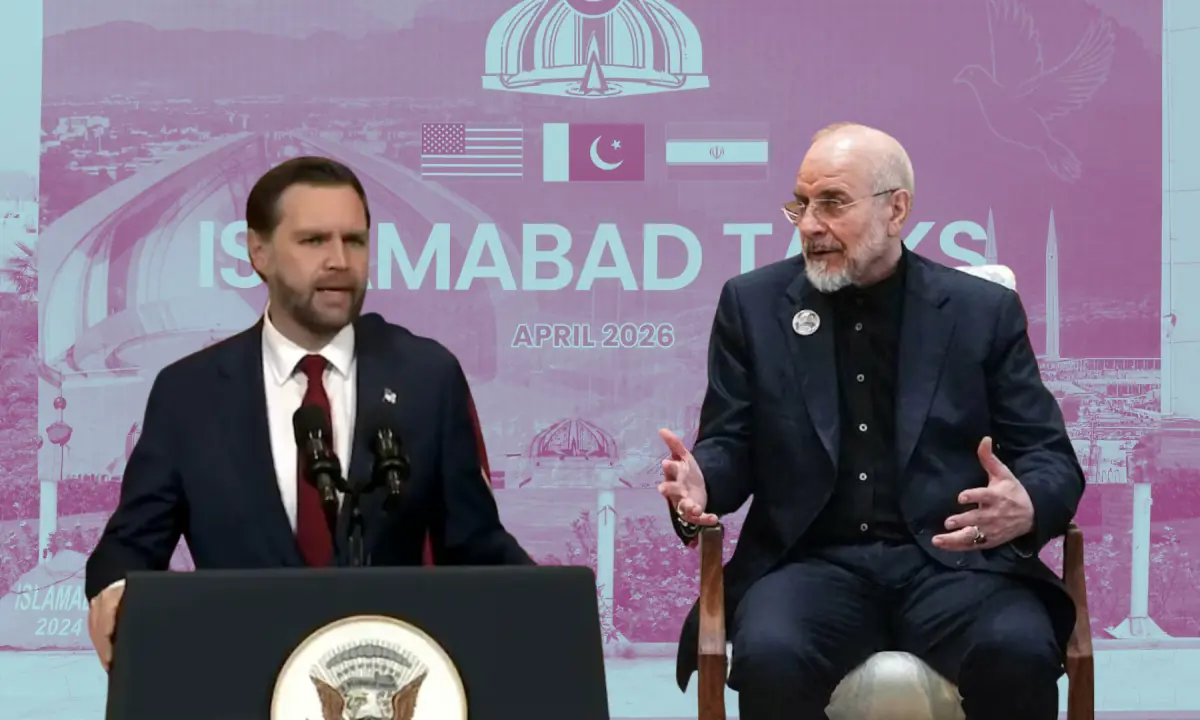
After a marathon 21 hours of high-level talks, delegations from the United States and Iran departed from Islamabad on Sunday morning without reaching an agreement.
The Islamabad Talks had the world, especially the Middle East, hoping that the 40-day US-Iran war would come to a permanent end. Both countries had agreed to a two-week ceasefire earlier this week, with Pakistan playing a key diplomatic role.
However, speaking to the media earlier today, US Vice President JD Vance said: “The bad news is that we have not reached an agreement, and I think that’s bad news for Iran much more than it’s bad news for the United States of America.”
“So we go back to the United States, having not come to an agreement. We’ve made very clear what our red lines are.” He also cited shortcomings in the talks, saying that Tehran had chosen not to accept American terms, including the building of nuclear weapons.
On the other hand, Iran’s semi-official Tasnim news agency said that “excessive” US demands had hindered an agreement.
“The success of this diplomatic process depends on the seriousness and good faith of the opposing side, refraining from excessive demands and unlawful requests, and the acceptance of Iran’s legitimate rights and interests,” wrote Iran’s Ministry of Foreign Affairs Spokesperson Esmaeil Baqaei in an X post.
He added that the delegations had reached an “understanding” on several issues; however, Baqaei stated that “on 2-3 important issues, views were far apart, and ultimately, the talks did not lead to an agreement”.
Here’s what analysts and journalists are saying about the latest developments:
‘Not over’
In a post on X, Michael Kugelman, a Washington-based scholar of South Asian affairs, said the talks likely weren’t over. “More talks could come, but it’s unclear if they’ll be in Pakistan or elsewhere.”
“The US, for domestic political reasons, wants a deal that enables it to exit the war. That such a senior group flew all the way to Pak shows the US commitment,” he wrote.
“Despite Vance’s comments, this likely isn’t over.”
‘Only 24 hours’
Daniel DePetris, a foreign affairs columnist, said that a comprehensive agreement between Iran and the US was not possible in one day.
“Nearly 24 hours of talks is a lot, but it’s only 24 hours […] you weren’t going to solve nuclear, sanctions, Strait of Hormuz and terms to end the war in 21 hours,” he wrote on X.
“He (Vance) basically gave Iran an ultimatum: accept our terms because you’re not going to get a better agreement.
“The fact that Iran is still rejecting US demands despite 6 weeks of war shows just how confident it is right now,” DePetris added.
‘Diplomacy, not one-shot negotiation’
Journalist Raza Ahmad Rumi was also of the opinion that talks will resume, highlighting that Vance’s signal of no deal after last night’s talks reflected a “structural deadlock”.
“Washington is pushing for verifiable limits on enrichment and regional de-escalation, while Tehran is holding firm on sanctions relief and strategic autonomy. The gap was always going to be wide. The first round was less about agreement and more about testing red lines.
But this is diplomacy, not a one-shot negotiation,” he wrote on X.
Rumi said that “a collapse” would risk escalation in an already volatile region. “Markets, supply chains, and vulnerable economies would all take the hit. No serious actor can afford that outcome.”
Which is why, he continued, talks will resume.
“And in all this, Pakistan has quietly delivered a strategic win. By bringing Washington and Tehran into the same diplomatic space and opening a credible channel, it has shifted from the margins to the table at a critical geopolitical moment. Outcomes remain uncertain, but the fact of engagement itself is a durable achievement.
“In a fragmented world, creating the conditions for dialogue is no small feat,” the journalist added.
‘Most serious effort’
Meanwhile, anchorperson Kamran Yousaf emphasised that even though the talks remain inconclusive, the dialogue was the “most serious effort yet to reach a deal”.
“Never before have the US and Iran spoken to each other directly at the highest level. The sticking point that eludes the deal remains the Strait of Hormuz,” he said.
Yousaf added that several ideas were floated during marathon talks, “but the stalemate persists”.
“In the end, Pakistan may not have achieved its ultimate goal, but its efforts to help broker a deal of the century will be in the history books,” the journalist said.
‘Space for dialogue’
Dr Tehmina Aslam Ranjha, columnist and research analyst, noted that even though the talks did not produce an agreement, Islamabad created space for dialogue in a moment charged with mistrust and brinkmanship.
“Bringing adversaries to the same table after decades is not routine diplomacy; it is strategic credibility in action,” she wrote on X.
ملاحظة تحريرية | Editorial Note:
نُشر هذا المقال في الأصل بواسطة Dawn.
خبر (Khabr) هي منصة إعلامية أردنية مرخّصة تعمل بالذكاء الاصطناعي.
نضيف قيمة تحريرية من خلال: تحليل ذكي للأخبار، ملخصات تلقائية، رواية صوتية بالذكاء الاصطناعي، ترجمة متعددة اللغات، وتدقيق الحقائق.
هدفنا جعل الأخبار أكثر وضوحاً وسهولةً للقارئ العربي.
This article was originally published by Dawn.
Khabr is a licensed Jordanian AI-powered news platform (Registration #82086).
We add editorial value through: AI-powered news analysis, automated summaries, AI audio narration, multi-language translation (Arabic, English, French, Turkish), and AI fact-checking.
Our mission is to make news more accessible and understandable for Arabic-speaking audiences worldwide.
هذا الخبر ضمن تغطية خبر لقسم سياسة.
نقدّم لك تحليلات ذكية وملخصات يومية لأهم الأخبار من مصادر موثوقة متعددة.
المصدر: Dawn.
يوجد 6 مقالات مرتبطة بهذا الموضوع.
This article is part of Khabr's coverage of Politics.
We provide AI-powered analysis, summaries, and multi-source aggregation to keep you informed.
Source: Dawn.
Tags: US, Iran, analysis.
🍪 نستخدم ملفات تعريف الارتباط لتحسين تجربتك وعرض الإعلانات المخصصة. باستخدامك للموقع، فإنك توافق على سياسة ملفات تعريف الارتباط وسياسة الخصوصية.
We use cookies to enhance your experience and show personalized ads. By using this site, you agree to our Cookie Policy and Privacy Policy.
FREEFree 1GB Internet + Free International Calls
$1 trial — eSIM in 190+ countries — No roaming charges