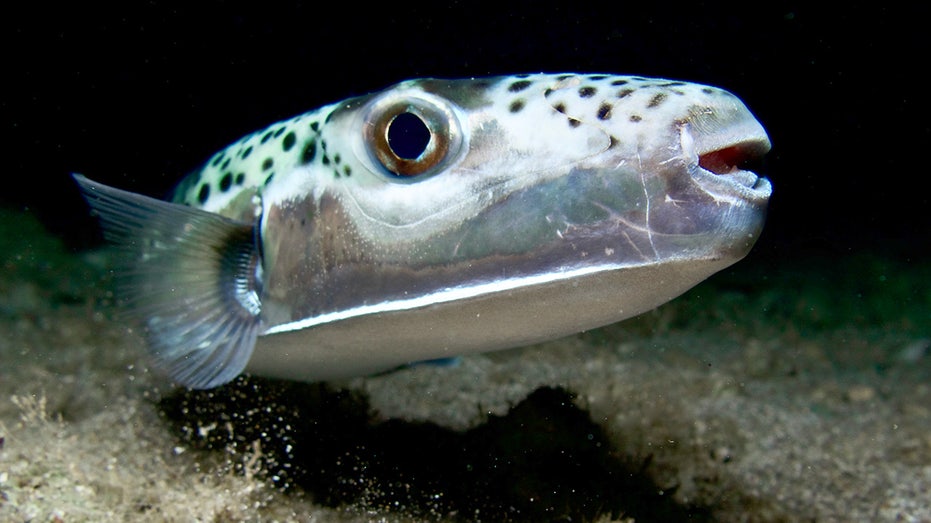
These Fish Robots Will Eat Seawater To Harvest U.S. Critical Minerals
•InnovationSustainabilityThese Fish Robots Will Eat Seawater To Harvest U.S.
•Critical MineralsByNoël Fletcher,Contributor.Forbes contributors publish independent expert analyses and insights.
•Noel Fletcher is a reporter covering renewable energy and wildlifeFollow AuthorMay 27, 2026, 09:56pm EDT--:-- / --:--This voice experience is generated by AI.
هذا الخبر من Forbes. خبر يقدم أدوات ذكاء اصطناعي للتلخيص والترجمة والاستماع.
InnovationSustainabilityThese Fish Robots Will Eat Seawater To Harvest U.S. Critical MineralsByNoël Fletcher,Contributor.Forbes contributors publish independent expert analyses and insights. Noel Fletcher is a reporter covering renewable energy and wildlifeFollow AuthorMay 27, 2026, 09:56pm EDT--:-- / --:--This voice experience is generated by AI. Learn more.This voice experience is generated by AI. Learn more.Galveston Bay in Texas.gettyA project to develop fish-like nanorobots to swim and eat lithium ions in seawater was among 19 to win $45.7 million in U.S. government critical mineral technology grants.The U.S. Department of Energy announced May 19 the winners of grants from its Office of Critical Minerals and Energy Innovation. The investments are intended to ween the U.S. from its current heavy reliance on foreign countries for critical minerals.“By ensuring the minerals that are mined in America can be processed in America and manufactured into American technologies, these investments will bolster America’s national security and energy independence,” Assistant Secretary of Energy Audrey Robertson, announced recently.The funds were allocated under the DOE’s “Critical Material Innovation, Efficiency, and Alternatives” competitive grant program. The largest awards went to two pilot projects to foster the domestic critical minerals/materials supply chain:$19.3 million for USA Rare Earth in Stillwater, Okla.—to build and operate a pilot-scale continuous ion exchange rare earth element production plant that could become the first U.S. mine-to-magnet supply chain.$10 million to Big Blue Technologies in Cheyenne, Wyo.—to continuously operate a magnesium metal production process in a modular smelter that may pave the way for commercial production.The remaining 17 projects included those chosen by DOE to develop unique ways to diversify commercially viable domestic critical materials supplies. Lithium featured prominently in five projects each awarded a $1-million grant...المصدر: Forbes | Source: Forbes
ملاحظة تحريرية | Editorial Note: نُشر هذا المقال في الأصل بواسطة Forbes. خبر (Khabr) هي منصة إعلامية أردنية مرخّصة تعمل بالذكاء الاصطناعي. نضيف قيمة تحريرية من خلال: تحليل ذكي للأخبار، ملخصات تلقائية، رواية صوتية بالذكاء الاصطناعي، ترجمة متعددة اللغات، وتدقيق الحقائق. هدفنا جعل الأخبار أكثر وضوحاً وسهولةً للقارئ العربي.
This article was originally published by Forbes. Khabr is a licensed Jordanian AI-powered news platform (Registration #82086). We add editorial value through: AI-powered news analysis, automated summaries, AI audio narration, multi-language translation (Arabic, English, French, Turkish), and AI fact-checking. Our mission is to make news more accessible and understandable for Arabic-speaking audiences worldwide.