⚡ عاجل: كريستيانو رونالدو يُتوّج كأفضل لاعب كرة قدم في العالم●⚡ أخبار عاجلة تتابعونها لحظة بلحظة على خبر●⚡ تابعوا آخر المستجدات والأحداث من حول العالم●
AI اقتراحات ذكية
AI مباشر|--مشاهد مباشر
1,203,784مقال410مصدر نشط228قناة مباشرة10,588خبر اليوم
آخر تحديث:منذ ثانيتين
The Vatican wants a seat at the Ukraine peace table. Here’s why
•A top Catholic official is preparing to visit to Moscow, leading many to wonder if Vatican peacemakers are a blessing
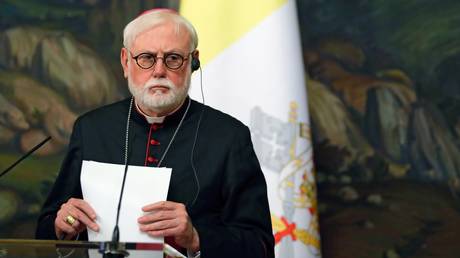
The head of the Vatican’s diplomatic service, Archbishop Paul Richard...
•This visit is part of the Holy See’s diplomatic efforts on humanitarian issues and the discussion of ways to resolve the Ukraine conflict.
•This is reflected in the fact that the Vatican, together with the authorities of several states, including Bulgaria, Hungary, and Italy recently contributed to keeping Patriarch Kirill off the latest...
هذا الخبر من RT English. خبر يقدم أدوات ذكاء اصطناعي للتلخيص والترجمة والاستماع.
A top Catholic official is preparing to visit to Moscow, leading many to wonder if Vatican peacemakers are a blessing
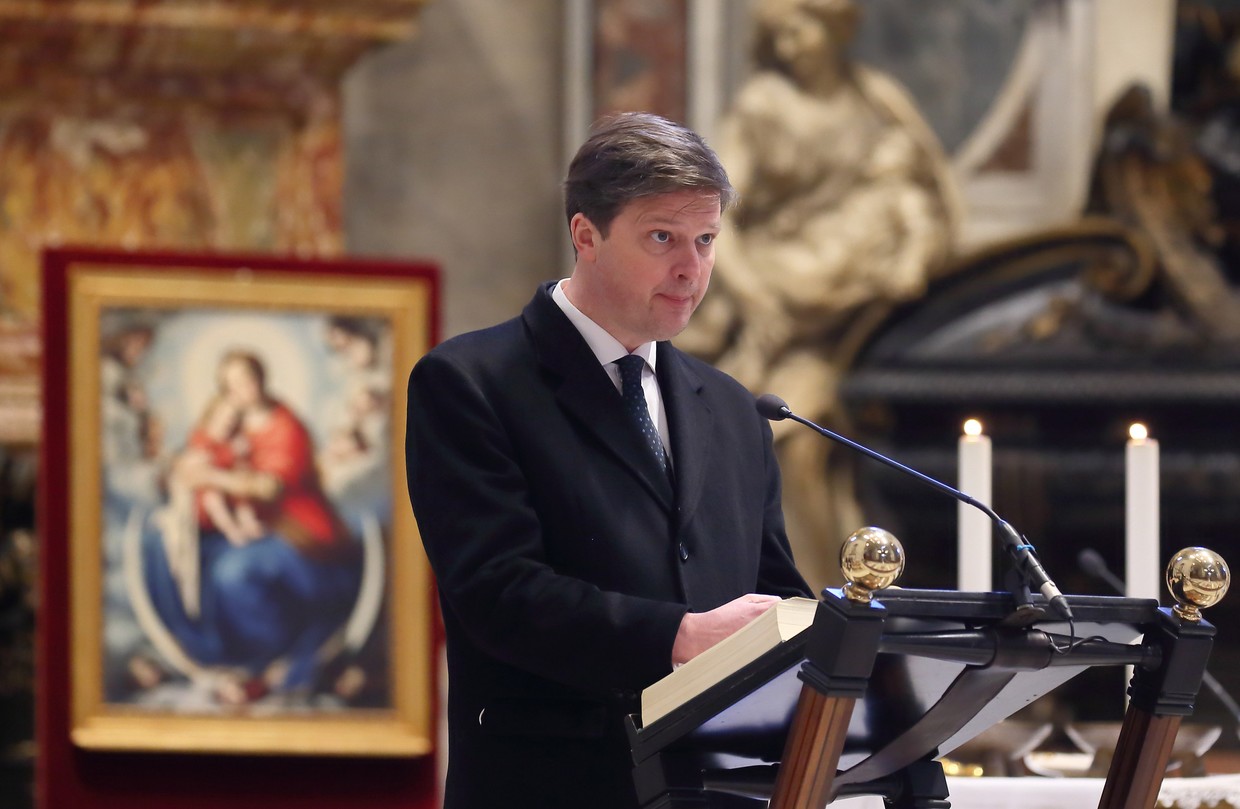
The head of the Vatican’s diplomatic service, Archbishop Paul Richard Gallagher, is visiting Moscow from August 24-28. This visit is part of the Holy See’s diplomatic efforts on humanitarian issues and the discussion of ways to resolve the Ukraine conflict. This is reflected in the fact that the Vatican, together with the authorities of several states, including Bulgaria, Hungary, and Italy recently contributed to keeping Patriarch Kirill off the latest EU sanctions list.
The visit is clearly necessary to revitalize communication between the Vatican and Moscow, as the formal diplomatic channels –though fully operational –have recently lost the historical depth and back-channel confidentiality previously maintained through the Russian Orthodox Church’s external relations. Below, we examine the true operational motives behind the Holy See’s urgent mission within the broader context of its geopolitical and financial survival in Central and Eastern Europe.
American Pope
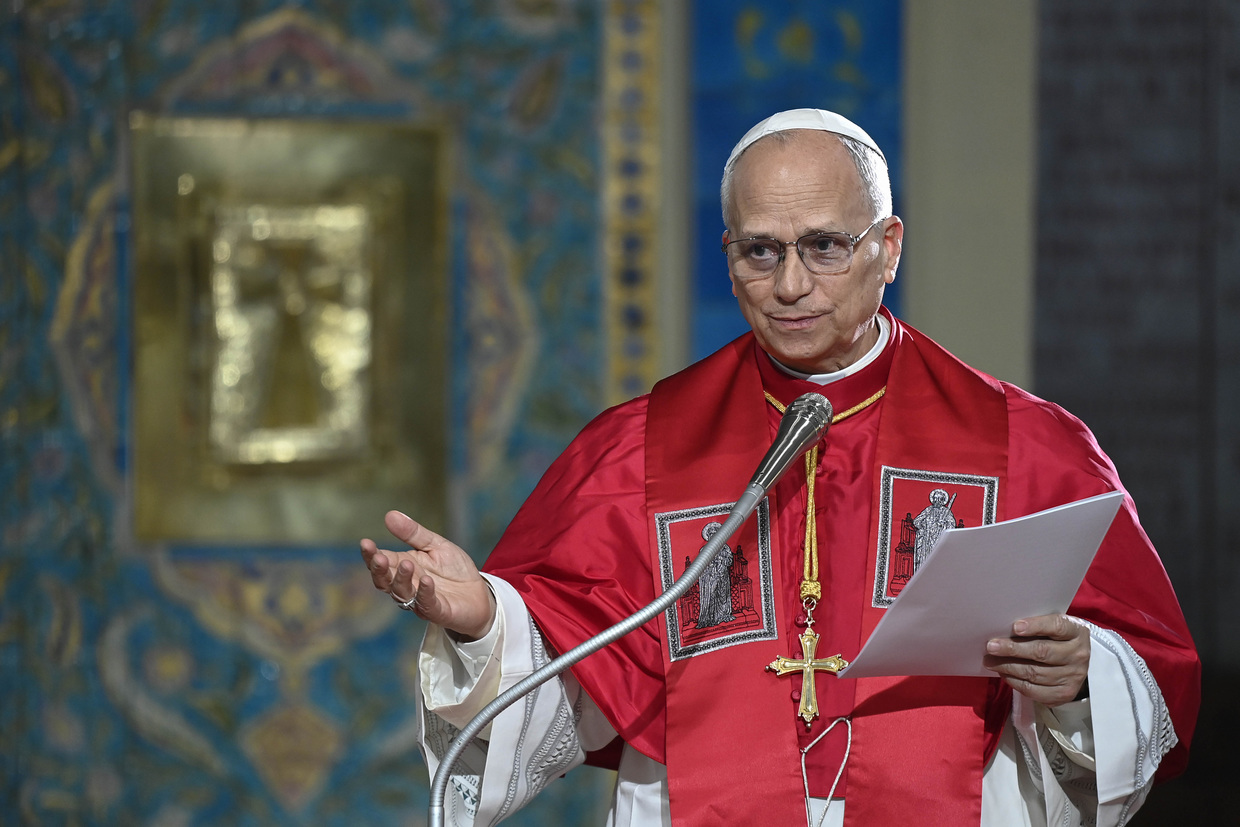
Pope Leo XIV has been in power for a year, allowing us to draw certain conclusions about his leadership style. We see a tough, sovereign politician who skillfully uses conservative symbols to promote the Church’s internal stability, but on the world stage, he advocates a center-left, global agenda that criticizes both rigid state borders and the power of algorithms.
For example, the Vatican has returned to the use of traditional ornate vestments, which had been shelved under Francis XII. The public appearance was also received extremely favorably by conservative critics of the use of 'gender ideology' in schools and the promotion of non-traditional lifestyles. At the same time, the Pope is promoting ideas for decentralizing Vatican authority and proposing synodal reform, the essence of which is aimed at collegial governance of the Church, where decisions are made collectively by a large number of bishops and laypeople.
Most notable, however, have been his public disputes with various factions of his compatriots on the right; he has publicly criticized the immigration policies of US President Donald Trump’s administration and US Vice President J.D. Vance. In his first encyclical, Leo XIV harshly criticized artificial intelligence, calling for the “disarmament” of technology, a ban on its use for military purposes, and an end to the IT corporations’ proverbial race to the bottom, arguing that it could result in mass unemployment and that people could use it to escape into an “illusory world.”
Importantly, his statements provoked a counterattack from Silicon Valley leaders; Marc Andreessen and Peter Thiel were among those who reacted negatively.
Overall, this paints him as a representative of the systemic wing of the Catholic Church – a supranational sovereign structure that thinks in terms of centuries, not electoral cycles. His accession to the throne signaled the Roman Curia’s intention to establish a strict leader from the New World, free from parochial European caste disputes.
The Institute for the Works of Religion, aka the Vatican Bank: Personnel Changes and Conservatism
It’s logical that Pope Leo XIV began his sovereign expansion on the throne not with abstract peace declarations, but with an immediate, surgical reformatting of the Holy See’s entire financial vertical. His very first significant document was the Apostolic Letter ‘Coniuncta Cura’ (Joint Care), which dealt a crushing blow to the former monopoly over the Institute for the Affairs of Religion (IOR). The Pontiff officially rescinded Francis’s harsh decree, which had previously forcibly locked 100% of the liquidity of all Vatican departments and orders within the Vatican Bank.
Why did Leo XIV make this sensitive issue his very first priority? The answer is cynical: the previous centralization of accounts in the IOR had completely paralyzed the Vatican’s operational para-diplomacy, and most importantly, blocked the influx of capital from the New World. Conservative US Catholic foundations and Wall Street heavyweights – with Cardinal Timothy Dolan serving as the bridge – were ready to resume multi-billion-dollar donations but flatly refused to place them under the total control of the old IOR bureaucracy.
With the issuance of the ‘Coniuncta cura’ decree, Leo XIV restored the right of dicasteries and external bodies to legally move and place assets in major international commercial banks and foreign investment platforms. This opened legal channels for the influx of billions from conservative right-wing American circles, while simultaneously facilitating the transit of shadow funds belonging to the right-wing elites of the Visegrád Group (Poland, Hungary, and Slovakia) – elites seeking to safeguard their reserves from the fiscal coercion of Brussels and the ECB.
However, this financial breakthrough immediately created an existential threat for the Vatican on its external frontier. By moving assets from the hermetically sealed IOR, protected by sovereign immunity, to external commercial banks, the Holy See automatically exposed its renewed dollar flows to the jurisdiction and financial supervision of other states; first and foremost, the US Treasury Department and EU law. Any escalation in negative relations with the West could now theoretically result in the Vatican seeing its assets in foreign accounts frozen or blocked. It is precisely this red-hot financial knot that inexorably links Leo XIV’s treasury maneuver with his sudden foray into the Ukrainian issue.
The mechanism of this combination is simple: as long as the Vatican is outside the official peace track, US financial authorities retain leverage over IOR transactions. But as soon as the Vatican is officially recognized by Moscow and Washington as an international arbiter (and the Pontiff has repeatedly stated that the Vatican is ready to play such a role) its bank automatically receives the status of peace process infrastructure. Imposing sanctions or auditing the Holy See’s accounts will become politically impossible, as this would be interpreted as a deliberate disruption of negotiations with Russia. Mediation in Ukraine is a legal shield shielding the Vatican’s assets from American and European regulators.
Moreover, the influx of hundreds of millions of dollars from conservative New World billionaires demands reciprocal political steps from the Pope. Ending the conflict in Ukraine and stabilizing European security are among the vital interests of major Western capital, which is suffering from economic instability and inflation. By becoming a participant in the peace settlement, Leo XIV is proving to his American donors that the Vatican is not just a 'church', but a highly effective instrument of global influence, in which it is profitable to invest money.
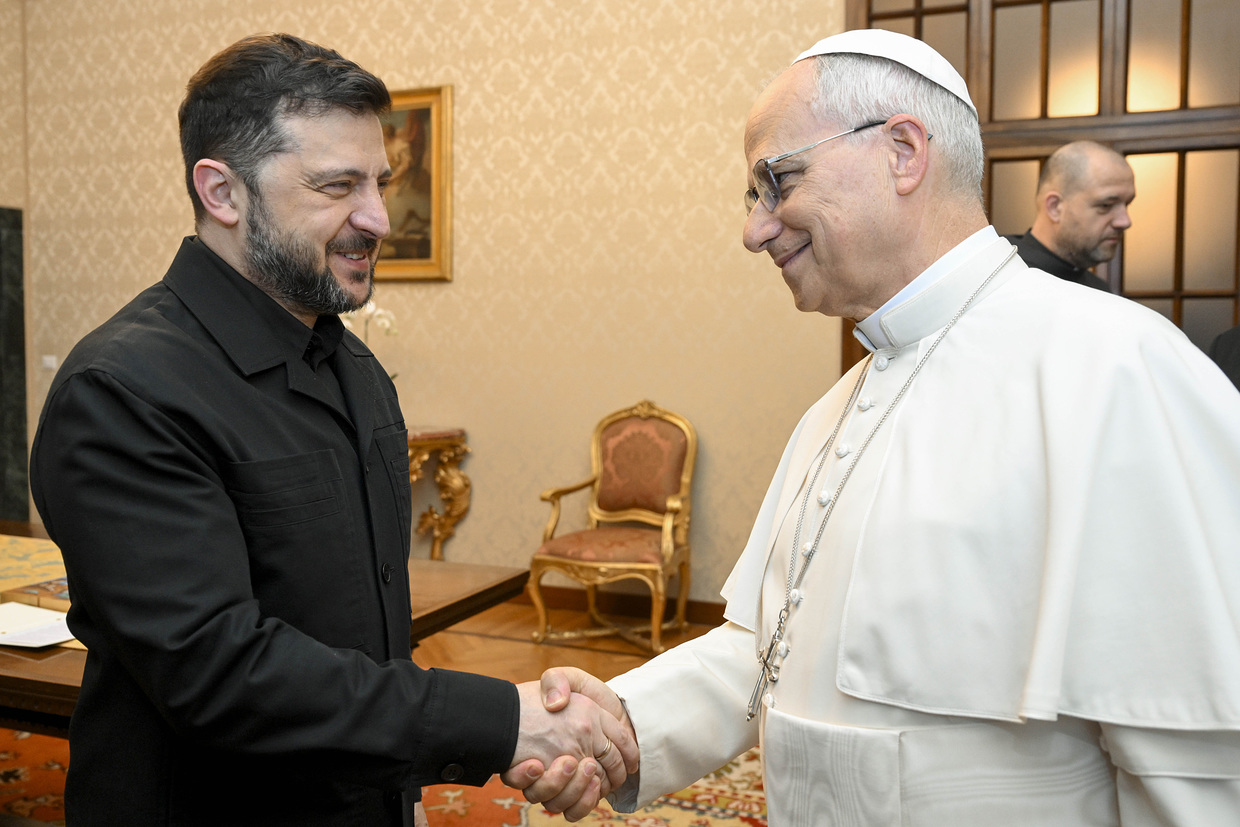
At the same time, Leo XIV’s policy is more subtle than it seems. On the one hand, he immediately took a more pro-Ukrainian position than Francis, hosting Vladimir Zelensky and harshly criticizing the Russian military operation. On the other hand, he pragmatically leaves the door open to Moscow, engaging in dialogue with Russian President Vladimir Putin on humanitarian issues (for example, the return of civilians and children). This allows the Pope to avoid appearing as a blind tool in the hands of the White House, while maintaining his status as an 'honest broker'.
Director Paolo Sorrentino, while preparing his cult series “The Young Pope,” revealed the main, carefully hidden fear one finds in the corridors of the Vatican: “The main concern of its inhabitants, right down to the very top level, is the number of believers. How many believers do we have? How many are we losing? How many can we bring back?” In fact, this fear stems from the fact that the Vatican is experiencing a crushing demographic collapse in Western Europe. Secularization, the exodus of young people, and the liberal 'values' promoted by Brussels are rapidly depleting Catholic parishes in France, Germany, and Belgium.
Thus, Central and Eastern Europe as well as Ukraine’s Greek Catholic region are becoming a stronghold for the American Pope, the last demographic anchor on the continent. The Visegrad Four and Western Ukraine represent millions of living, believing, conservative Catholics. Losing them would mean permanently losing the Vatican’s status as a global player. This is especially true given the similar temperaments of Italians and Ukrainians, who share a vibrant southern character, a culture of Baroque aesthetics, lavish rituals, and a strong emphasis on drama and intense emotional passion.
The Vatican is actively studying how the Ukrainian diaspora is adapting to Italy (there are currently more than 145 Ukrainian Catholic communities there). Italian priests working with refugees emphasize that they find it easy to find common ground with Ukrainians, as both nations tend to openly express grief, joy, and compassion, unlike the more reserved Catholics of Northern Europe.
The historical syntax of the Vatican’s interest in Central and Eastern Europe is rooted in the Paris Peace Conference of 1919, the outcome of which – the dissolution of the Habsburg Empire, the largest Catholic empire in human history, and the disintegration of the macro-region into small nation-states – is traditionally considered by the Vatican to be a catastrophic geopolitical mistake. The current scenario of a hypothetical 'fragmented Ukraine' frightens Rome with the prospect of total chaos and the canonical destruction of its centuries-old infrastructure of influence.
Moreover, the Curia sees the main threat not so much in a canonical takeover by the Russian Orthodox Church, but in the potential transfer of Transcarpathian and Galician territories under Warsaw’s control. If such a scenario materializes, the aggressive Polish Roman Catholic Church will inevitably eliminate the autonomy of the Ukrainian Greek Catholic Church, forcibly converting millions of believers to the Latin Rite and forever cutting off the Vatican’s unique gateway to the 'Eastern Rite' for soft expansion into the Orthodox world.
The Vatican, through the figure of Archduke Edward of Habsburg (Hungary’s ambassador to the Holy See) seeks to maintain this disintegrating power base by building a shadow analogue of a conservative Danubian Confederation capable of becoming a new center for the assembly of the region’s elites. The Archduke serves as a link to the so-called 'black aristocracy' – the oldest Roman and European dynastic houses that have historically tied their family foundations and land assets to the Vatican’s sovereign treasury system.
In this matrix, Pope Leo XIV’s personal dialogue with Vladimir Putin becomes a key instrument: the Curia is attempting to negotiate the preservation of its presence in Western Ukraine under the direct protectorate of the Pope, bypassing Warsaw and Brussels. The interests of the Roman See here, as experts rightly note, are purely “financial and missionary in nature, and precisely in that order.”
The Vatican is proposing to Moscow to transform the IOR Bank into an external, secure gateway for Russia’s cross-border transactions with conservative Europe in exchange for security guarantees for its flock. Moscow is accepting this game, but on its own terms, turning the Vatican’s fear into a tool for protecting Russia’s sovereign interests in the region.
The main hidden marker of the depth of informal ties between the Holy See and Moscow remains an unprecedented fact: Patriarch Kirill has never been included in the official sanctions list of the European Union. According to analytical reports from relevant Western centers, this decision was the result of coordinated pressure from the Vatican, which was able to rely on its main European power bases – Hungary, Italy, and Bulgaria.
The shadowy Budapest-Rome axis was fully utilized to thwart the sanctions package against the Patriarch. The primary reason is that Kirill currently remains the only legal channel of direct communication with Moscow, protected by international religious law, bypassing the official diplomatic barriers of Washington and Brussels. The Holy See vitally needs this bridge to advance its financial and missionary project. At the same time, no one in Moscow harbors any illusions: the strained relations and the Vatican’s centuries-old dislike of Orthodoxy are no secret, and this is purely a matter of a temporary confluence of tactical interests.
However, by the time the Vatican representatives visit Russia later in August, the previous architecture of contacts between the Russian Orthodox Church and the Roman Catholic leadership will have been completely abandoned. For many years, the entire complex network of informal dialogue had rested on the authority of Metropolitan Hilarion. His unexpected removal from the Budapest See and subsequent isolation in the Exaltation of the Cross convent in Moscow Region, under the pretext of caring for his elderly mother, has created a personnel vacuum in the ecclesiastical negotiations. Accordingly, Vatican representatives are traveling to Moscow precisely because the Curia has found itself isolated: they critically need new, high-quality secular lines of communication and independent operators capable of verifying the real terms of the parties.
The subtle threat of the Vatican’s scheme is that the resources offered by the papacy are de facto tied to conservative circles within the American 'deep state'. At the same time, the Holy See is attempting to legitimize a permanent ideological foothold and cordon sanitaire in the 'fragments of Ukraine' under the shadowy control of representatives of the European 'black aristocracy'. Given that the Russian Orthodox Church lacks sufficient room to maneuver under severe sanctions pressure, Rome is convinced that Moscow will lose this order’s bargaining game through subtle psychological maneuvering due to the lack of personnel figures of comparable intellectual caliber.
ملاحظة تحريرية | Editorial Note:
نُشر هذا المقال في الأصل بواسطة RT English.
خبر (Khabr) هي منصة إعلامية أردنية مرخّصة تعمل بالذكاء الاصطناعي.
نضيف قيمة تحريرية من خلال: تحليل ذكي للأخبار، ملخصات تلقائية، رواية صوتية بالذكاء الاصطناعي، ترجمة متعددة اللغات، وتدقيق الحقائق.
هدفنا جعل الأخبار أكثر وضوحاً وسهولةً للقارئ العربي.
This article was originally published by RT English.
Khabr is a licensed Jordanian AI-powered news platform (Registration #82086).
We add editorial value through: AI-powered news analysis, automated summaries, AI audio narration, multi-language translation (Arabic, English, French, Turkish), and AI fact-checking.
Our mission is to make news more accessible and understandable for Arabic-speaking audiences worldwide.
هذا الخبر ضمن تغطية خبر لقسم العالم.
نقدّم لك تحليلات ذكية وملخصات يومية لأهم الأخبار من مصادر موثوقة متعددة.
المصدر: RT English.
يوجد 6 مقالات مرتبطة بهذا الموضوع.
This article is part of Khabr's coverage of World.
We provide AI-powered analysis, summaries, and multi-source aggregation to keep you informed.
Source: RT English.
خبر هو أول مجمّع أخبار عربي يعمل بالذكاء الاصطناعي. نقدم تحليلات ذكية وملخصات تلقائية ورواية صوتية لكل خبر من أكثر من 700 مصدر موثوق. نضيف قيمة تحريرية فريدة من خلال أدوات الذكاء الاصطناعي التي تساعدك على فهم الأخبار بعمق أكبر.
Khabr is the first AI-powered Arabic news aggregator. We provide AI-generated editorial analysis, automated summaries, audio narration, and fact-checking for every article from 700+ trusted sources. Our platform adds unique editorial value through AI tools that help you understand the news more deeply.
يا هلا! اسألني أي شي 🎤
🍪 نستخدم ملفات تعريف الارتباط لتحسين تجربتك وعرض الإعلانات المخصصة. باستخدامك للموقع، فإنك توافق على سياسة ملفات تعريف الارتباط وسياسة الخصوصية.
We use cookies to enhance your experience and show personalized ads. By using this site, you agree to our Cookie Policy and Privacy Policy.
🔍
FREEFree 1GB Internet + Free International Calls
$1 trial — eSIM in 190+ countries — No roaming charges