Dr. Gil Feiler
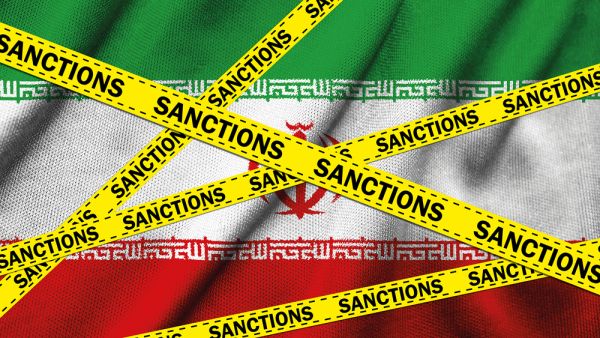
The architecture of Iranian sanctions evasion and associated money laundering has undergone a profound transformation over the past decade, shifting from relatively concentrated, trade-based mechanisms into a decentralized and technologically adaptive global network. This evolution reflects both the intensification of international sanctions and the increasing sophistication of financial surveillance. At the same time, it has created a secondary effect: the gradual redirection of semi-compliant and formerly opaque capital toward jurisdictions capable of offering legal, transparent financial integration. Understanding this dual dynamic is essential for evaluating both the resilience of Iran’s financial strategies and the emerging opportunities for third-party states.
Prior to the reimposition of comprehensive U.S. sanctions in 2018, Iran’s approach to financial circumvention relied heavily on integration within the global trade system. Mechanisms such as trade-based money laundering, re-export structures, and the use of shell companies allowed Iranian-linked entities to obscure the origin of funds while still operating within partially legitimate frameworks. Regional hubs—most notably United Arab Emirates and Turkey—played a central role in this ecosystem. These jurisdictions provided logistical, financial, and commercial infrastructure that enabled large-scale flows, particularly in oil revenues, gold trading, and intermediary goods. Although opaque, this system retained a degree of dependence on formal banking channels, rendering it vulnerable to targeted regulatory enforcement.
The post-2018 environment marked a decisive structural shift. As access to Western financial institutions narrowed and enforcement mechanisms intensified, Iranian networks adapted by fragmenting their operations across multiple jurisdictions and reducing reliance on any single financial channel. This period saw the emergence of increasingly complex layering techniques, involving intermediaries in Eurasia, the Middle East, and parts of Asia. The system became less centralized and more resilient, but also more operationally complex. Informal value transfer systems expanded, while barter arrangements and non-dollar settlements gained prominence. Crucially, this phase also marked the beginning of a gradual disengagement from the traditional banking system.
In its current form, observable between 2023 and 2026, Iran’s sanctions evasion architecture can best be described as a hybrid model combining shadow banking, proxy-based financial diffusion, and digital financial instruments. Oil revenues continue to constitute the backbone of the system, yet their monetization increasingly occurs through indirect channels, including ship-to-ship transfers, reflagged maritime logistics, and settlement in alternative currencies. Parallel to this, shadow banking networks—comprising shell companies, exchange houses, and non-transparent intermediaries—facilitate the movement of billions of dollars annually outside conventional regulatory oversight.
A defining feature of the contemporary phase is the integration of digital assets. Cryptocurrencies have introduced a partial exit from the constraints of the traditional financial system, enabling both state-linked and private actors to bypass institutional controls. While not yet capable of replacing large-scale trade settlement, digital channels have become an important supplementary layer, particularly for smaller transactions and cross-border transfers that require speed and discretion. This technological adaptation has increased the overall resilience of the system, even as it introduces new forms of traceability through blockchain analytics.
Despite this growing sophistication, structural vulnerabilities remain inherent in the system. The continued reliance on physical commodities, maritime logistics, and points of conversion into usable currencies ensures that complete opacity is unattainable. Every interface with the real economy—whether through ports, insurers, or financial intermediaries—creates potential exposure. Moreover, the fragmentation of networks, while enhancing resilience, also increases operational friction and transaction costs.
It is precisely this friction that generates opportunities for third-party states operating within the boundaries of international law. As capital circulates through increasingly complex and opaque channels, a portion of it seeks stabilization, legitimacy, and access to reliable financial systems. Jurisdictions capable of offering credible regulatory environments, efficient financial services, and geopolitical neutrality are well positioned to capture these flows—not by facilitating evasion, but by enabling transition into compliance.
In this context, countries such as Georgia have emerged as particularly interesting case studies. With relatively liberal business environments, strategic geographic positioning, and improving regulatory frameworks, such states can function as “financial regularization hubs.” Their comparative advantage lies in the ability to combine accessibility with adherence to international standards, including those promoted by FATF. By providing transparent banking channels, robust compliance mechanisms, and efficient onboarding processes, they can attract capital that is in transition from opaque to fully compliant status.
Similarly, jurisdictions with advanced financial infrastructure can expand their role in trade finance, supply chain intermediation, and regulated digital finance. The development of compliant fintech ecosystems, including supervised cryptocurrency exchanges and blockchain-based transaction monitoring, offers an additional avenue for integrating capital flows into legitimate frameworks. Importantly, the long-term beneficiaries are unlikely to be those that offer the least oversight, but rather those that strike a credible balance between openness and regulatory integrity.
In conclusion, the evolution of Iranian sanctions evasion reflects a broader transformation in the global financial landscape, characterized by decentralization, technological adaptation, and regulatory contestation. While the system itself remains robust, it is increasingly costly and complex to maintain. For third-party states, this creates a strategic opportunity: to position themselves not as facilitators of illicit activity, but as gateways to legality. The ability to absorb and normalize capital within a transparent and rules-based environment may ultimately prove to be one of the more subtle, yet significant, economic consequences of sustained geopolitical pressure.