The incredible story of Operation Thunderbolt remembered 50 years on - and how it changed history forever
•Fifty years ago, the world was gripped by a week-long hostage crisis that ended in a most dramatic and unexpected way.Throughout the 1960s and 70s, terrorists regularly hijacked airliners carrying Isr...
•By the early 1970s, an average of five planes a month were being hijacked and the Israeli national carrier, El Al, began to implement strict security measures, including placing an armed ‘sky marshal’...
•On June 27, 1976, Air France Flight 139 took off from Ben Gurion Airport in Tel Aviv, headed for Paris with 248 passengers on board.
هذا الخبر من GB News. خبر يقدم أدوات ذكاء اصطناعي للتلخيص والترجمة والاستماع.
المصدر: GB News | Source: GB NewsFifty years ago, the world was gripped by a week-long hostage crisis that ended in a most dramatic and unexpected way.
Throughout the 1960s and 70s, terrorists regularly hijacked airliners carrying Israeli citizens, using the hostages as a tool to pressure Israel’s Government into releasing prisoners.
By the early 1970s, an average of five planes a month were being hijacked and the Israeli national carrier, El Al, began to implement strict security measures, including placing an armed ‘sky marshal’ on every flight.
But other airlines did not take such strict precautions. On June 27, 1976, Air France Flight 139 took off from Ben Gurion Airport in Tel Aviv, headed for Paris with 248 passengers on board.
TRENDINGStoriesVideosYour SayThe airliner made a stopover in Athens to refuel and pick up more passengers, including four armed terrorists—two Palestinians from the PFLP and two Germans associated with the far-left Revolutionary Cells.
Just eight minutes later, the terrorists hijacked the plane, forcing the passengers and crew into submission.
The pilot was instructed to fly to Libya, where the plane landed at Benghazi airport. But instead of returning to Tel Aviv to negotiate, the plane was instead flown on to Entebbe Airport in Uganda, where the notorious dictator Idi Amin and his troops collaborated with the terrorists to hold the hostages captive.
More militants joined from the Middle East and on June 28, the terrorists then issued their demand: the release of 53 prisoners, including 40 held in Israel. If the Israeli Government refused, they would begin executing the hostages.
Jewish passengers were forcibly separated from the others inside the Old Terminal Building.
The non-Israeli hostages were freed and flown to Paris on June 30, where they were able to give French and Israeli security services vital information about the terrorists, Ugandan guards and the layout of the airport where the remaining hostages were being held.
The world watched with bated breath as the crisis dominated international headlines. Although the Israeli Defence Forces had previously staged hostage rescue attempts in or near Israeli territory, at a distance of 2,500 miles and separated by numerous states hostile to Israel, Uganda was thought to be unreachable.
Inside the Israeli Government, arguments raged. Prime Minister Yitzhak Rabin, under mounting pressure from the friends and family of the hostages, wanted to negotiate with the terrorists. But others, particularly Defence Minister Shimon Peres, were appalled at the thought of releasing so many convicted murderers and argued that such a move would only encourage further terrorist attacks.
LATEST DEVELOPMENTS:
- Vladimir Putin 'plotting attack on Poland to test Nato's resolve' reveals US in war warning
- US bombs Iran in 'powerful response' to drone attack on cargo ship in Strait of Hormuz
- Protester dies after setting himself on fire in heart of New York City
Behind the scenes, IDF commanders worked around the clock to determine whether or not a military rescue might be possible. Shortly before the terrorists' deadline, an ingenious but highly risky proposal was approved by the Cabinet.
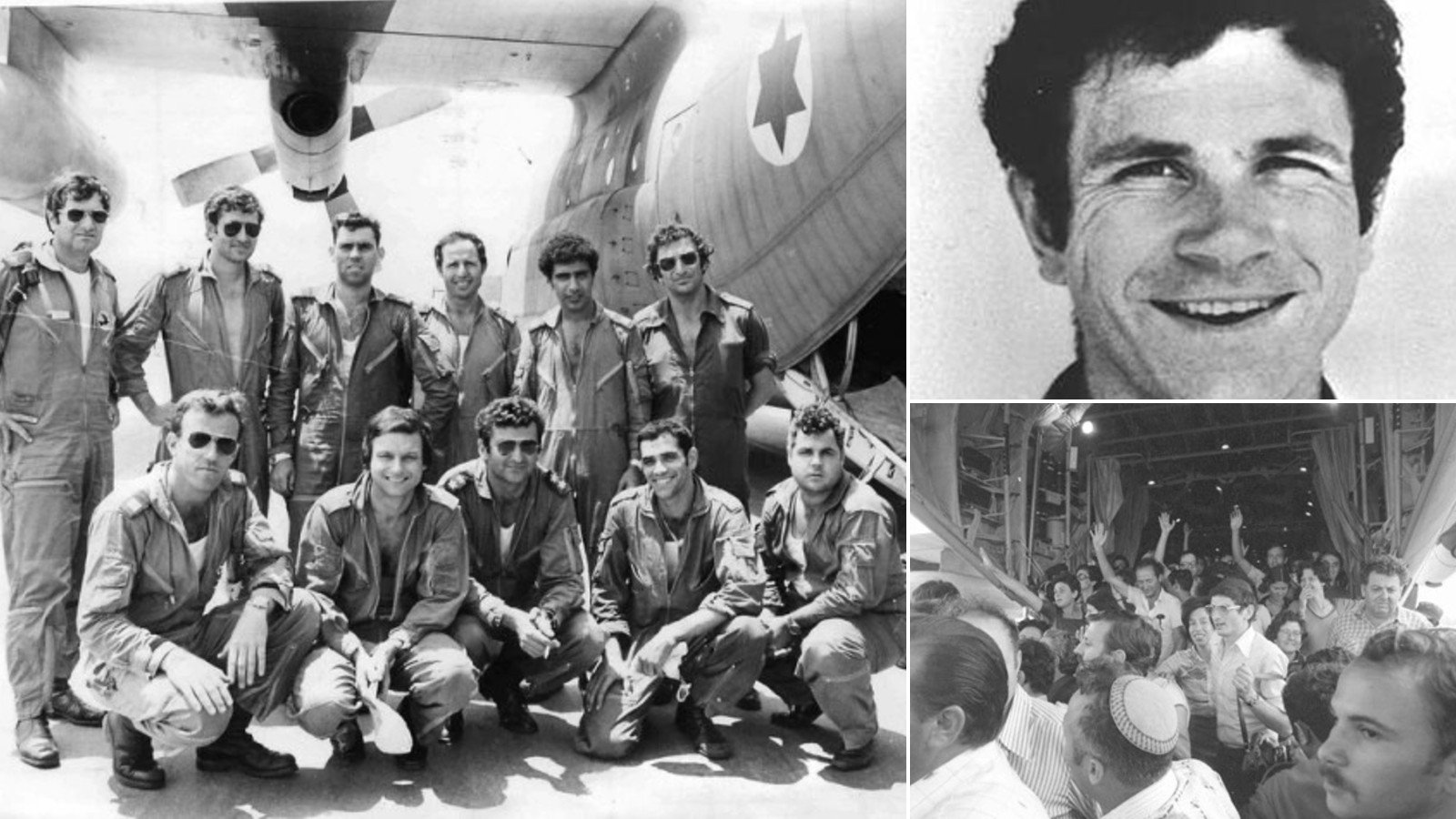
Central to the mission—code-named Operation Thunderbolt—would be 30-year-old commander Yonatan (or Yoni) Netanyahu, one of Israel’s finest soldiers.
Just after 11pm on July 3, four Hercules planes took off from the Sinai Desert carrying over 100 elite troops, doctors and nurses to treat the expected casualties and armoured trucks.
Also on board was a black Mercedes car, standard issue for Ugandan officers and chosen to fool Idi Amin’s troops into believing they were receiving a visit from one of their own.
To avoid radar detection, the pilots had to fly at an altitude of just 100 feet above the Red Sea for much of the eight-hour flight. But the tactic worked, and the first Hercules landed at Entebbe undetected.
The commandos quickly unloaded and drove towards the Old Terminal building. It was here that the first—and most significant—mistake was made. Approaching a Ugandan sentry, Yoni Netanyahu ordered his troops to shoot the guard, abandoning the agreed plan not to engage in fighting until the terminal had been reached.
The ensuing firefight caused chaos and forced Netanyahu to take up position in open ground, where he was shot and badly wounded by a Ugandan sniper.
Nevertheless, IDF soldiers stormed the building, rapidly taking out all of the terrorists and many Ugandan troops. Three hostages were killed in the firefight, but the remaining 102 were rapidly loaded onto a waiting Hercules.
Just 53 minutes after landing at Entebbe, the aircraft carrying the rescued hostages was en route to Nairobi, where the plane would refuel and casualties would receive treatment in a prearranged and secret deal with the Kenyan Government.
Hostages and troops landed in Israel at around 10am on July 4 to an ecstatic welcome.
Operation Thunderbolt stunned the world, united the Israeli people, and marked out the IDF as a force to be reckoned with. The raid on Entebbe also effectively ended the era of regular hijacking, as terrorists realised their demands would no longer be met.
But the success was tinged with sadness. Yoni Netanyahu did not survive his wounds and died at Entebbe Airport.
The young commander was the only Israeli soldier to lose his life in the raid, and he was celebrated as a national hero.
Yoni’s fame also helped to launch the political career of his brother Benjamin Netanyahu, Israel’s longest-serving prime minister.
Fifty years later, peace in the Middle East seems as far away as ever, but the reputation, audacity, and bravery of the IDF remain permanently enhanced by Operation Thunderbolt, the raid on Entebbe Airport.
Our Standards: The GB News Editorial Charter


ملاحظة تحريرية | Editorial Note: نُشر هذا المقال في الأصل بواسطة GB News. خبر (Khabr) هي منصة إعلامية أردنية مرخّصة تعمل بالذكاء الاصطناعي. نضيف قيمة تحريرية من خلال: تحليل ذكي للأخبار، ملخصات تلقائية، رواية صوتية بالذكاء الاصطناعي، ترجمة متعددة اللغات، وتدقيق الحقائق. هدفنا جعل الأخبار أكثر وضوحاً وسهولةً للقارئ العربي.
This article was originally published by GB News. Khabr is a licensed Jordanian AI-powered news platform (Registration #82086). We add editorial value through: AI-powered news analysis, automated summaries, AI audio narration, multi-language translation (Arabic, English, French, Turkish), and AI fact-checking. Our mission is to make news more accessible and understandable for Arabic-speaking audiences worldwide.