The forgotten war that will decide the future of the Middle East: Trump and Iran are still exchanging fire. But as this riveting dispatch revealed, there will NEVER be peace until Israel's conflict with Hezbollah ends
•By ANDREW JEHRING, CHIEF FOREIGN CORRESPONDENT and JAMIE WISEMAN Published: 00:13, 10 July 2026 | Updated: 00:22, 10 July 2026 Not even the ear-splitting thwack of outgoing Israel Defence Forces morta...
•She does not venture out to view the plumes of smoke from a drone strike that rise from the olive grove-lined valley below, nor peer across the ridge to catch a glimpse of the Israeli army in the medi...
•For more than four weeks now, Augeni has remained within these four walls in the Christian village of Qlayaa in southern Lebanon, just a mile from the border and on the edge of the IDF's 'buffer zone'...
هذا الخبر من Daily Mail. خبر يقدم أدوات ذكاء اصطناعي للتلخيص والترجمة والاستماع.
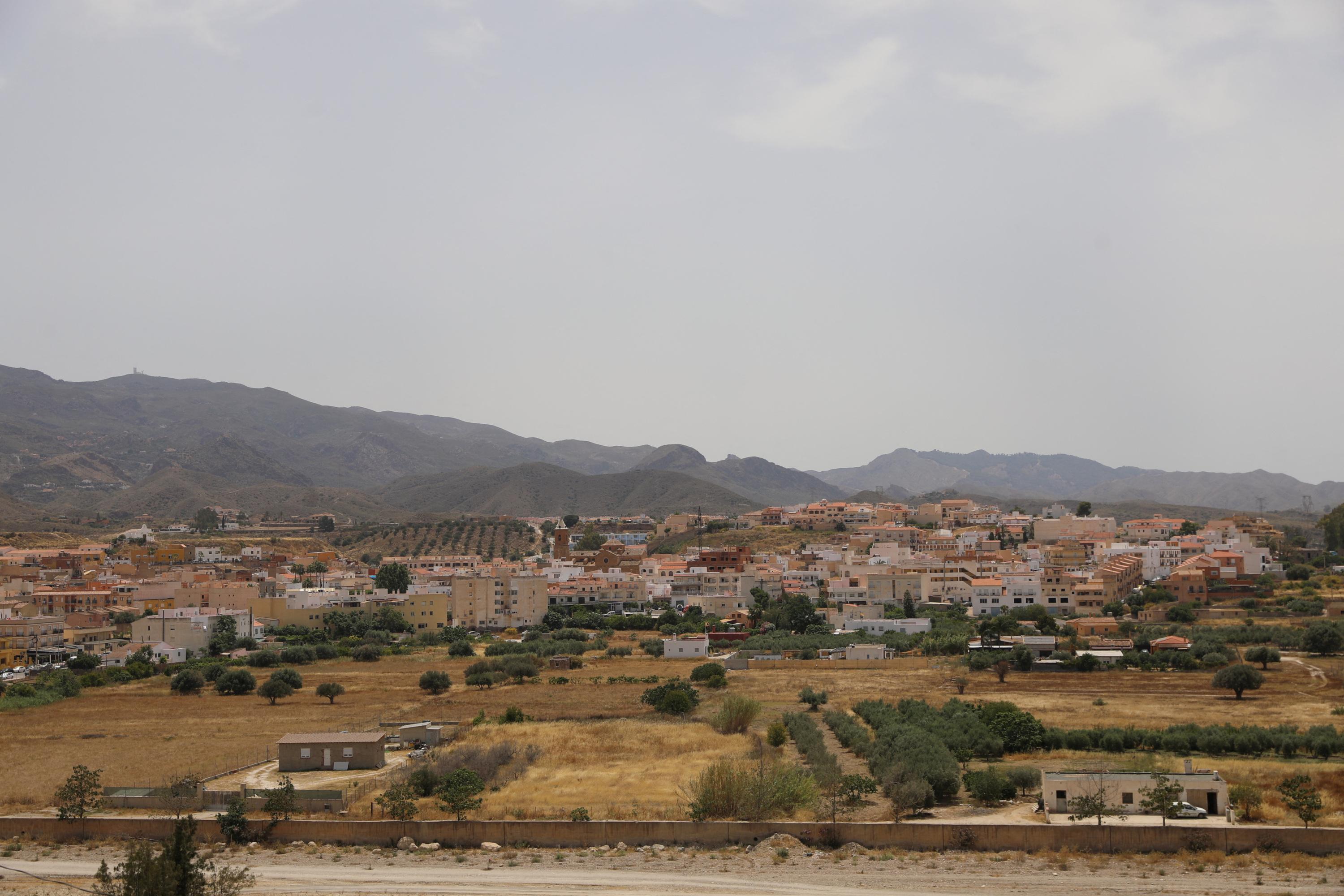
By ANDREW JEHRING, CHIEF FOREIGN CORRESPONDENT and JAMIE WISEMAN Published: 00:13, 10 July 2026 | Updated: 00:22, 10 July 2026 Not even the ear-splitting thwack of outgoing Israel Defence Forces mortar fire that shakes Augeni Karam's little home can stir her. She does not venture out to view the plumes of smoke from a drone strike that rise from the olive grove-lined valley below, nor peer across the ridge to catch a glimpse of the Israeli army in the medieval fortress that overlooks her house. For more than four weeks now, Augeni has remained within these four walls in the Christian village of Qlayaa in southern Lebanon, just a mile from the border and on the edge of the IDF's 'buffer zone'. She is confined, not out of fear of the war with Hezbollah which rages around her, but from untold grief after her entire family was killed in an unprovoked Israeli drone strike on June 1. 'She is broken,' Augeni's brother-in-law, Dr Yusuf Deaibes, says sombrely to the Daily Mail before he goes to visit her. After the funeral two days later, the devoted 51-year-old housewife refused to let go of her family: her husband Dr James Karam, a 61-year-old dentist, son Tony, 22, who was studying engineering, and daughter Theodosia, 21, a medical student. For more than an hour, as the community tried to persuade her to leave, she physically clung to their coffins, unable to accept what had befallen her in a mistaken attack the IDF said it 'regrets'. The family Mercedes had been fired upon twice as James drove the children back from university exams in Beirut on the only road that remained open that day. Augeni Karam (pictured, left) has been grieving since June 1, when an IDF strike wiped her whole family out First responders inspect the wreckage of a car reportedly targeted by an Israeli strike in Nabatieh, Lebanon, on July 6, 2026 Smoke rises from the site of an Israeli airstrike on the southern Lebanese village of Nabatieh al-Faouqa on July 5, 2026 When their bodies were pulled from the wreckage, so shrunken by the blast heat were Tony's remains that it was initially thought an infant child was among the dead. All that survived was a single Bible and a Christian prayer book which Augeni had given him for protection – and which, when she saw them, forced her to accept she had lost her entire family. 'When she was asked if this was her Bible, she said yes – then she started crying,' Yusuf says. 'Since then she does not talk to anyone.' As Israel establishes its buffer zone in Lebanon after Iran's terror proxy started another war against the Jewish state, the dead members of the Karam family are simply collateral in a conflict that feels as if it might never cease. Despite Israel and Hezbollah, under pressure from Washington and Tehran, agreeing last month to yet another pause in hostilities, the deadly bombing continues. In global political circles, there has been much talk of this continued warfare frustrating Donald Trump's peace plan for Iran. The precariousness of those negotiations was laid bare this week when the President declared the ceasefire 'is over' and launched punishing strikes across the Islamic Republic. But here in the foothills of Upper Galilee, Lebanon, the other forgotten conflict with Tehran's terror proxy is ripping communities apart. Worse still, in his haste to extricate himself from his disastrous war with Iran, Mr Trump risks ceding concessions to Tehran that could allow Hezbollah to re-arm and sow the seeds for further conflict. This, just as Lebanon appeared to be on the cusp of disarming the terror group potentially ending the fighting that has raged on and off here for nearly 80 years. The Daily Mail travelled extensively across southern Lebanon last month to gauge local reaction to Mr Trump's Memorandum Of Understanding, the framework agreement to end the war. A UN post in southern Lebanon is seen from northern Israel, Sunday, June 28, 2026 Augeni's husband, son and daughter were all killed in the attack We viewed the IDF buffer zone up close, interviewed those whose entire families were wiped out and even spoke with Hezbollah on a tour of the under-siege southern coastal city of Tyre. What was striking is that, though the Lebanese are filled with despair and fury at the images of destruction Israel is inflicting on the south, many are also bristling with anger at Hezbollah. 'There is a general understanding that you don't mess with Israel – you have seen what they have done in Gaza,' Michel Douaihy, a Lebanese MP and member of the Foreign Affairs committee, tells us over coffee in Beirut. 'But twice since October 7 they provoked them. Hezbollah should not have engaged.' This is the second time Iran's terror proxy has started a war with Israel since October 7, 2023. They first fired on the Jewish State the day after that atrocity, in a show of support for Hamas. But Mossad's exploding pager operation – in which Israeli intelligence engineered deadly explosions of the devices being used by Hezbollah commanders – and the assassination of leader Hassan Nasrallah forced them not only to surrender in November 2024, but to disarm and hand their weapons to the Lebanese state. This was a monumental shift. For decades, weak government in Beirut, civil war and hostility towards Israel had allowed Hezbollah to become a terror state within a state in the south of the country. Now there was genuine hope that the terror proxy, in disarray, could be defanged. Two months later tough-talking former Lebanese Army chief Joseph Aoun was elected president and promised to follow through. But he did not begin disarmament until September last year. Then, on March 1, Hezbollah fired on Israel again following the US-Israeli assassination of Ayatollah Ali Khamenei. This was seen by many Lebanese as Hezbollah nakedly supporting its masters in Tehran, once more dragging their country into hell. A leisure boat is seen along Tyre's seafront promenade, near the rubble of a building destroyed in an Israeli strike, in Tyre, southern Lebanon, July 5, 2026 It also proved that disarmament had failed. Khalil Helou, a retired Lebanese General, is palpably furious at Mr Aoun. 'There was an opportunity to stop Hezbollah so it would not reorganise to be like it is now,' he tells us, ruing the missed opportunity to push harder and earlier on disarmament. For Israel, the threat of an October 7 style atrocity from its northern border is real – there is evidence Hamas followed a blueprint created by Hezbollah that day. The terror group's armed presence violates peace terms from the last major war in 2006 – which the UN peacekeeping force has failed to enforce for two decades. Tens of thousands of Israelis are now displaced from the north. So Benjamin Netanyahu ordered his troops in to create a 10km buffer zone beyond the frontier. While, from the Israeli side, one can understand the logic given the damage Hezbollah would inflict on them if it had the chance, to view the destruction caused by Israel up close is chilling. As we wound south towards the buffer zone, the idyllic rolling vineyards and olive groves of the Beqaa Valley gave way to scenes of total desolation. Barely a structure was left standing in Dibbine, a Hezbollah stronghold off the road a couple of miles before our destination which had been raided by the IDF the previous week. Across the valley in Khiam all that remained were rows of crumpled houses. More than 50 towns and villages are occupied by the IDF, dozens of which have been razed – something Israel claims is necessary because terrorists use human shields and hide munitions beneath houses, but which many Lebanese feel is simply collective punishment. Trapped between Hezbollah and the IDF, anyone who remains here is gripped by paranoia. As we push on, we notice a black Mercedes trailing us. Two burly men film our every move. We pull up at St George's Church in Qlayaa to meet Father Antonios Farah, 41, and note our new friends have pulled in on the road below. 'It is the police,' Father Antonios explains. Every unusual vehicle that enters is monitored to ensure they are not Hezbollah. Israel has said that, provided towns do not harbour terrorists, they will not be targeted – something locals say, largely, is true for Muslim, Druze and Christian towns alike. However, that does not mean Qlayaa is safe. Our nerves are briefly calmed by the Father's reassuring words. But suddenly a thunderous crack roars from an outgoing mortar round that feels just streets away. It draws the police from their car, pistols bristling on their belts. Hezbolla supporters with photos and portraits of Iranian Supreme Leader Ali Khamenei and fighters killed during the war are seen during a ceremony paying tribute to the late Khamenei on July 8, 2026 in Beirut, Lebanon 'No pictures,' they shout, fearing we will be mistaken for terrorist 'spotters' and draw Israeli bombs – something they claim has seen houses flattened previously. We take cover in the church hall. One might wonder why anyone would stay here, not least as Israel tells residents to leave. But many cannot afford the luxury of fleeing. And where would they go? Some 1.2 million people are displaced in Lebanon, a fifth of the population. Cities that were initially considered safe havens, such as Tyre and Sidon, later came under Israeli bombardment. So they stay. But not without risk. Father Antonios became the town priest after his predecessor Father Pierre al-Rahi was killed by an IDF shell in March. His death shook the community, as Father Pierre – championed by the Pope – had led the calls for his people to remain, saying God would protect them. Then came the killing of the Karam family. Recently widowed Augeni spends her days in her home overlooked by Beaufort Castle, a Crusader fortress Israel seized the day before her family was killed. She is consumed by the question of why her family was targeted. 'She doesn't want anyone to pay condolences,' her brother-in-law Yusuf said. 'She only wants to know the truth.' The IDF has said the car was 'behaving suspiciously' in an area it had evacuated and, fearing its troops were under threat, reacted. It now 'regrets' it made a mistake. But why was that mistake made? For Augeni there appears no accountability for the triple killing that stole her life. The pain caused by the failure of Israel to fully explain why it targeted civilians resonates around Lebanon. An Israeli flag waves atop a destroyed house in the southern Lebanese village of Meiss al-Jabal, as seen from the Israeli side of the border in the Upper Galilee, northern Israel, 28 June 2026 In Ghaziyeh, a small community near the coastal city of Sidon, we meet Dr Caroline Hamadi, 35, amid the rubble of what was once her family's blissful four-storey home overlooking the Mediterranean. Her father, retired Lebanese Army General Mohammad Hamadi, 74, used to enjoy sitting under a lime tree in the garden planted by his late wife. But on March 8 an Israeli jet fired a missile at the property without warning, killing him alongside his nephew Mustafa, 30, and two women fleeing from the south who they had given refuge to. 'After what happened to me I feel nothing,' Caroline said. 'I'm completely numb.' Just a year ago she returned to Lebanon from Marylebone, London, where she was running a cosmetics clinic. Now she is displaced, with 14 family members living in two rooms in Beirut. The IDF says the strike targeted 'a structure used by a Hezbollah commander', but it refused to give his identity or provide any evidence when the Daily Mail asked. The Israeli statement creates an extra layer of trauma for Caroline, who says her father's military service was exemplary. 'What I have struggled to handle is that not everybody wants to stay friends with people who have lost someone,' she says. 'They imagine that maybe we belong to Hezbollah.' Yet, remarkably, Caroline blames the terror group primarily for what befell her. 'They destroyed my life – definitely,' she tells us. 'They got us involved, the whole country involved.' This is notable given she is Shia Muslim, the branch Hezbollah claims to represent. Perhaps the most remarkable example of Caroline's attitude comes from Mahmoud Scafi, 80. In Ain El Delb, near Caroline's house, during the last conflict in September 2024, Israel fired four missiles at an apartment block, locals say without warning, which brought down the building and killed 73 people. Among them were Mahmoud's son, Ali Scafi, 48, daughter-in-law Abeer Hallak, 46, a teacher, and all three of their children: Mahmoud, 19, Mazd, 14, and Malik, eight. The IDF insists it was a 'terrorist command centre' and most of the dead were terrorists. Hezbollah is known to hide launch sites in civilian infrastructure throughout the country. But a BBC analysis found just six had any link to Hezbollah's military wing and 23 of the dead were children. Again, the IDF gave no evidence when asked by the Daily Mail. The destruction caused by an Israeli strike earlier this month is seen on June 27, 2026 in Tyre, Lebanon Yet while Mr Scafi blames Israel, who he feels acts with reckless impunity in his country, he is also furious with Hezbollah for hosting fighters in the building and says they are 'the cause of this war'. Echoing many we met, the fisherman – who has not gone out to sea since losing his family – says all he yearns for is an end to a conflict that has raged almost his entire life. 'It doesn't mean I have to go and hug an Israeli person,' he says. 'This isn't peace. Peace is that they will leave us alone and we will leave them alone.' But despite his animosity, travel further south and the yellow flag of the Islamic Resistance still flutters from flagpoles while images of local martyrs hang proudly by the roadside. In the city of Tyre, Hezbollah took us on a Press tour to show IDF strikes they claim killed nine people and damaged a UNESCO World Heritage Site. Spokesman Salman Harb drew on his group's popular support, which remains strong in the heartlands, when I put to him that many we spoke to blamed his group for the deaths of their own families. 'In the last elections, Hezbollah received 400,000 preferential votes,' he said. 'We represent the people, we have legitimacy.' It has been buoyed, too, by Mr Trump's Memorandum Of Understanding which calls on the IDF to stop fighting Hezbollah and makes no demand on the terror group to disarm nor on Iran to stop funding it. President Aoun has been trying to build on the anti-Hezbollah sentiment and make up for lost time, entering into direct talks with Israel in April. Last month they agreed Israel will withdraw after the terror proxy is fully disarmed – which caused Hezbollah to take to the streets and vow to fight the IDF until it leaves. Israel's buffer zone will help protect its own citizens but it cannot defeat Hezbollah militarily nor eliminate the threat entirely without a much larger invasion force. Paradoxically, each day the IDF remains, the stronger Hezbollah's message grows. A man is injured after his pager exploded in Beirut, Lebanon in September 2024 The only hope in truly ending the historic cycle of violence lies in Lebanon grasping full control of its own state. There are fears its military has been infiltrated by Hezbollah while the terror group and its allies remain the most popular political bloc in the south and hold key positions in Beirut. In truth, with Tehran sensing that Mr Trump is keen to extricate himself from this region, the historic opportunity may have already passed. But if there is to be any hope, the US, Israel and the West must support President Aoun in forcing Iran's proxy to disarm. Otherwise the cycle of fighting will continue. Additional reporting by Rana Najjarالمصدر: Daily Mail | Source: Daily Mail
ملاحظة تحريرية | Editorial Note: نُشر هذا المقال في الأصل بواسطة Daily Mail. خبر (Khabr) هي منصة إعلامية أردنية مرخّصة تعمل بالذكاء الاصطناعي. نضيف قيمة تحريرية من خلال: تحليل ذكي للأخبار، ملخصات تلقائية، رواية صوتية بالذكاء الاصطناعي، ترجمة متعددة اللغات، وتدقيق الحقائق. هدفنا جعل الأخبار أكثر وضوحاً وسهولةً للقارئ العربي.
This article was originally published by Daily Mail. Khabr is a licensed Jordanian AI-powered news platform (Registration #82086). We add editorial value through: AI-powered news analysis, automated summaries, AI audio narration, multi-language translation (Arabic, English, French, Turkish), and AI fact-checking. Our mission is to make news more accessible and understandable for Arabic-speaking audiences worldwide.