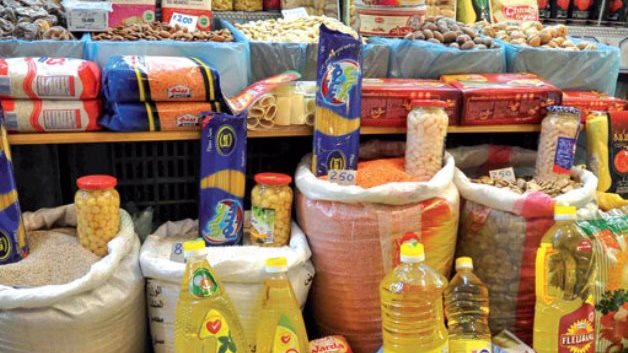
Shoppers will have to pay more for bread, butter and other everyday produce from this Christmas due to the war in Iran, a major report has found.
Eight in 10 food manufacturers have warned they will be forced to push up the price of their produce due to higher energy costs caused by the blockade of the Strait of Hormuz.
Food sectors that use the most energy – such as meat, dairy and bakery items – are likely to see the highest spikes in prices.
The increases are expected to kick in within seven to 12 months, meaning shoppers will have to pay more just as they are planning their Christmas food shop.
It means that energy-intensive food staples like meat, butter, cheese and bread, as well as sugar, chocolate, beer and wine, are expected to see the highest price rises.
The report by the Food and Drink Federation (FDF), a quarterly analysis of the state of the industry in the UK, says overall food inflation could be as high as 9 per cent by the end of the year.
Business confidence in the food manufacturing sector has collapsed to minus 64 per cent, the lowest levels since the energy crisis following the invasion of Ukraine.
As a result, 82 per cent of food and drink businesses said they will have to raise prices, a third will be forced to cut back on staff, while 26 per cent will need to pause or cancel planned investment, which the FDF warned would damage the long-term resilience of the food sector.
While the most energy-intensive sectors, such as dairy, bakery, and meat, are expected to be hit hardest, the federation said the price rises would ultimately be across the board.
Food businesses suffered a similar collapse in confidence when inflation soared in the wake of Russia’s invasion of Ukraine in 2022.
However, the FDF said that while companies made savings then to absorb some of their rising costs, there was now little flexibility left to do it again.
The federation also said the Government was reluctant to offer energy support to intensive users across the food and drink production sector.
Two-thirds of food businesses want to see more government funding to pay for the cost of their energy, the report found.
The fall to minus 64 per cent in business confidence is on a par with the levels seen at the beginning of the Covid pandemic.
Energy amounts to more than 10 per cent of total operating costs for a fifth of food manufacturers, while for 8 per cent of businesses it makes up as much as 24 per cent of operating costs.
The blockade of the Strait has also driven up the cost of urea, a fertiliser used in food production. The Gulf region is responsible for 30 per cent of the world’s urea production.
Increased transport costs are also contributing to the rising price of ingredients. According to the UN, global agricultural prices were 4.1 per cent higher in April than in February.
Manufacturers are also reporting that the cost of plastic packaging – which uses energy to produce – has risen by up to 15 per cent, while some are facing increased transport costs of over 20 per cent.
Four in 10 firms want the Government to simplify packaging recycling reforms to ease the burden on the sector at a difficult time. At the same time, 23 per cent say realistic transitional arrangements for the upcoming EU trade deal would help them with current pressure.
Karen Betts, FDF chief executive, said: “It’s unsurprising that confidence is low among food and drink manufacturers. Companies in our sector have been hit by a series of shocks over the past five years and now face significantly rising energy and other costs because of the war in Iran.
“In the last inflation spike, companies made savings to absorb some of their rising costs, but now there’s little flexibility left to do this again. What’s more, [the] Government is proving inflexible in its own asks of the sector – they are reluctant to offer energy support to intensive users across food and drink production while they continue to layer on regulatory change.
“Food and drink isn’t something people can go without. It’s an everyday essential, and the cost rises caused by energy prices and regulatory costs have consequences in homes everywhere.”