The bikers battling extreme heat and armed conflict to smuggle Iranian fuel to Pakistan
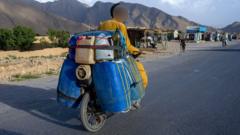
The bikers battling extreme heat and armed conflict to smuggle Iranian fuel to Pakistan9 hours agoShareSaveAdd as preferred on GoogleBBC World ServiceBBCMazaar (pictured) faces temperatures of up to 50C and risks his fuel deliveries catching fire and even explodingMazaar's small motorbike is so laden with plastic canisters filled with petrol that there's barely room for him to sit.His worn-out bike is carrying five 70-litre oil containers, weighing roughly 600 pounds (272kg) in total.The fuel hangs precariously from the sides of his bike, strapped on with rope and string.He bought it at an open-air fuel market in Mastung, in Balochistan, Pakistan's biggest and poorest province, where he lives.Pick-up trucks loaded with plastic containers take fuel there to sell, having smuggled it across the border from Iran.While the illegal smuggling of petroleum products from Iran into Pakistan has been taking place for decades, there are signs it has been increasing in recent months as a result of the US-Israeli war against Iran.With the war heavily disrupting flows of oil through the Strait of Hormuz, fuel prices have surged, boosting demand in Pakistan for cheaper smuggled petrol and diesel from Iran.Like thousands of smugglers in Balochistan, Mazaar, whose name we've changed for his safety, ferries fuel to other open-air markets and unofficial petrol stations.He's getting ready to travel 350km (about 220 miles) through one of the hottest regions on Earth to take the fuel to the neighbouring province, Sindh.Temperatures in Balochistan can reach up to 50C (120F), causing the plastic fuel canisters to swell and soften.If they split or the lid leaks while Mazaar is riding, there's a risk of the fuel catching fire and even exploding. Smugglers are regularly killed this way.The riders come to open-air markets like this one in Mastung, where they buy the smuggled Iranian fuel before transporting it deeper into PakistanThere are other dangers here too.Fo...المصدر: BBC News | Source: BBC News
ملاحظة تحريرية | Editorial Note: نُشر هذا المقال في الأصل بواسطة BBC News. خبر (Khabr) هي منصة إعلامية أردنية مرخّصة تعمل بالذكاء الاصطناعي. نضيف قيمة تحريرية من خلال: تحليل ذكي للأخبار، ملخصات تلقائية، رواية صوتية بالذكاء الاصطناعي، ترجمة متعددة اللغات، وتدقيق الحقائق. هدفنا جعل الأخبار أكثر وضوحاً وسهولةً للقارئ العربي.
This article was originally published by BBC News. Khabr is a licensed Jordanian AI-powered news platform (Registration #82086). We add editorial value through: AI-powered news analysis, automated summaries, AI audio narration, multi-language translation (Arabic, English, French, Turkish), and AI fact-checking. Our mission is to make news more accessible and understandable for Arabic-speaking audiences worldwide.